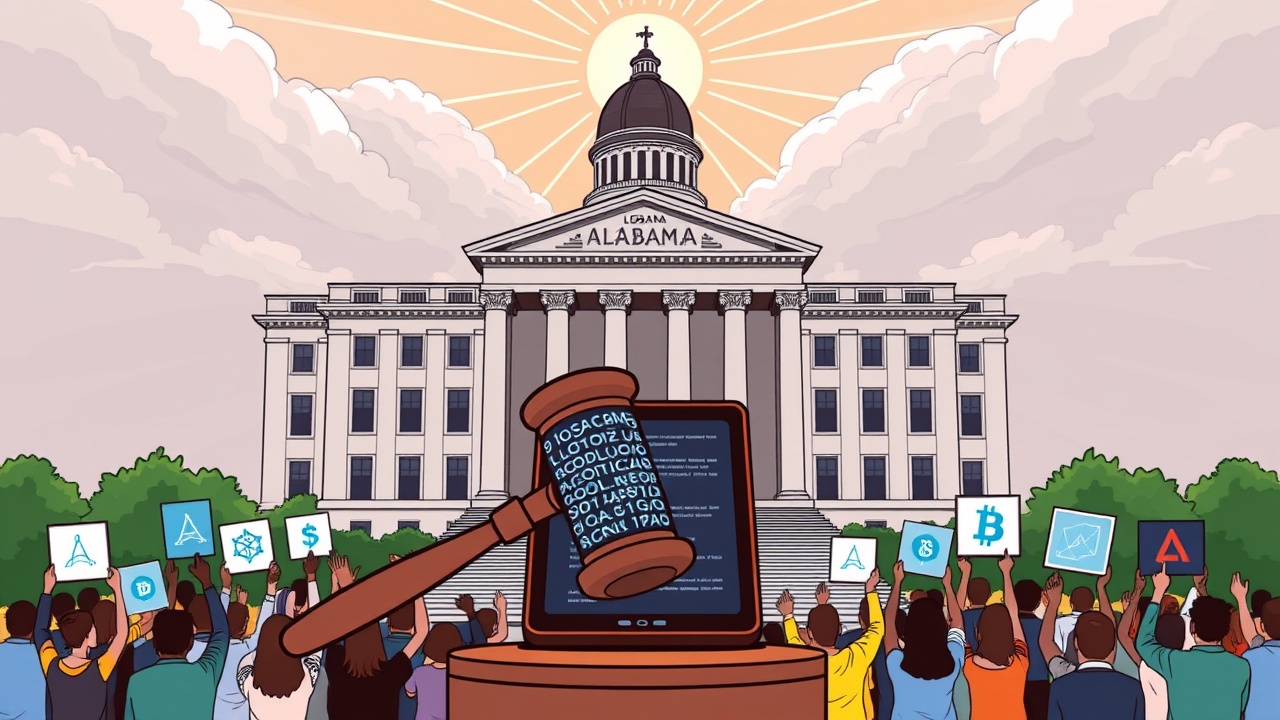
Alabama Recognizes DAOs as Legal Entities
In a significant move for the regulatory landscape of decentralized organizations, Alabama has officially recognized decentralized autonomous organizations (DAOs) as legal entities through the Decentralized Unincorporated Nonprofit Association Act, known as the DUNA Act. This milestone comes after the state legislature overwhelmingly approved the bill, with a vote tally of 82 in favor and just 7 against, while 16 members abstained on March 17. The measure was spearheaded by Republican Senator Lance Bell and has now received the endorsement of Governor Kay Ivey, making Alabama the second state in the U.S. to offer such legal status to DAOs, following Wyoming, which forged the path in 2024.
Implications of the DUNA Act
Miles Jennings, the head of policy and general counsel at a16z Crypto, lauded this development in a recent post on X, emphasizing the importance of decentralized governance for the future of cryptocurrency. He indicated that the legislation provides essential stability for decentralized communities, enabling them to build, manage, engage, and expand their operations in the physical world.
The DUNA Act outlines specific criteria for an entity to be classified as a DAO. Among these requirements, an organization must consist of a minimum of 100 members united for a shared nonprofit objective, such as overseeing a blockchain network or smart contract framework. With the DUNA Act, DAOs can leverage blockchain capabilities, utilizing smart contracts where processes like voting and consensus can be securely documented on-chain.
Legal Recognition and Operational Capabilities
Legal recognition facilitates a range of operational capabilities for these organizations, including the ability to own property, enter contracts, and engage in legal proceedings, effectively providing its members with protections against personal liability in disputes connected to DAO activities. As the conversation within federal circles moves towards more robust crypto market structure legislation, individuals operating within these decentralized entities are posited to benefit from these emerging legal frameworks.
Growing Trend Across States
Additionally, there have been movements in other states, highlighted by a recent proposal in West Virginia introduced by Representative Tristan Leavitt, which is currently pending the governor’s approval. This growing trend reflects a wider acknowledgment of the necessity to create clear legal guidance and infrastructure for the rising number of DAOs, which, according to CoinLaw, currently encompass over 13,000 organizations globally, managing approximately $24.5 billion in assets.