Introduction
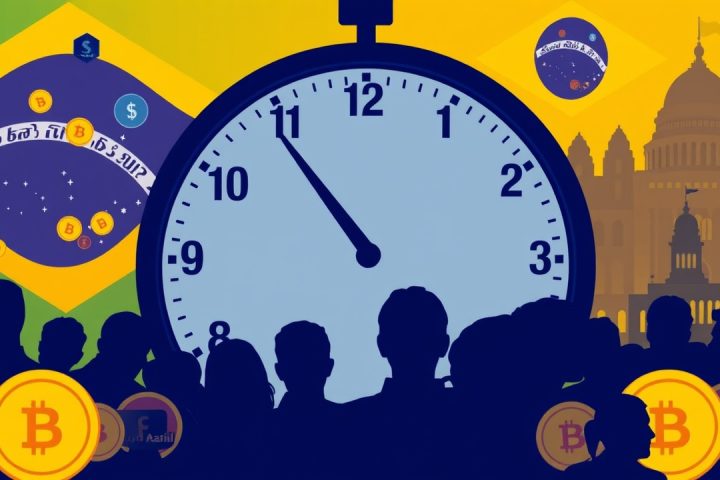
In a significant move to modernize its financial landscape, Brazil’s stock market exchange, B3, is set to introduce a tokenization platform alongside a stablecoin tied to the Brazilian real by 2026. This development aims to weave blockchain technology into the country’s financial fabric, enabling a more integrated approach to trading and asset management.
Tokenization Platform
The forthcoming tokenization platform will initially focus on tokenizing real-world assets, particularly equities. This innovative system is designed to facilitate the issuance and trading of these assets on a blockchain while maintaining a seamless connection to B3’s current market infrastructure. Through this integration, B3 aims to enhance liquidity across both traditional and digital markets, thereby improving settlement processes and minimizing the fragmentation often seen between on-chain and off-chain trading environments.
Stablecoin Introduction
Additionally, the exchange plans to launch a stablecoin, pegged to the Brazilian real, which will play a critical role in supporting the clearing and settlement operations on the new tokenization platform. The objective is to replace current cash-based transaction methods, streamlining processes for investors and enhancing the overall efficiency of market transactions.
Regulatory Context and Future Offerings
This initiative follows the Central Bank of Brazil’s recent decision to limit the scope of its digital currency project, known as the Drex, thus allowing room for private sector innovations in the realm of tokenized finance. In conjunction with these developments, B3 is also working on introducing weekly options contracts linked to popular cryptocurrencies: Bitcoin (BTC), Ethereum (ETH), and Solana (SOL). These options are currently under review by Brazil’s Securities and Exchange Commission (CVM) and, pending approval, would mark a significant expansion of B3’s offerings in the crypto sector within a regulated environment.
Conclusion
With these developments, B3 is committing to a vision of blockchain technology not as a standalone venture but as a complementary extension of Brazil’s established financial systems, furthering its goal of integrating digital assets into a cohesive market structure.