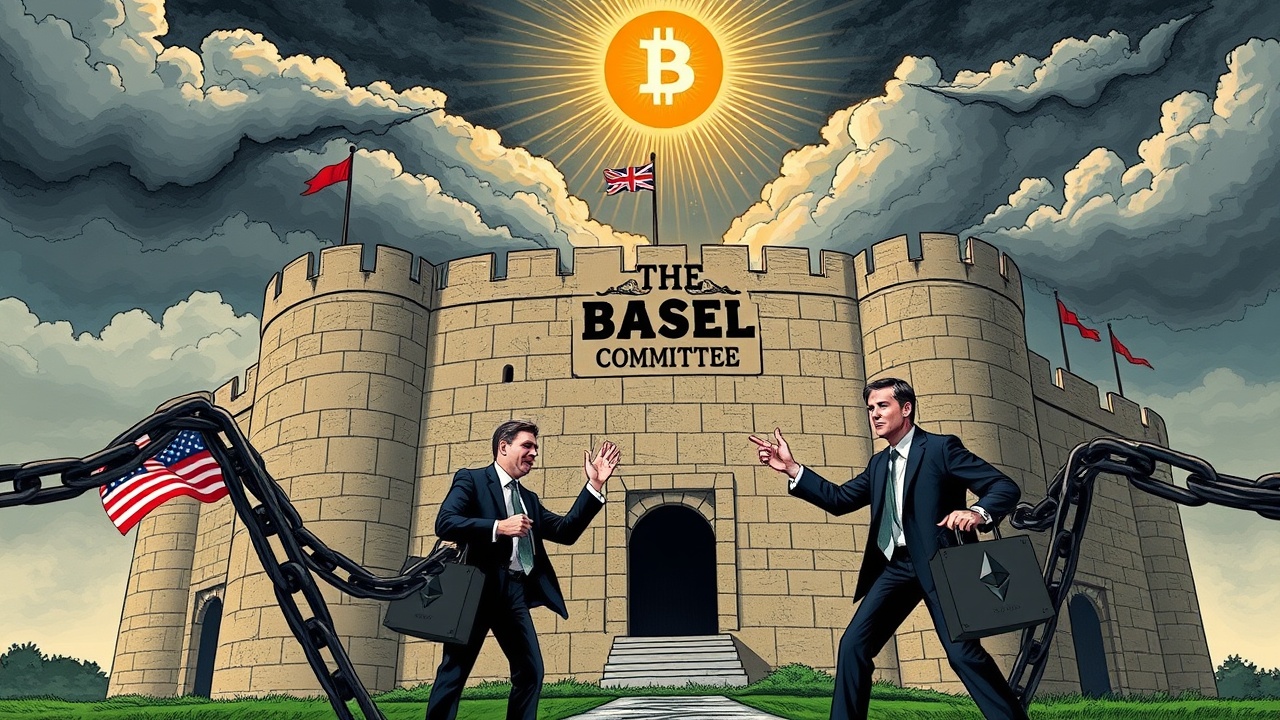
Reassessment of Capital Requirements for Cryptocurrency
As the global banking landscape evolves, regulators at the Basel Committee on Banking Supervision (BCBS) are reconsidering their stringent capital requirements for cryptocurrency. This comes in the wake of the United States and the United Kingdom openly rejecting the current proposed rules, which could threaten the long-established agreement within the committee.
Need for Change in Risk Weighting
Erik Thedéen, the chair of the BCBS and governor of the Swedish central bank, revealed in a Financial Times interview that a reassessment of the 1,250% risk weighting assigned to crypto assets might be necessary. This high risk weight mandates that financial institutions set aside capital equal to their crypto asset exposure, thus discouraging banks from engaging with the crypto market. The current regulations categorize cryptocurrencies, including well-known stablecoins like USDt and USDC, the same way they classify high-risk investments.
Shift in Regulatory Perspective
However, Thedéen’s remarks highlight a significant shift in the landscape, noting the rapid surge of regulated stablecoins, which is prompting calls for an evolved regulatory stance. He pointed out the dramatic changes in the market, emphasizing the urgent need for regulators to analyze these developments quickly before making decisions.
“Given the increase in stablecoins, we might need a different approach,”
he stated, indicating that the existing framework might not adequately address the evolving risks associated with these digital assets.
Pushback Against Basel Rules
The pushback against the Basel rules is becoming increasingly clear, particularly from major economic powers. Reports suggest that the US Federal Reserve has no plans to adopt the Basel rules as they are, deeming the capital charges unrealistic. Similarly, the Bank of England has indicated it will not implement the framework in its current state. Meanwhile, while the European Union has begun to integrate the 2022 regulations, it has omitted crucial elements pertaining to permissionless blockchains.
Potential Amendments to Guidelines
Additionally, the Basel Committee appears poised to amend its 2022 guidelines next year, potentially creating a more favorable environment for banks engaging with cryptocurrencies. Many within the banking sector view the current regulations as discouraging participation in crypto and stablecoin services altogether. The discussion around these revisions has gained momentum amid the increasing use and acceptance of regulated stablecoins in the US, supported by political decisions such as the adoption of the GENIUS Act, which permits these assets for payment purposes.
Challenges in Achieving Consensus
However, Thedéen stressed that while the growth of stablecoins necessitates a thorough examination and possibly a lenient regulatory framework, aligning on various perspectives within the BCBS may prove challenging. He stated,
“There are many differing views within the committee, making consensus difficult.”
Concerns Over Competitive Imbalance
This growing disparity in regulatory approaches raises concerns about creating an uneven competitive landscape among global banks. If banks in the EU are required to adhere to stringent rules while their counterparts in the US and UK benefit from a more lax regulatory environment, it creates a significant imbalance. This could determine which regions are capable of offering bank-issued stable coins, tokenized deposits, or even providing crypto custody services, thereby influencing the future of the banking industry on a global scale.