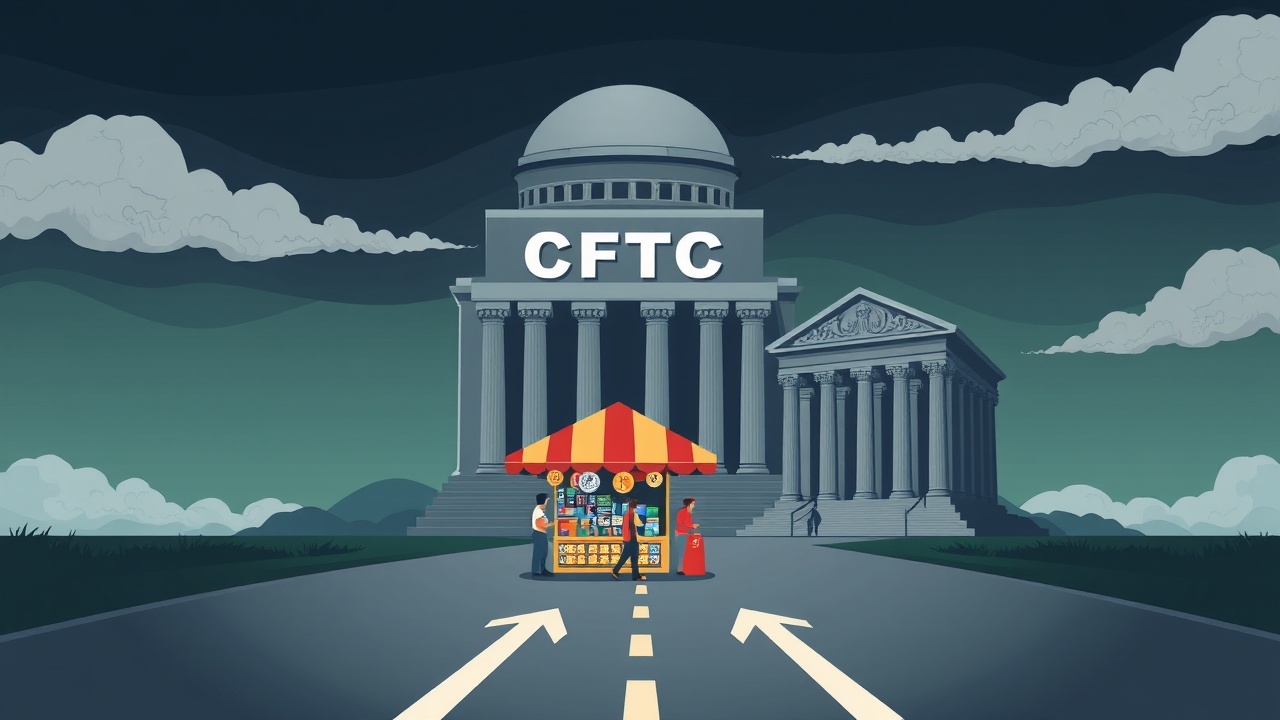
Concerns Over CFTC’s Cryptocurrency Regulation Proposal
Better Markets has raised concerns regarding the Commodity Futures Trading Commission’s (CFTC) proposal to regulate specific cryptocurrency exchanges and transactions, claiming that this approach may offer investors less protection compared to the Securities and Exchange Commission (SEC). The nonprofit organization, which advocates for financial reform, expressed skepticism about the CFTC’s ability to effectively oversee retail crypto transactions, asserting that the agency is not adequately equipped for the task.
CFTC’s Regulatory Framework
On Monday, the CFTC announced it was seeking feedback on a regulatory framework intended for margined, leveraged, or financed cryptocurrency trades, utilizing its existing authority. Benjamin Schiffrin, the director of securities policy for Better Markets, criticized this initiative, arguing that the CFTC’s lack of an investor protection mandate sets it apart from the SEC, which is primarily focused on safeguarding individual investors. He pointed out that the CFTC’s regulatory framework is traditionally designed for the commodity and derivatives markets, where retail traders have historically had minimal involvement.
“The CFTC is not the appropriate agency to oversee crypto asset transactions involving retail investors due to its existing rules, which do not offer the same protections that apply to SEC-regulated security trades.”
Regulatory Landscape and Conflicts of Interest
The critique from Better Markets emerges amid ongoing efforts by both the CFTC and SEC to formulate crypto regulations after the CLARITY Act did not progress in Congress. Both regulatory bodies have indicated a readiness to move forward without new legislative mandates. Better Markets also disputed the CFTC’s assertion that its authority was meant to cover retail crypto transactions, noting that the legal foundations cited were originally established to combat fraud in leveraged precious metals trading, not to position the agency as a primary regulator for cryptocurrencies.
Additionally, Schiffrin expressed concerns regarding potential conflicts of interest within the proposed framework, which he believes might echo the issues that led to the downfall of the FTX exchange. He further challenged the statements made by CFTC Chair Mike Selig about establishing the U.S. as a global hub for cryptocurrency, arguing that such a status is not inherently beneficial. He pointedly suggested that just as no one views the designation of the U.S. as the cocaine production capital favorably, acclaiming the U.S. as a crypto capital should also be critically examined.
“After nearly two decades, crypto has yet to demonstrate any substantial real-world utility, being predominantly associated with speculation and illicit activities.”
Industry Response and Future Directions
In response to these assertions, Nate Geraci, president of NovaDius Wealth Management, countered the claims, stating that the cryptocurrency industry is not against regulation; rather, it seeks clearer guidelines from Congress. If legislative clarity is not forthcoming, he suggested, the CFTC and SEC may be forced to create regulations independently.
As part of its new initiative, the CFTC is also contemplating a federal classification for crypto trading platforms, which would enable it to directly oversee qualifying exchanges. Meanwhile, the SEC is advancing its own agenda with several crypto-related measures, including proposals to simplify custody rules for investment advisors and facilitate limited trading of tokenized U.S. stocks, along with providing new guidance on the intersection of securities laws and cryptocurrency.