Bitcoin Mining Electricity Consumption Surge
In December 2025, the electricity consumption related to Bitcoin mining surged to approximately 190 terawatt-hours (TWh), marking a significant 38% rise from 138 TWh recorded in June 2024, according to preliminary findings presented by Alexander Neumueller from the Cambridge Centre for Alternative Finance at the Energy Investors Forum in Dallas. This data will be further elaborated upon in the upcoming second edition of Cambridge’s Digital Mining Industry Report, slated for release later in 2026.
Shift in Energy Sourcing
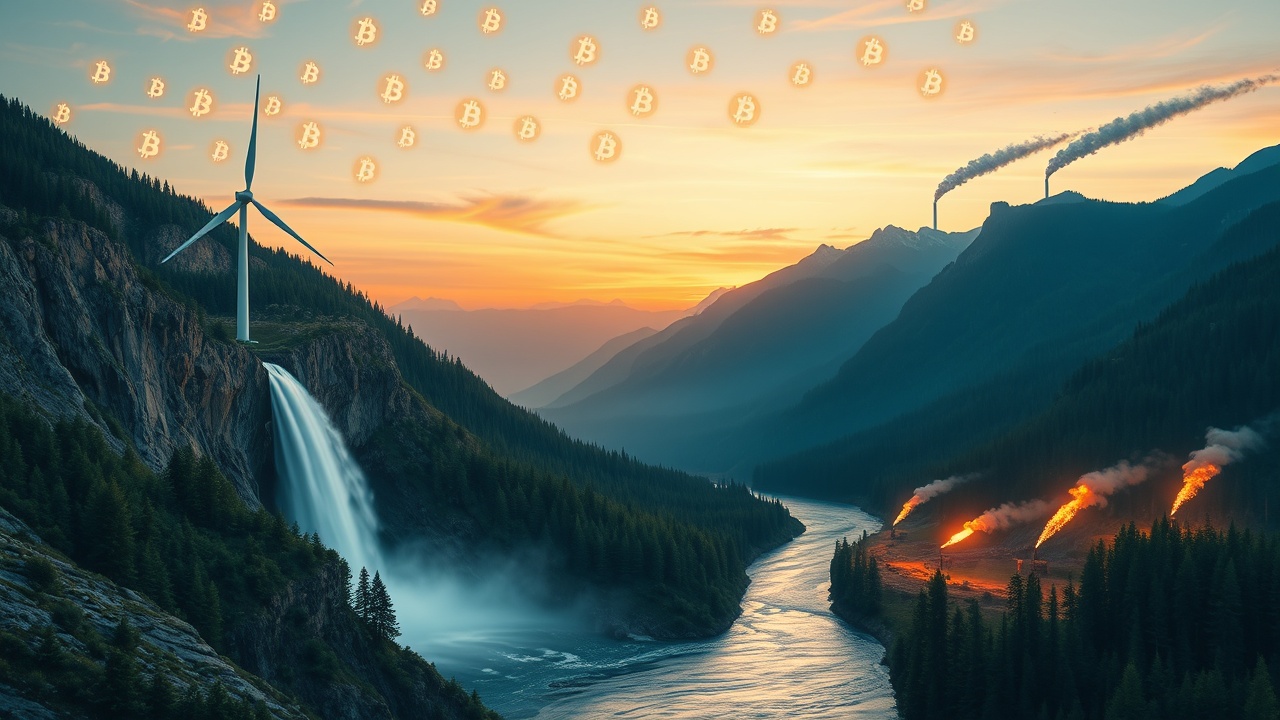
Notably, the research highlights a pivotal shift in energy sourcing for Bitcoin operations: hydropower has now eclipsed natural gas as the predominant source of electricity for mining, indicating a move towards more sustainable energy solutions. The proportion of mining activities powered by low-carbon sources has increased to 59.4%, up from 52.4% in the previous version of the report. Despite this progress in energy sourcing, the report also notes a 20% increase in total greenhouse gas emissions, which leaped from about 40 million to 48 million tonnes of carbon dioxide equivalent.
Energy Contributions and Emissions
In the context of these developments, natural gas remains a substantial contributor, providing 38.2% of the electricity for surveyed mining operations, while renewables accounted for 42.6% and nuclear energy contributed 9.8%. The reliance on coal has significantly diminished, plummeting to 8.9% from a stark 36.6% in the 2022 assessment.
Neumueller attributed the increased prominence of hydropower partly to improved survey participation from regions rich in hydroelectric resources, such as Ethiopia. The East African nation has ramped up its Bitcoin mining activities, leveraging affordable electricity generated by the Grand Ethiopian Renaissance Dam.
Annualized Electricity Demand and Emissions
The overall increase in Bitcoin’s annualized electricity demand signals a notable rise of 52 TWh between the two reported periods. It’s important to clarify that this annualized figure reflects predicted usage if mining levels remain constant at the December 2025 rate, rather than actual energy consumed within that calendar year.
Interestingly, emissions did not increase at the same pace as electricity consumption due to the heightened use of a greener energy mix. Yet, Cambridge’s reports reveal that while the low-carbon strategy has moderated emissions growth, it has not compensated for the overall increase in energy requirements.
Mining Machines and Computational Output
Furthermore, during this time frame, a surge in the number of mining machines operating on the network has contributed to the heightened total computational output. Although newer equipment boasts enhanced efficiency in performing calculations for each unit of energy consumed, the overall rise in mining power—a metric known as the hashrate—remains substantial.
The new estimates by Cambridge were primarily derived from responses of mining companies that collectively represent slightly over half of the global Bitcoin hashrate, providing a more expansive perspective than prior surveys. Yet, the final figures may still undergo modifications as further validations are performed.
Geographic Bias and Power Allocation Trends
The 2025 report also raised concerns regarding the potential bias in geographic estimates, primarily because U.S. companies composed a significant proportion of respondents, potentially inflating the reported share of U.S. mining activity.
Additionally, the report explored trends in power allocation, specifically whether Bitcoin miners are beginning to divert their electricity supply towards artificial intelligence (AI) and high-performance computing (HPC). Approximately 10% of respondents indicated they have already begun allocating power to these sectors, while over 40% expressed interest in pursuing this path. However, Neumueller warns that an intention to explore does not equate to a commitment to invest, pointing out that AI infrastructures require robust networks and reliability systems, which many standard Bitcoin mining locations may lack.
Future Outlook and Financial Performance
Despite these challenges, nearly 90% of miners surveyed anticipate that the crossover into AI and HPC applications will expand in the coming years. According to crypto.news, mining firms have currently announced over $70 billion in contracts for AI and HPC endeavors, indicating their desire to diversify revenue streams beyond traditional Bitcoin mining.
This evolving landscape is already reflected in some companies’ financial performance. TeraWulf, for instance, reported $21 million from HPC services, surpassing the revenue generated from Bitcoin mining, which was less than $13 million during the first quarter of 2026.
The findings from Cambridge illustrate a dual trend: while Bitcoin mining’s energy demands are escalating, there is a concurrent shift towards hydropower and other low-carbon energy solutions gaining a more significant share. As mining companies explore the potential for AI services, Cambridge anticipates that the full report will delve deeper into the energy mix and methodological approach later in 2026.