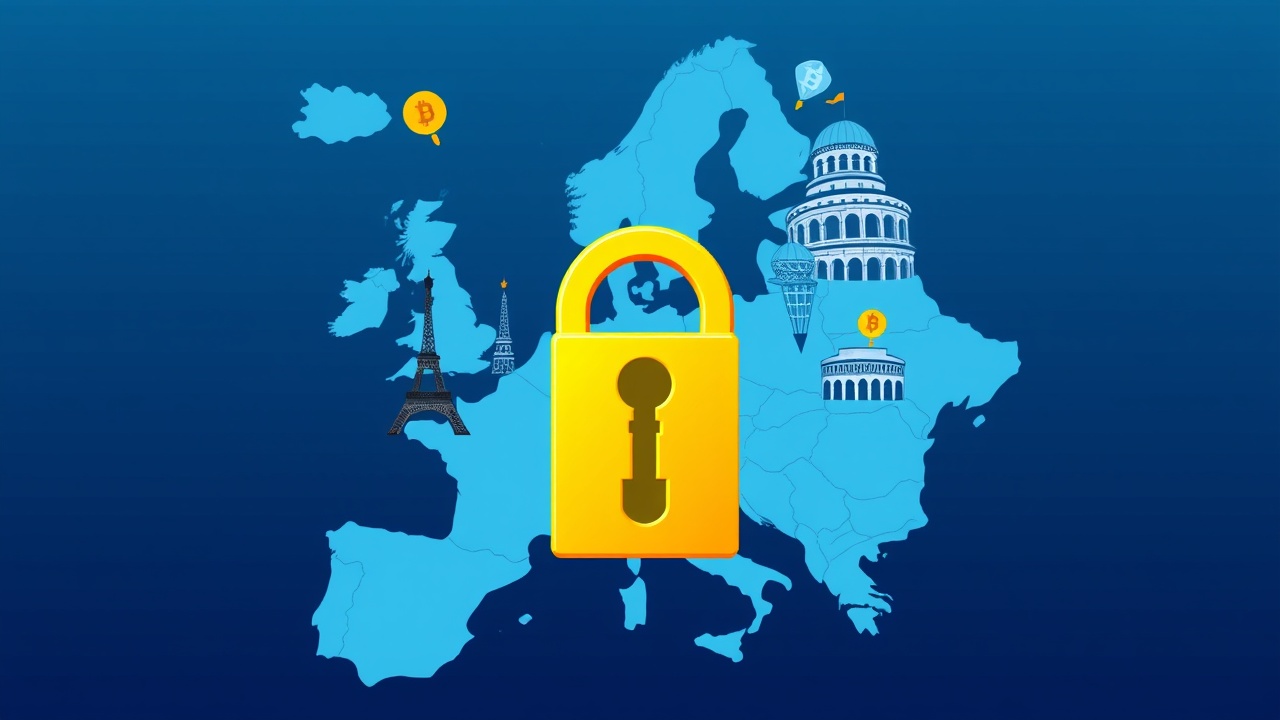
BitPay Achieves MiCA Authorization
BitPay, a leading provider of crypto payment solutions, has achieved a significant milestone by obtaining authorization under the European Union’s Markets in Crypto-Assets (MiCA) regulatory framework. This approval allows BitPay B.V., its Dutch subsidiary, to offer regulated digital asset services throughout the EU, thanks to a designation as a crypto-asset service provider (CASP) from the Dutch Authority for the Financial Markets (AFM).
Expanded Services Across the EU
The authorization positions BitPay to deliver a variety of services across EU member nations, utilizing MiCA’s passporting provisions. With this new license, BitPay can:
- Facilitate cryptocurrency payment acceptance
- Enable transactions using stablecoins
- Offer cross-border payment solutions specifically tailored for businesses
Additionally, consumers will benefit from enhanced tools designed for managing and spending digital assets, while affiliated platforms will be empowered to buy, sell, and trade cryptocurrencies.
Commitment to Compliance
Thom de Jong, the Chief Compliance Officer for Europe at BitPay, emphasized that this regulatory approval bolsters the firm’s commitment to compliance and enables it to better serve both businesses and consumers across Europe.
De Jong highlighted the significance of MiCA in fostering a standardized regulatory environment that encourages innovation in the digital asset sector.
Industry Landscape and Challenges
Following the EU’s July 1 deadline for crypto-asset service providers to conform to MiCA regulations, BitPay becomes one of several companies to secure such authorization. Notably, Ripple also achieved full CASP status from Luxembourg’s financial authority, while Coinbase has chosen Luxembourg as its regulatory hub, gaining rights to operate across all 27 EU member states, as well as in Iceland, Liechtenstein, and Norway.
However, not all firms managed to complete the licensing process on time. Reports reveal that Binance withdrew its license application in Greece and restricted its offerings in various European markets after the transition phase came to a close. Observers have noted a shift in customers increasingly gravitating towards licensed platforms, resulting in new compliance hurdles.
Bruna Szego, who chairs the EU Authority for Anti-Money Laundering and Countering the Financing of Terrorism (AMLA), voiced concerns regarding firms needing to uphold rigorous anti-money laundering practices while onboarding a growing number of clients.
Future Outlook for BitPay
From its operational base in Amsterdam, BitPay aims to meet the rising demand for regulated digital asset transactions among merchants, partners, and consumers alike. Jonathan Arler, Head of Europe at BitPay, remarked on the crucial role Europe plays in shaping the future landscape of payments, asserting that the company is now ideally positioned to enable various stakeholders to accept, transfer, manage, and utilize digital assets effectively.
The authorization under MiCA marks an important advancement in BitPay’s European strategy, complementing its existing global regulatory presence, which consists of money transmitter licenses and various approvals in multiple regions. The firm also intends to invest further in its regional infrastructure and strategic alliances in order to broaden its regulated cryptocurrency payment capabilities across the European Union.
Conclusion
Founded in 2011, BitPay continues to push the envelope in the burgeoning field of digital payments. As cryptocurrency transactions, stablecoin operations, and consumer finance applications gain traction, the company is well-equipped to adapt to the evolving demands of the market.