Bank of Montreal’s Revolutionary Move
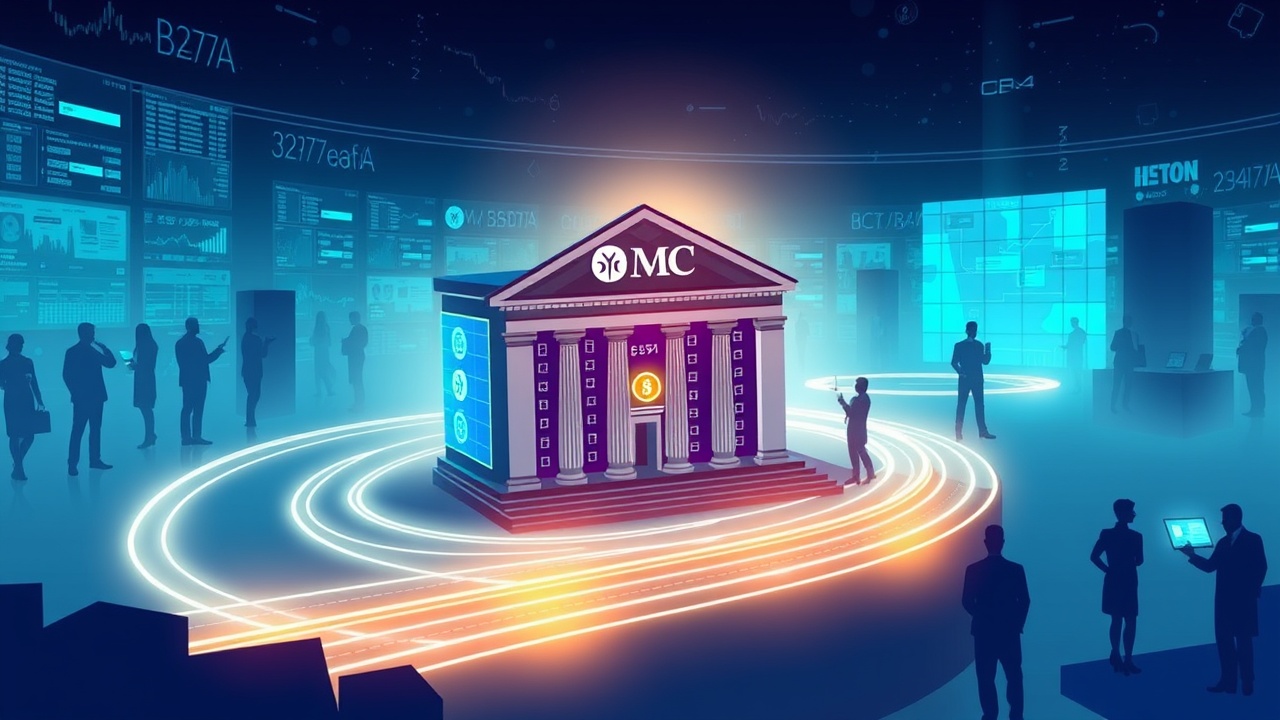
In a landmark move, the Bank of Montreal (BMO) is set to revolutionize financial transactions by enabling its clients to utilize tokenized cash and deposits on the CME and the Google Cloud’s Universal Ledger. This announcement was made on March 24, positioning BMO as a pioneer in offering a tokenized cash solution created by CME Group through the Google Cloud’s secure, private distributed ledger designed for the financial sector.
Innovative Platform Features
This innovative platform will allow institutional clients of BMO to convert U.S. dollars into tokenized forms which can be utilized for margin calls, collateral management, and derivatives trading, all of which can happen continuously around the clock, overcoming the limitations posed by traditional banking systems.
BMO is introducing two key functionalities with this initiative:
- Tokenized Cash: This will cater to mutual clients involved in capital markets and commercial banking, with plans to extend this service to regulated financial services entities in the latter half of 2026, pending regulatory approvals.
- Tokenized Deposits: This more expansive feature aims to provide traditional commercial banking funds in a digital format, allowing for versatile B2B transactions, treasury processes, and programmable payment systems.
Collectively, these offerings are designed to enhance the accessibility and functionality of dollar-denominated liquidity for various institutional and commercial applications.
Technological Backbone
The Google Cloud Universal Ledger (GCUL) serves as the technological backbone of this platform. CME Group and Google Cloud have been testing this programmable distributed ledger since March 2025, targeting 2026 for broader service rollouts. With BMO’s involvement, it marks the first operational use of this framework in an institutional setting.
Strategic Alignment and Regulatory Efforts
BMO’s entry into this realm comes at a critical moment, as the CME has indicated its interest in tokenized collateral structures. In a previous earnings call in February 2026, CME CEO Terry Duffy expressed a keen interest in working with reputable financial institutions for these developments.
“If you were to give me a token from a systemically important financial institution, I would probably be more comfortable than maybe a third or fourth-tier bank trying to issue a token for margin,”
he noted, highlighting BMO’s strategic alignment with CME’s objectives.
Moreover, BMO’s initiative coincides with the ongoing regulatory efforts to integrate tokenized assets into derivative markets. The Commodity Futures Trading Commission (CFTC) initiated a pilot program in December 2025 allowing qualified futures firms to accept cryptocurrencies such as Bitcoin and Ethereum, along with tokenized real-world assets, as valid collateral. This move has been positively received by industry leaders who see it as a move toward more efficient and secure settlement processes. BMO’s tokenized cash initiative aligns perfectly within this developing regulatory framework, fostering seamless operational capabilities that match the needs and expectations of today’s financial markets.