Transformation of Banking in France
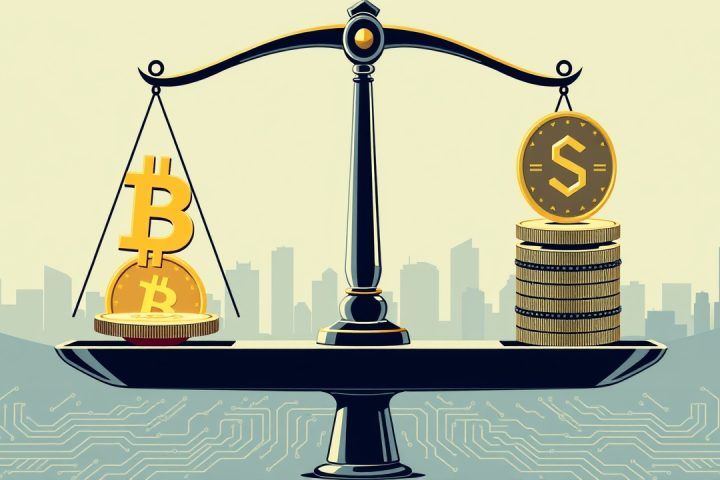
The landscape of banking in France is undergoing a significant transformation as BPCE, one of the country’s major financial groups, begins to allow direct cryptocurrency transactions for selected retail clients. By enabling customers to purchase Bitcoin, Ether, Solana, and USDC, BPCE is taking a noteworthy step towards integrating traditional finance with the burgeoning digital asset market.
Service Rollout and Future Plans
This new offering is being rolled out through four of its regional banks, namely Banque Populaire Île-de-France and Caisse d’Épargne Provence-Alpes-Côte d’Azur, which combined serve nearly two million customers. BPCE has ambitious plans to extend this service to its other branches by 2026. However, bank officials have expressed their intention to first evaluate how the initial launch performs before pursuing a rapid expansion.
Transaction Details
Users will be able to engage in cryptocurrency transactions via mobile applications provided by Caisse d’Épargne and Banque Populaire, where each customer must establish a specific digital asset account. Maintaining this account incurs a monthly fee of €2.99, and every transaction is subject to a 1.5% commission, with a baseline fee of €1. All cryptocurrency management will be handled by Hexarq, BPCE’s dedicated cryptocurrency subsidiary.
Market Context and Competition
The move comes at a time when European banks are increasingly recognizing the need to enhance digital asset services to meet the growing demand from consumers who prefer regulated and secure access to cryptocurrency. The rise of fintech firms, such as Revolut and Trade Republic, which have already gained large user bases in the crypto sector, has put considerable pressure on traditional banking institutions to adapt.
Several banks across Europe have already begun to diversify their offerings. For instance, BBVA has enabled its Spanish clients to trade Bitcoin and Ether via its mobile application, while Santander’s digital branch, Openbank, recently added a range of cryptocurrencies including Litecoin and Cardano, along with features to facilitate trading and custody.
Future Outlook
BPCE believes that by incorporating digital assets into their services, they can enhance customer retention during a period of rapid fintech evolution. The bank anticipates continued growth in client interest as it provides an easy entry point for individuals eager to navigate the cryptocurrency space using platforms they trust. The careful rollout of this service allows BPCE to gather essential user data and make necessary adjustments, all while preparing for an anticipated increase in demand as regulatory frameworks for digital assets evolve in Europe.
This initiative is emblematic of a broader shift in the European banking sector, which is moving toward granting customers access to digital assets through traditional banking channels rather than through external platforms. BPCE aims to establish itself as a dependable and convenient option for everyday investors looking to explore the realm of cryptocurrencies.