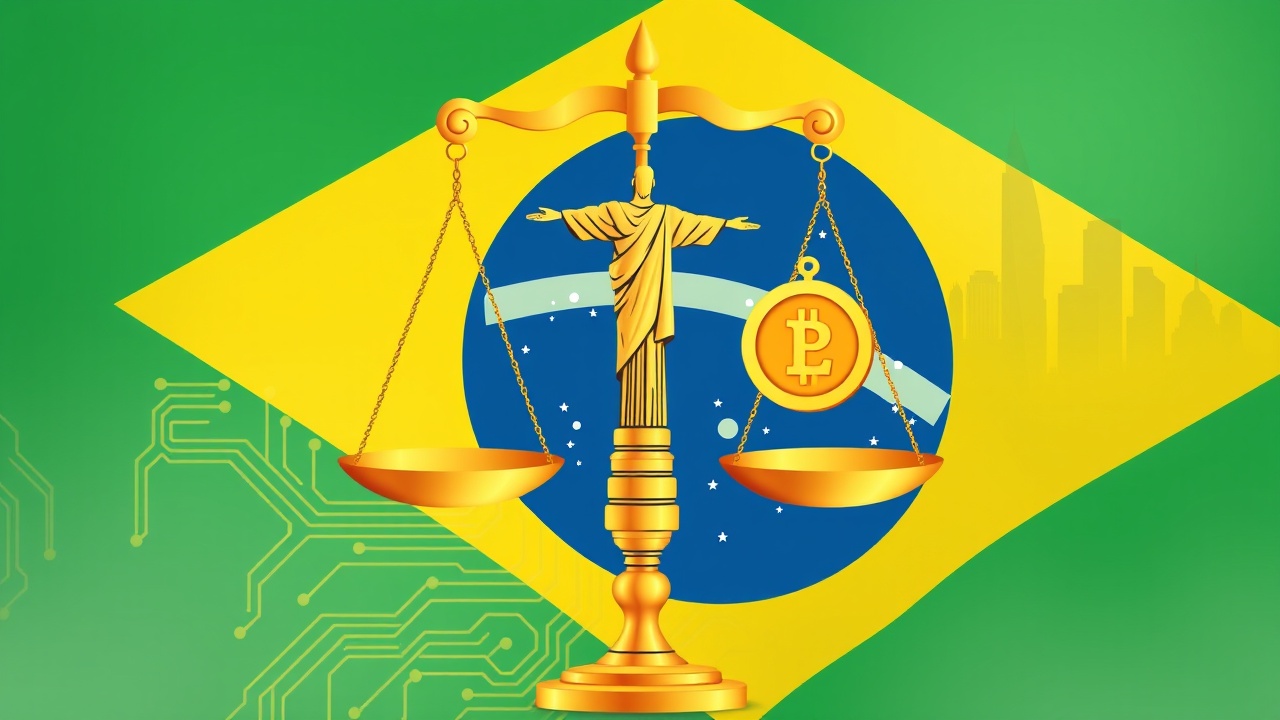
Brazil’s Regulatory Shift on Cryptocurrency Transactions
In a significant regulatory shift, Brazil is contemplating the implementation of a tax on cryptocurrencies utilized for international transactions. This initiative is aligned with the country’s adoption of a global framework for reporting cryptocurrency transactions, specifically the Crypto-Asset Reporting Framework (CARF).
According to a report from Reuters published on Tuesday, sources familiar with internal discussions indicate that Brazil’s finance ministry is considering an expansion of the Imposto sobre Operações Financeiras (IOF) tax to encompass certain cross-border dealings involving digital assets.
Current Taxation Status
As of now, transactions involving cryptocurrencies are exempt from the IOF tax, although capital gains from these assets are subject to a flat tax rate of 17.5%. The IOF is a federal tax applicable to various financial transactions, particularly those related to foreign exchange, credit, and securities.
The proposed tax on crypto transactions aims to close what is seen as a regulatory loophole, as cryptocurrencies, particularly stablecoins, are increasingly being used for transactions that traditionally would be taxed through conventional means. The two anonymous sources mentioned by Reuters noted that this proposed legislative change could serve to enhance public revenue while ensuring that the use of stablecoins does not lead to a discrepancy in regulatory standards compared to the standard foreign exchange market.
Alignment with International Standards
On November 14, Brazil’s Federal Revenue Service outlined plans to synchronize its cryptocurrency reporting guidelines with international standards, effectively gaining access to information about citizens’ foreign crypto accounts through the Organisation for Economic Co-operation and Development (OECD)’s established reporting mechanisms. This decision aligns with Brazil’s endorsement of CARF made in late 2023.
Global Context and Similar Actions
This step comes amid similar actions from other countries, including the United States, where the White House is presently evaluating the Internal Revenue Service’s initiative to participate in CARF. The European Union‘s Council of Finance Ministers is also reportedly working towards similar alignment. In a related movement, the United Arab Emirates announced its agreement to join the data-sharing initiative in late September.
Strengthening Regulatory Framework
In light of these developments, Brazil is reinforcing its regulatory framework, which recently included rules from the central bank designating certain stablecoin and cryptocurrency wallet operations as equivalent to foreign exchange transactions. These new regulations are designed to enhance consumer protection, improve transparency, and deter money laundering activities among crypto exchanges and intermediaries.
The Brazilian judiciary had previously empowered judges to seize cryptocurrency assets from individuals unable to meet their debts, further tightening the grip on how digital currencies are handled within the country. The Superior Court of Justice stressed that while cryptocurrencies are not considered legal tender, they remain viable for transactions and value storage, thereby necessitating regulatory scrutiny.