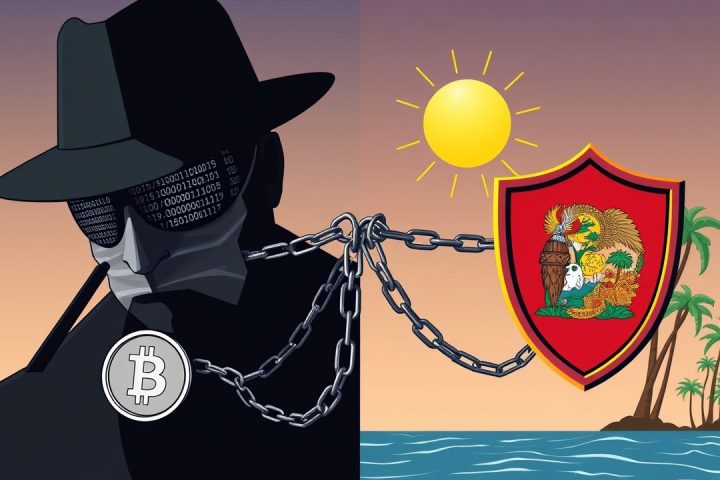
Investigation Findings
A recent investigation conducted by the Cato Institute has revealed that a significant portion of debanking incidents across the United States is linked to government influence, directly or indirectly, rather than to decisions made independently by banks themselves. The report highlights that firms in the cryptocurrency sector are particularly vulnerable, as regulatory bodies appear to leverage their authority to deter banks from engaging with these businesses. This contradicts the prevailing beliefs that attribute closures of accounts chiefly to biases grounded in political or religious beliefs.
Types of Debanking
The comprehensive analysis distinguishes three types of debanking:
- Political or religious closures: occur when institutions sever ties due to clients’ beliefs.
- Operational closures: primarily business-related.
- Government-induced debanking: where state actors exert pressure on banks to cut off certain clients.
Evidence of Government Influence
Evidence from public records shows that officials have repeatedly intervened in banking operations to manipulate how financial entities handle their relationships with customers, often through both overt and covert means. Specifically, the research denotes that cryptocurrency firms have struggled significantly to secure banking services, suggesting a pattern in regulatory tactics that lean towards informal coercion rather than outright bans.
Manifestations of Government-Induced Debanking
According to the report, government-induced debanking manifests in two primary ways:
- Through direct actions like court orders or formal correspondence that instruct banks to close accounts.
- Through indirect means, such as legislation that complicates banking for certain clients, rendering them too risky to serve.
Notable Examples
A notable example cited in the report includes actions taken by the Federal Deposit Insurance Corporation (FDIC), which has prompted banks to halt crypto-related operations without giving explicit timelines, leading to account closures without clear rationale.
Industry Reactions
JPMorgan Chase’s CEO, Jamie Dimon, mentioned in December that while the bank does not terminate accounts based on political or religious affiliations, he admitted that pressures from both major political parties have had an impact on banking operations.
This statement coincides with allegations from Jack Mallers, CEO of Strike, who claimed his accounts were abruptly closed by the bank without justification. Similar experiences were reported by other industry leaders like those at ShapeShift.
Call for Legislative Reform
The document notes that while actions taken during President Trump’s administration and changes in leadership at regulatory agencies have begun to address some of the underlying issues, they have not provided a comprehensive solution. The Cato Institute emphasizes that legislative reform is essential, urging Congress to adjust the Bank Secrecy Act and eliminate the regulatory landscape that imposes reputational risks on banks, as well as to abolish confidentiality protocols that obscure governmental pressures from public awareness.
The consensus among the report’s authors is that Congressional initiatives are critical to dismantling the mechanisms that enable government agencies to influence the banking sector’s decision-making operations.