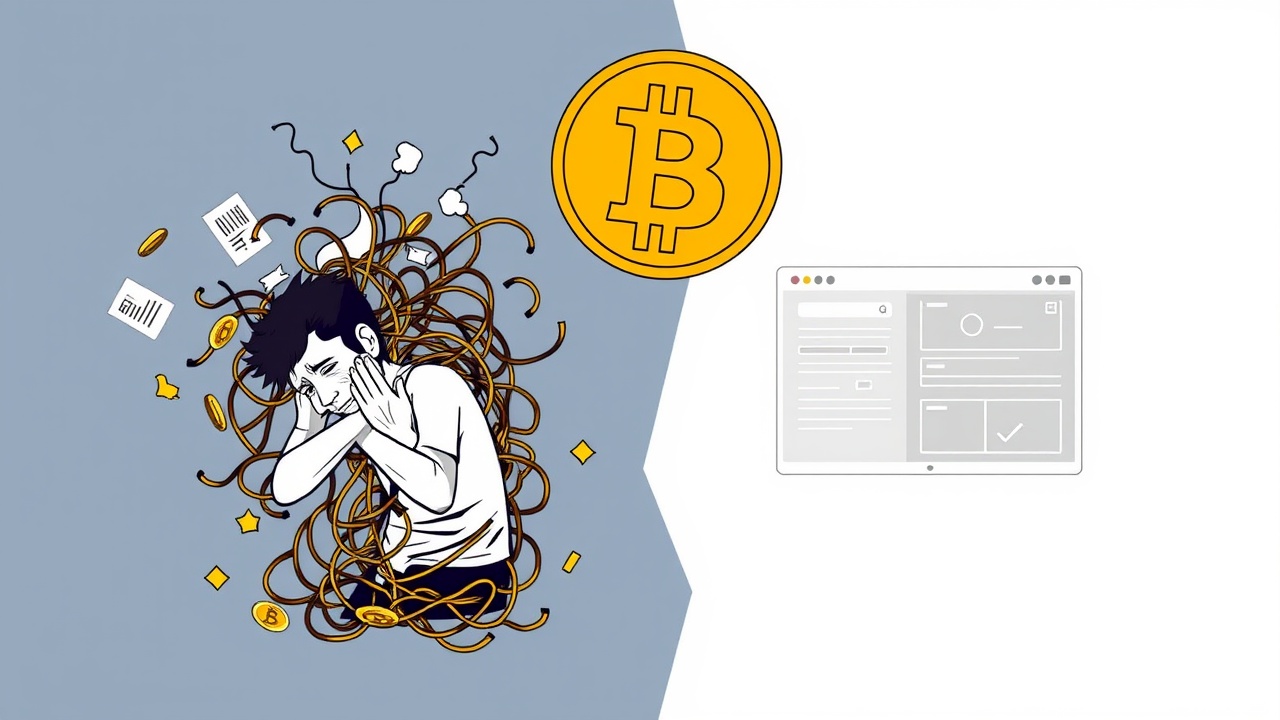
Bitcoin Self-Custody and Usability Challenges
The ongoing conversation around Bitcoin self-custody took a notable turn on July 31, fueled by Bitcoin Archive’s assertion that the subpar usability of Bitcoin wallets is often cloaked in cultural elitism instead of being recognized as an obstacle to wider adoption. The account called out a significant faction of Bitcoin purists, claiming they are indifferent to mainstream adoption and perpetuate a culture that views the complexities surrounding self-custody as a positive attribute, rather than a hindrance to new users.
The post did not name specific individuals or organizations nor provided empirical evidence for its assertions, which positions it more as a viewpoint than a fact-based analysis of the Bitcoin ecosystem.
Critiques of the user experience surrounding self-custody have surfaced previously, spotlighting how many advocates for Bitcoin do not consider the various challenges faced by newcomers.
Empowerment and Responsibility of Self-Custody
Self-custody empowers Bitcoin holders by allowing them full control over their private keys, thus eliminating reliance on exchanges or custodians. However, this autonomy comes at a cost—users are now solely responsible for aspects such as recovery, backups, and verifying transactions. Losing a backup or having a recovery phrase compromised can lead to irreversible asset loss.
Bitcoin Core’s documentation cautions that forgotten passphrases are unrecoverable and stresses the importance of maintaining reliable backups free from malware, indicating that challenges with usability have been an ongoing issue.
Debate on Complexity and Gatekeeping
Bitcoin Archive’s commentary delves into the argument that the inherent complexities of self-custody are purposefully sustained to act as a form of gatekeeping, sparking a debate that lacks definitive evidence to back it up.
Research conducted by Carnegie Mellon University highlighted that many users struggle to recognize crucial wallet concepts, with only 43% of participants correctly identifying a seed phrase image. Some even mistakenly believed it was possible to reset a lost phrase. Such findings reveal the prevalent weak understanding that can lead to exposure to scams or accidental loss of funds.
Wallet Options and User Preferences
A separate study from the CHI examined the different wallet options sought by crypto users, finding choices vary based on personal usage, experience levels, and perceived risks. Many users favored hardware or smart-contract wallets for larger transactions, indicating a desire to balance usability with security considerations.
In 2026, a paper published in Scientific Reports pointed out that the inadequacy in recovery options presents a significant ongoing issue for self-custody holders. Meanwhile, the Bitcoin Design guide advises on improving user experience through clear instructions and regular backup validation, rather than presuming that all users have prior knowledge of effective key management.
Innovative Wallet Solutions
Currently, several wallet solutions aim to enhance the recovery process while maintaining a degree of user control. For instance, Bitkey has developed a two-of-three key recovery system integrating an app key, a hardware key, and a server key, allowing any two of them to perform transactions, while their server key alone cannot execute fund transfers. Ledger offers a variety of methods, including a Recovery Key safeguarded by a PIN and the Ledger Recover subscription, which encrypts and disperses backup data across three separate service providers for enhanced security.
Proton Wallet takes a different route, facilitating transactions via email while still using a traditional seed phrase. Each of these approaches carries its own set of privacy, availability, and reliability considerations. However, the need for a secure wallet setup alongside thorough user education remains evident.
Risks and Future Directions
Recent reports from crypto news sources have also drawn attention to vulnerabilities linked to poor randomness in wallet creation across various blockchains, as well as phishing attacks that exploit Ledger and Trezor users’ trust, emphasizing that merely enhancing usability does not eliminate the risks of randomness or social engineering.
While self-custody mitigates the risk of exchanges freezing withdrawals or mismanaging assets, it does not relieve users from facing phishing attempts, hardware vulnerabilities, data loss, or issues surrounding asset inheritance. The landscape moving forward will hinge on verifiable product developments rather than opinions shared on social media.
Wallet creators are encouraged to publish audits, conduct recovery tests with users lacking technical expertise, improve interoperability in backups, and track failure rates. Bitcoin Archive’s critique of the Bitcoin maximalist culture is subjective, but the usability hurdles facing the platform are well-documented and actively addressed by various stakeholders.