Introduction
In a notable development in the realm of sports marketing, Chelsea FC has entered into a partnership with Circle, making it the first organization in the cryptocurrency sector to secure a shirt sponsorship deal in the Premier League. This agreement was finalized just three months after the UK’s Financial Conduct Authority (FCA) cautioned Premier League clubs against engaging with potentially untrustworthy crypto sponsors. While Circle is not perceived as problematic in the same vein, the stablecoin that features prominently on the team’s uniforms, USDC, operates within a regulatory gray area that will not be clarified until 2027.
Match Day and Global Exposure
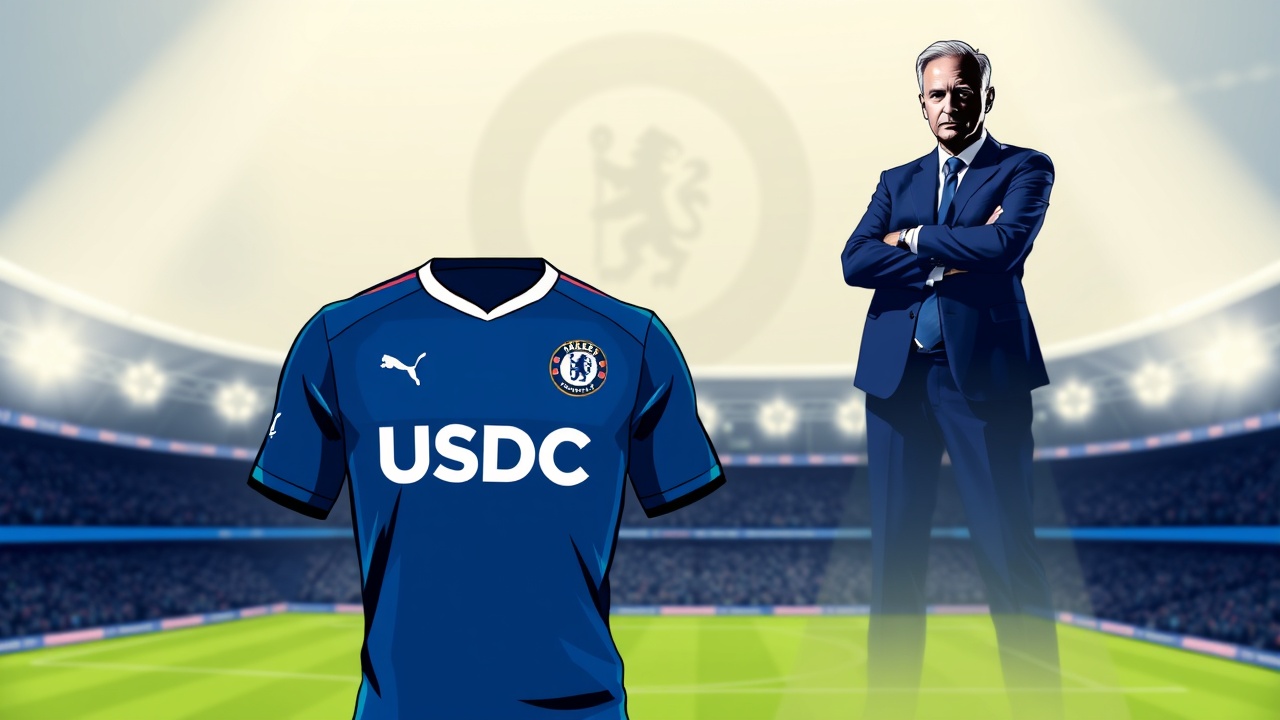
On August 31, 2026, during a match at Stamford Bridge witnessed by around 40,000 fans, Chelsea’s players took to the field showcasing the “USDC by CIRCLE” branding on their shirts, an event that reached millions of viewers globally. This notable exposure came shortly after the FCA issued a stern warning letter to every Premier League club regarding the risks associated with crypto sponsorships, explicitly using terms like “dodgy” to describe potential partners.
Circle’s Reputation and Regulatory Challenges
On the surface, Circle projects a solid reputation: it is publicly traded on the New York Stock Exchange and is fully licensed across several continents. Still, the nature of USDC embodies a distinct regulatory loophole that UK law has yet to address. Such a situation reflects a significant aspect of the current landscape of crypto regulation.
Chelsea FC’s Sponsorship History
Chelsea FC found itself without a shirt sponsor at the outset of the season for four consecutive years, an unusual predicament for a club of its stature. Historical sponsorships include previous partnerships with Samsung, Yokohama Tyres, and Three, each lucrative but disrupted by the club’s tumultuous transition post-Roman Abramovich’s sanctions and subsequent ownership change in 2022. This instability forced Chelsea to explore options that did not match the high-value contracts of the past, leading them to seek a reliable sponsor—making the 33 million pounds or more offered by Circle an attractive solution.
Challenges in Securing a Sponsor
During the search for a Principal Partner, Chelsea’s commercial team reached out to traditional industries, but many potential sponsors hesitated due to the club’s recent issues and the uncertainty surrounding crypto volatility. Circle emerged as the partnership that could swiftly provide financial support while being vetted through compliance checks, making the deal both timely and mutually advantageous.
FCA’s Guidance and Market Context
The FCA’s guidance underlined that clubs should not allow unauthorized entities to leverage fan loyalty, a stark reminder given the backdrop of significant crypto failures, including the collapse of FTX, which left a lasting impact on the industry’s reputation.
Circle’s Regulatory Framework
Circle stands apart from its crypto contemporaries by possessing a robust regulatory framework. It became the UK’s first licensed virtual currency operation in 2016 and received FCA authorization as an Electronic Money Institution in 2018, making it both compliant and credible. The FCA’s scrutiny and letters dissecting ‘unauthorized’ firms have increased the difficulty for other crypto entities to secure sports sponsorships, as demonstrated by the unsuccessful sponsorship attempts from firms like Binance.
Complexity of USDC
The nature of USDC itself, however, adds complexity to this sponsorship: while Circle is authorized, the stablecoin product marketed on Chelsea’s kits does not fall under UK regulations for financial instruments. Although the FCA’s anticipated regulatory framework set to launch in October 2027 suggests that Circle may eventually need specific authorization for USDC, it currently retains the freedom to promote it during a pivotal transitional period.
Conclusion
This unique confluence of regulatory authorization, profit-driven models, and strategic timing allowed Circle to secure its place as a font of trust in an evolving market that has seen many crypto ventures stumble. With Chelsea’s reach into millions of households, Circle’s presence on the club’s shirts signifies a critical intersection of sports and finance that highlights a major shift in the cryptocurrency landscape: stablecoins have begun to secure their market position, overshadowing many volatile alternatives and evolving into consumer-centric financial instruments.
As a well-capitalized, publicly traded entity, Circle’s financial health offers stability in contrast to other recent crypto sponsorship deals, which have often been hampered by financial turmoil or regulatory hurdles. This partnership not only provides Circle with global visibility but also reinforces the increasingly mainstream acceptance of stablecoins in the financial arena.