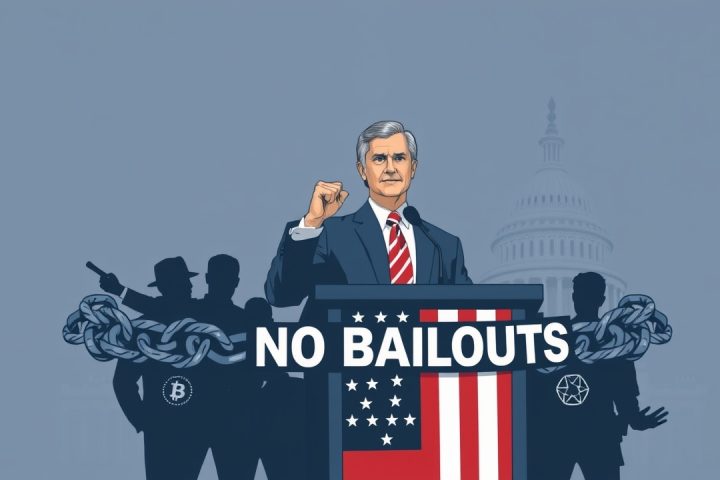
Coinbase Criticizes U.S. Banking Institutions
Coinbase, a prominent cryptocurrency exchange, has criticized U.S. banking institutions for their push to dissuade regulators from permitting customer incentives such as cashback, merchant rewards, and discounts tied to stablecoin transactions. The company’s chief policy officer, Faryar Shirzad, labeled this lobbying effort as “unamerican,” arguing that it undermines consumer freedom regarding their financial choices.
Contention Over the GENIUS Act
The contention arises from the language of the GENIUS Act, which specifically forbids stablecoin issuers from providing interest or yield to token holders. However, the legal text does not seem to restrict actions taken by crypto exchanges or related businesses offering such incentives. Banks are concerned about what they perceive as an “indirect interest” when these third-party entities gain economically by partnering with stablecoin issuers.
Regulatory Concerns and Consumer Freedom
In a statement on social media platform X, Shirzad urged regulatory bodies to adhere to the existing statutory framework. He expressed disapproval of the banking sector’s endeavor to influence how consumers handle their stablecoin assets post-issuance. “There is a troubling aspect to banking lobbyists seeking to dictate how stablecoin users can interact with their funds,” he remarked.
Impact on Traditional Banking
The financial institutions’ worries largely stem from the potential for yield-generating stablecoins to disrupt the conventional banking model, which relies on attracting deposits through high-interest savings to support loan-making activities. The U.S. Treasury Department estimated that the broad adoption of stablecoins could trigger more than $6.6 trillion in withdrawals from traditional banks by 2024.
Benefits of Stablecoins for Merchants
Furthermore, Coinbase contended that stablecoins could dramatically reduce the significant card fees—amounting to over $180 billion—that U.S. merchants encountered in 2024. Shirzad pointed out that the opposition from major banks stifles innovation in the stablecoin sector, ultimately disadvantaging consumers and merchants alike. He argued that if third-party benefits are restricted, confidence in stablecoins as a feasible payment method will diminish, leading to continued high transaction costs for retailers.
Conclusion
Coinbase and similar exchanges benefit from increased trading activity associated with stablecoins, generating revenue from transaction fees. Many exchanges, including Coinbase, offer credit cards that provide users with cashback and crypto rewards, initiatives which Shirzad believes are now jeopardized but maintains hope that reasonable judgment will ultimately prevail in the regulatory landscape.