Introduction
In the world of digital finance, generating passive income through cryptocurrency isn’t solely dependent on active trading. Among the leading strategies are staking and mining, both of which contribute to the security and transaction verification of blockchain networks, albeit in distinct ways. This article delves into the particulars of each method, examining their mechanisms, differences, profitability factors, and suitability for various types of cryptocurrency enthusiasts.
Mining
Mining, which is the earliest technique for earning cryptocurrency rewards, operates on the Proof-of-Work (PoW) consensus mechanism. This method is foundational to Bitcoin and several other initial cryptocurrencies that validate transactions and add blocks to the blockchain. Miners utilize specialized hardware—such as Application-Specific Integrated Circuits (ASICs) or powerful graphics processing units (GPUs)—to compete in solving intricate cryptographic puzzles. The miner who successfully solves this puzzle first is allowed to add the respective block to the blockchain, reaping a reward in the form of newly created coins plus transaction fees.
However, mining comes with significant operational demands including extensive computational capacity, high energy consumption, and the need for cooling systems. Some defining characteristics of mining encompass its reliance on hardware intensity and energy usage, the competitive nature of rewards where only successful miners benefit, and the establishment of mining farms or pools where resources are shared among participants. This energy-intensive process secures the blockchain by amplifying the computational cost of any potential manipulation, though it is often met with criticism for its environmental footprint.
Staking
Conversely, staking is rooted in the Proof-of-Stake (PoS) consensus mechanism, which has gained traction among newer blockchains like Ethereum 2.0, Cardano, and Solana. In staking, users assist in transaction validation by locking their cryptocurrencies in the network as a stake, rather than solving puzzles with hardware. Upon staking, the network randomly selects validators based on the weight of their stake and their historical performance to confirm new blocks, with these validators receiving rewards proportional to their stake and time of participation.
Staking stands out for its lower entry barriers, often requiring only the holding and locking of cryptocurrency. It is both energy-efficient and user-friendly, making it accessible even to novice participants. The returns from staking are typically described as an annual percentage yield (APY) and can be influenced by the network’s design and token value fluctuations.
Profitability Comparison
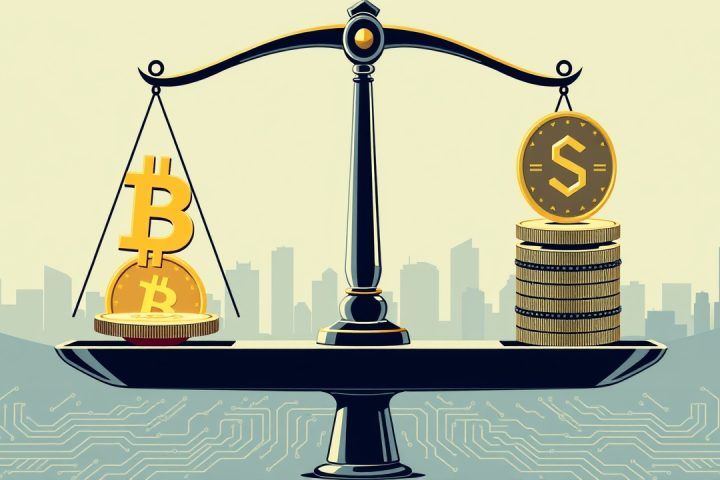
Determining the profitability of mining versus staking is complex and can vary based on several factors, such as network reward rates, cryptocurrency prices, electricity expenses, and hardware investments. Mining has the potential for substantial rewards, particularly if participants optimize their hardware and energy usage; however, profit margins can narrow due to rising network complexities and energy costs, often resulting in long return-on-investment (ROI) periods. In contrast, staking provides users with a more predictable form of passive income while minimizing upfront and ongoing costs, although it remains vulnerable to volatility in crypto prices.
Suitability for Participants
For individuals engaged in the crypto community, staking presents consistent earnings without the intricate setup and resource requirements associated with mining. Mining is typically suited for seasoned users willing to navigate the complexities of hardware management or collaborative mining pools. On the other hand, staking caters to newcomers due to its simplicity, with many platforms offering streamlined staking interfaces.
Financial Commitment and Risks
A notable difference between the two is the financial commitment involved. Mining necessitates significant initial investment in equipment, while staking primarily requires ownership of the cryptocurrency itself. Additionally, mining’s energy demands often face regulatory scrutiny, while staking is considered a more eco-friendly alternative. Each method carries its own set of risks; miners must contend with hardware malfunctions, surges in electricity costs, and increasing network difficulties, whereas stakers face challenges like token depreciation and potential slashing penalties for improper validation.
Conclusion
Certain networks exclusively support either mining or staking—Bitcoin relies solely on mining, while newer ecosystems like Solana utilize staking. Ultimately, the choice between staking and mining hinges on one’s financial goals, resource availability, risk tolerance, and preferred blockchain platforms. For beginners, staking offers a straightforward, low-cost entry into the crypto world, whereas mining might appeal to those willing to invest in higher potential rewards despite its increased complexity and expenses.