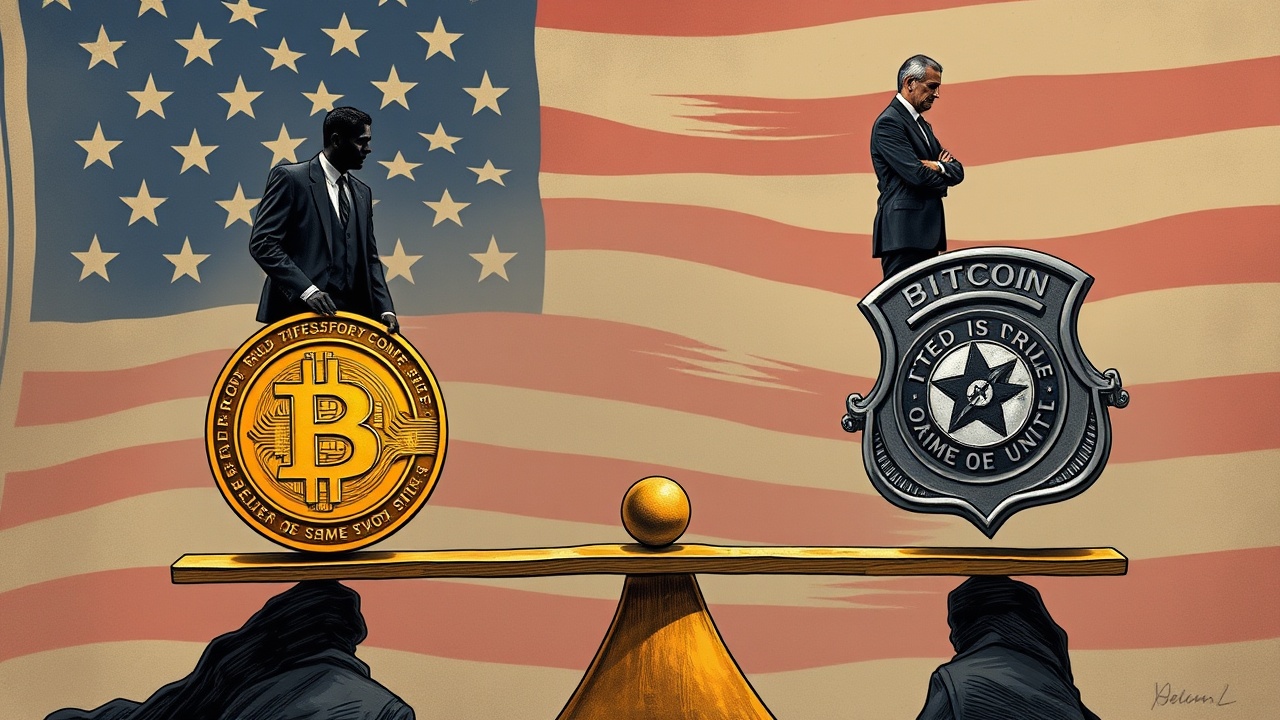
Controversy Surrounding Deputy Attorney General Todd Blanche
A recent controversy involving the Department of Justice (DOJ) has emerged, centering on Deputy Attorney General Todd Blanche and his substantial cryptocurrency holdings. This situation came to light when six Democratic senators publicly criticized Blanche, asserting that his financial interests represented a significant conflict of interest. Their concerns were amplified following an investigative report from ProPublica, which revealed that Blanche’s holdings in Bitcoin, Ethereum, and Solana were valued between $158,000 and $470,000 at the time he issued a contentious memo that effectively disbanded the National Cryptocurrency Enforcement Team (NCET).
Impact of the Memo
The memo, titled “Ending Regulation by Prosecution,” not only led to the disbanding of the NCET—responsible for high-profile investigations, such as one involving Binance that resulted in a staggering $4.3 billion settlement—but also halted various ongoing probes into cryptocurrency companies linked to the Biden administration. Furthermore, it directed the DOJ to support a cryptocurrency working group initiated under the Trump administration, raising alarms about possible favoritism towards the crypto industry, including the potential enhancement of Blanche’s own financial portfolio.
The senators expressed their outrage directly to Blanche, stating, “At the very least, you had a glaring conflict of interest and should have recused yourself.”
In defense, a DOJ spokesperson claimed that the memo’s provisions were pre-emptively flagged and addressed, although they failed to provide clarity on the review process.
Shift in DOJ Focus
Following the disbandment of the NCET, the DOJ has shifted its focus away from broader cryptocurrency enforcement, now reserving attention for cases exclusively related to terrorism, drug trafficking, human smuggling, cyberattacks, and cartel funding. This shift comes at a time when illicit crypto transactions surged by 162% according to a January 2026 report by Chainalysis, solidifying the senators’ points about potential risks stemming from the regulatory rollback.
Ethics Concerns and Family Transfers
In a somewhat controversial move, Blanche transferred his cryptocurrency holdings to relatives instead of liquidating them, a tactic deemed questionable by ethics experts who highlighted that such transfers did not absolve him of financial interests in the assets. The Campaign Legal Center raised alarms about this strategy, affirming that the family retained the value of the appreciated holdings, and ProPublica noted that Blanche’s Bitcoin assets increased by 34% after the date of his memo, potentially netting him an additional $105,000.
Future Implications
This unfolding scenario has emerged as a significant dimension in negotiations related to the CLARITY Act, where Democratic senators are advocating for stricter ethics regulations to prevent government officials from benefiting financially from cryptocurrency investments. Meanwhile, ProPublica‘s reporting has indicated a broader trend toward restructuring regulatory frameworks for cryptocurrencies, primarily through financial regulators rather than through criminal law enforcement. As of now, a complaint filed by the Campaign Legal Center with the Inspector General remains active, and the DOJ has yet to respond to the senators’ requests for further documentation regarding this troubling matter.