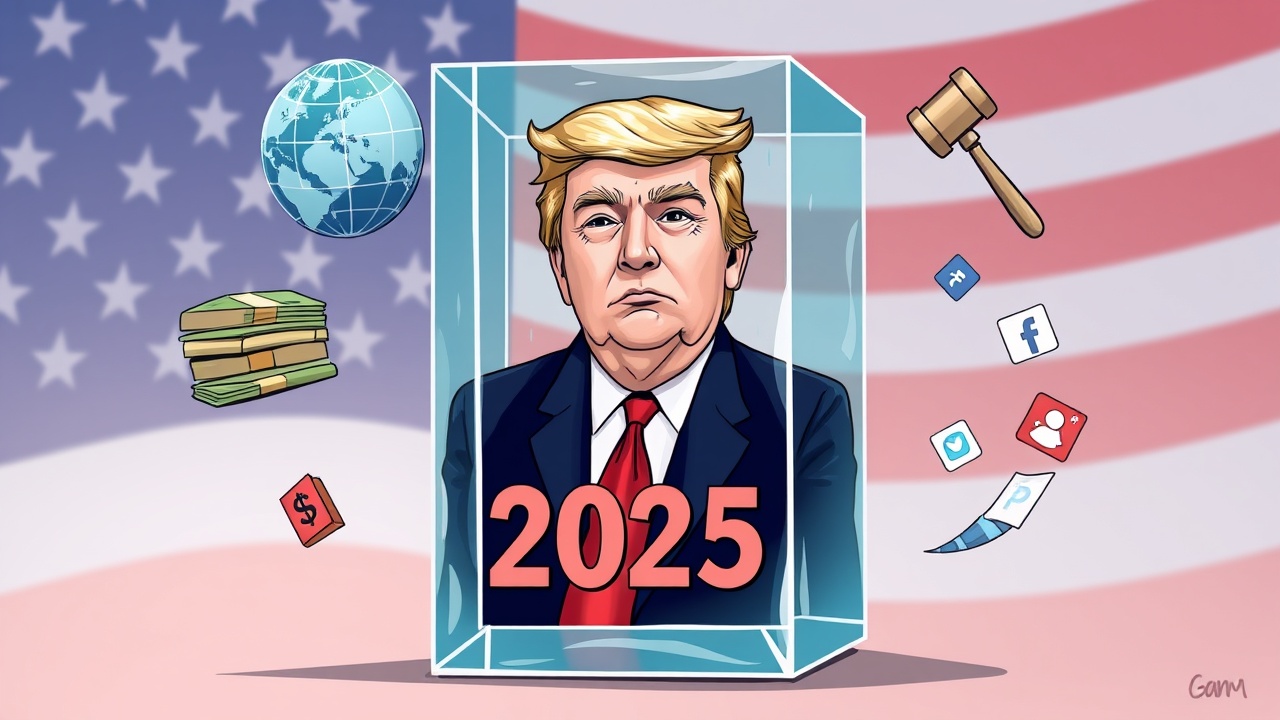
Cryptocurrency and Political Power
In a remarkable turn of events over the past year, the cryptocurrency landscape in the United States has experienced unprecedented interplay with the highest echelons of political power, fundamentally altering the trajectory of the industry. Until recently, leaders of major crypto firms had minimal engagement with federal officials; now, they find themselves navigating a landscape profoundly influenced by President Donald Trump. The shifts enacted by his administration have led to significant regulatory changes that have both galvanized and alarmed various factions within the crypto community.
Trump’s Influence on Cryptocurrency
As the past twelve months unfolded, President Trump has emerged as a pivotal figure in approving and promoting cryptocurrencies, arguably more than any founding figure of the digital asset realm. Under his directive, government efforts have minimized the regulatory hurdles that previously isolated cryptocurrencies from mainstream finance, leading to the dismantling of ongoing litigation and scrutiny faced by many crypto entities. His administration has successfully positioned these digital assets at the forefront of federal legislation—a move that has raised eyebrows and concerns from some long-time proponents of Bitcoin (BTC) and its underlying ethos.
Trump’s own financial ties to the crypto market through investments by him and his family have raised questions about potential conflicts of interest. Critics observe that this involvement may tilt the landscape in favor of certain stakeholders while disenfranchising others. Notably, Trump’s involvement has fostered perceptions of BTC deviating from its original intent of enhancing individual freedoms and providing a counterweight to governmental overreach.
Criticism from the Crypto Community
Among the most vocal detractors of this shift is Alex Gladstein, Chief Strategy Officer of the Human Rights Foundation (HRF), an organization that has historically leveraged Bitcoin to support human rights initiatives in oppressive regimes worldwide. Gladstein contends that the recent regulatory framework pushed by Trump’s administration jeopardizes Bitcoin’s foundational purpose, reducing it to a tool for profit rather than a protectant of civil liberties.
His assertion emphasizes that Bitcoin should remain an open, uncontrollable network designed to empower individuals globally—untethered from governmental influence.
Debates and Legislative Changes
The Trump administration’s stance has sparked debates throughout the crypto sphere, as some view the easing of regulations as beneficial for the overall growth and acceptance of digital currencies. Conversely, many early adopters and advocates laud Bitcoin for its embodiment of personal freedom and see the administration’s policies as antithetical to its core mission. Instances such as recent prosecutions undertaken by the Department of Justice (DOJ) targeting privacy-centric Bitcoin tools have ignited particular outrage among users who believe such actions undermine the privacy rights that cryptocurrencies are supposed to safeguard.
There has been significant activity over regulatory policy too, with the passing of the GENIUS Act aimed at solidifying the role of stablecoins within the U.S. financial ecosystem—a legislative victory touted by Trump’s administration for its economic implications, rather than any alignment with Bitcoin’s core tenets. The crypto community remains polarized; some champions of the technology are embracing the potential for legislative progress while mourning the dilution of its foundational ideals.
The Future of Cryptocurrency
As the battle for the future of cryptocurrency unfolds, the impending midterm elections could further complicate the dynamics. Should political tides shift back to a Democratic majority, there are rising concerns regarding how this would impact crypto policies and the relationship between government and digital assets. This uncertainty looms heavily for many within the industry, especially those wary of authoritarian tendencies and legal ramifications associated with their advocacy for privacy-enhancing technologies.
Just as developments continue to evolve, many stakeholders in the cryptocurrency sector remain vigilant about the potential ramifications of these changing tides and the administration’s next steps. The crossroads at which cryptocurrency finds itself today is not just about financial gain, but rather a fundamental discussion about the liberties and the transformative potential of digital currencies in society.
Within this intricate web of politics and blockchain, the true impact of Trump’s presidency on the crypto landscape remains to be fully assessed, even as his actions ripple across the corridors of power and into the wallets of investors.