Deutsche Börse Integrates EURAU Stablecoin
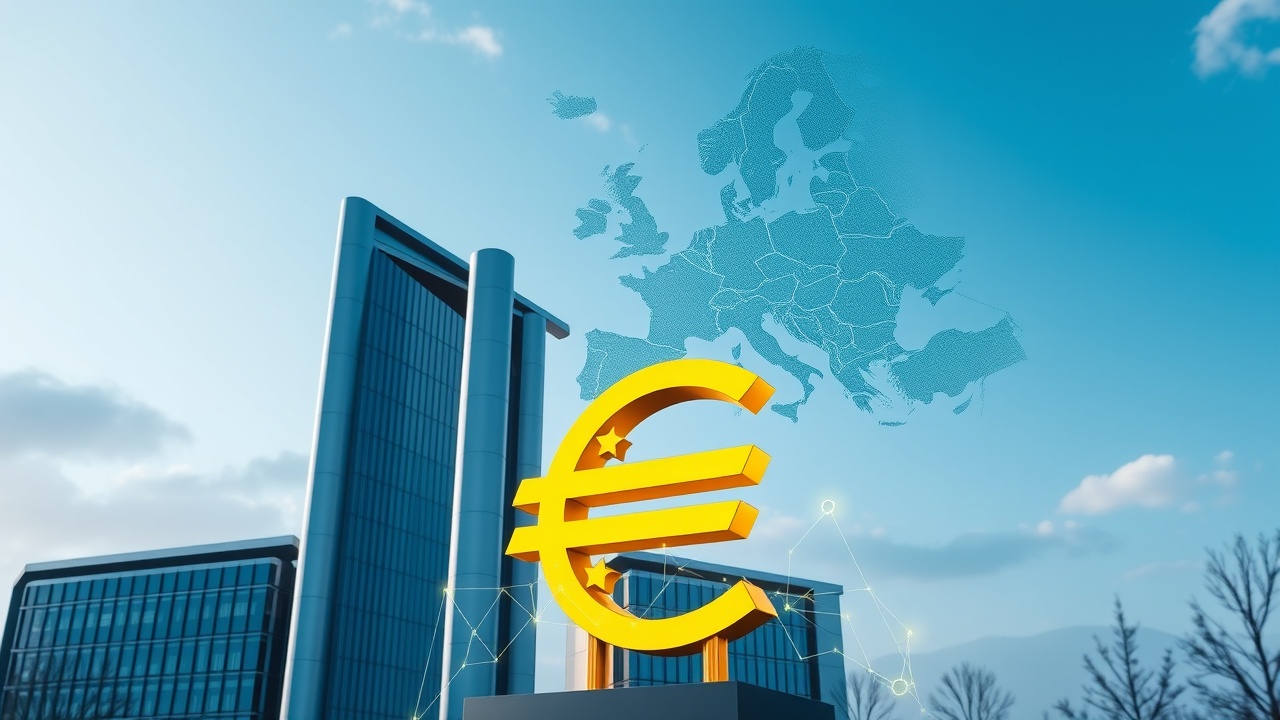
Deutsche Börse, a key player in market infrastructure, is set to incorporate the EURAU stablecoin, which is pegged to the euro, into its operations. This move represents an expansion of the firm’s digital currency initiatives, complementing previous collaborations with Circle, the issuer of the Euro Coin (EURC), and Societe Generale-Forge’s EUR CoinVertible (EURCV).
The announcement, made on a Wednesday via Cointelegraph, detailed that this integration with EURAU will begin with institutional custody provided by Clearstream, their central securities depository.
There are plans for comprehensive inclusion of this euro stablecoin across Deutsche Börse’s diverse service offerings in the future.
Market Potential and Strategic Partnerships
The integration of EURAU into Deutsche Börse’s suite of services taps into a substantial and growing market. According to statistics from the World Federation of Exchanges, Deutsche Börse hosts a domestic equity market valued at approximately $2.23 trillion, featuring 474 companies.
While specific activation timelines for the stablecoin were not disclosed, both Deutsche Börse and AllUnity have signed a memorandum of understanding indicating their commitment to this partnership. AllUnity’s CEO, Alexander Höptner, emphasized that their collaboration aims to facilitate seamless on-chain cross-border transactions and enhance accessibility to digital assets for institutional investors.
Connecting Traditional Finance with Digital Assets
Stephanie Eckermann, a member of the executive board at Deutsche Börse Group, remarked that the objective is to create a solid connection between traditional financial systems and the emerging domain of digital assets. She highlighted that incorporating institutional-grade stablecoins like EURAU would empower clients to explore innovative avenues within digital finance confidently.
Previously, Deutsche Börse partnered with Circle to implement the EURC token in late September and more recently, they solidified their alliance with Societe Generale-Forge to incorporate its EURCV stablecoin. With the addition of EURAU, Deutsche Börse is pursuing a holistic strategy in the stablecoin sector, combining offerings from varied origins:
- EURAU is issued by a German BaFin-licensed entity,
- EURCV is associated with the prominent French bank Societe Generale,
- EURC originates from a U.S.-based tech company.
Regulatory Landscape and Market Dynamics
The backdrop against which these moves are taking shape includes Europe’s gradual embrace of stablecoins amid the rollout of the Markets in Crypto-Assets Regulation (MiCA) framework, expected to take full effect by the end of 2024. The partnership aligns with MiCA objectives and is positioned as a pivotal step toward the digitization of European financial markets and the enhancement of liquidity and settlement mechanisms.
Höptner stated that Europe is poised to lead the global narrative on regulated digital finance.
However, while the adoption of stablecoins is accelerating, the European market remains relatively nascent compared to the United States. Analysts from the European Central Bank have noted that the current risks related to stablecoins within the eurozone are manageable, attributed to limited adoption rates and proactive regulatory measures.
Observations suggest that euro-pegged stablecoins arise partly from the need to maintain monetary autonomy and reduce reliance on U.S. dollar-pegged assets, which have gained prominence globally. Pierre Gramegna, managing director of the European Stability Mechanism, recently advocated for Europe’s independence from dollar-dominated stablecoins.
Emerging Local Initiatives
To bolster the European ecosystem, more local banking institutions are entering the stablecoin arena. For instance, in mid-October, the Franco-German bank ODDO BHF introduced a euro-pegged stablecoin within the MiCA framework. Moreover, a coalition of significant European banks—including Dutch lender ING and Italy’s UniCredit—announced a joint venture to produce a euro-pegged stablecoin, reflecting the increasing engagement of traditional financial entities in the crypto sphere.