The Emergence of A7A5 in Global Finance
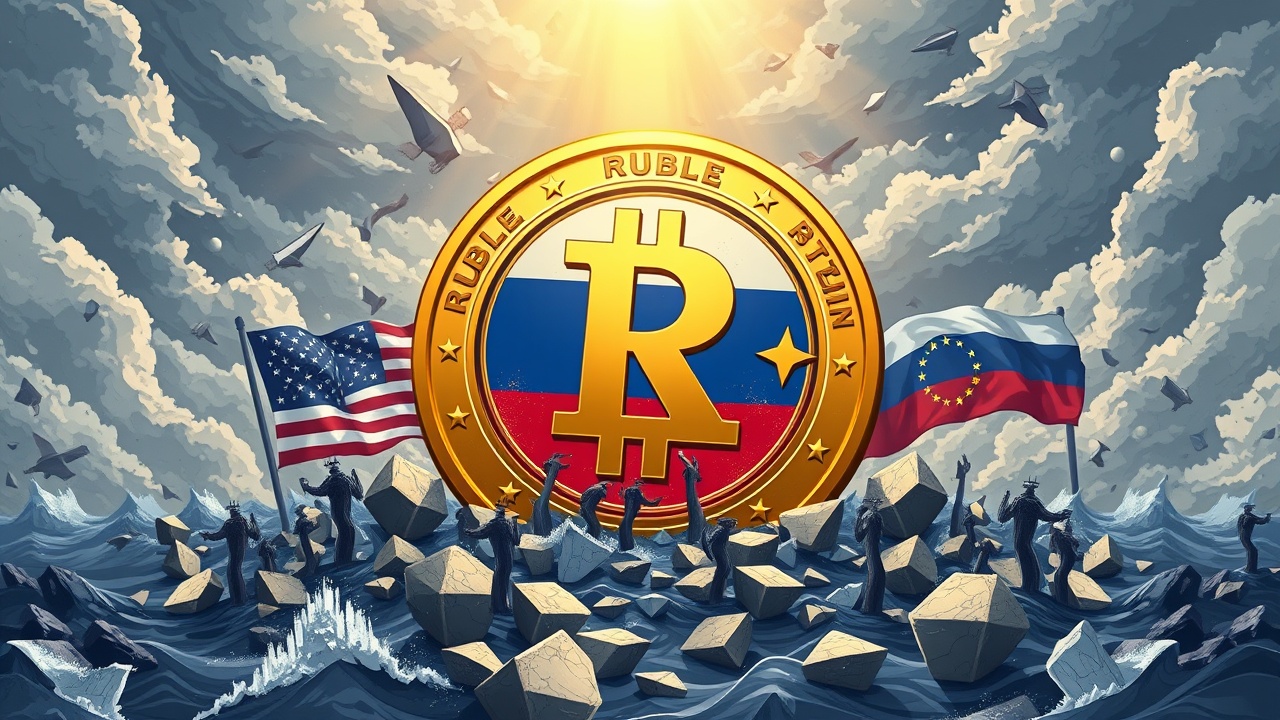
In the evolving landscape of global finance, the emergence of digital assets for cross-border transactions is raising eyebrows, particularly with the rise of A7A5, a stablecoin that maintains a 1:1 peg to the Russian ruble. Introduced in early 2025 and regulated by the Kyrgyz Republic, A7A5 is issued by Old Vector LLC and operates on both Tron and Ethereum networks.
Features and Growth of A7A5
This stablecoin is not only backed by bank deposits in rubles but also generates passive income for its holders through accrued interest on these deposits. Claims of compliance with international anti-money laundering (AML) and know-your-customer (KYC) standards underscore the issuer’s attempts to dispel any notions of engaging in sanction-evading activities.
During its inaugural year, A7A5 saw significant engagement, processing an impressive $39 billion in transactions. By the end of the year, its total transaction volume surged beyond the $100 billion mark. The circulating supply ballooned by $90 billion within 2025, with trading volumes hitting $17.3 billion—comprised of $11.2 billion in trades involving the A7A5/RUB pair and an additional $6.1 billion for A7A5/USDT. The user base expanded sharply, with holder numbers skyrocketing from 14,000 to 35,500, ushering in a market capitalization that approached $540 million.
Regulatory Challenges
However, the rapid growth of A7A5 has not gone unnoticed by regulators. In August 2025, authorities from both the United States and the United Kingdom targeted the Grinex exchange—where A7A5 is traded—by sanctioning it as the successor to Garantex, highlighting concerns about potential criminal activities associated with the platform. Just four months post-launch, approximately $9.3 billion in transactions related to A7A5 were funneled through Grinex alone.
The European Union also took a firm stance in October 2025, incorporating A7A5 into its 19th sanctions round, effectively barring any transactions involving the token within its member states, citing its potential use in financing military operations.
Conclusion
Despite these regulatory challenges, the growth trend of A7A5 appears resilient, indicating a sustained demand for alternative payment systems within the ruble economy. This highlights a broader trend where digital assets tied to national currencies could serve as a vital alternative for international finance, especially in jurisdictions grappling with financial sanctions. The potential impact of ongoing regulatory scrutiny on this emergent sector remains to be seen.