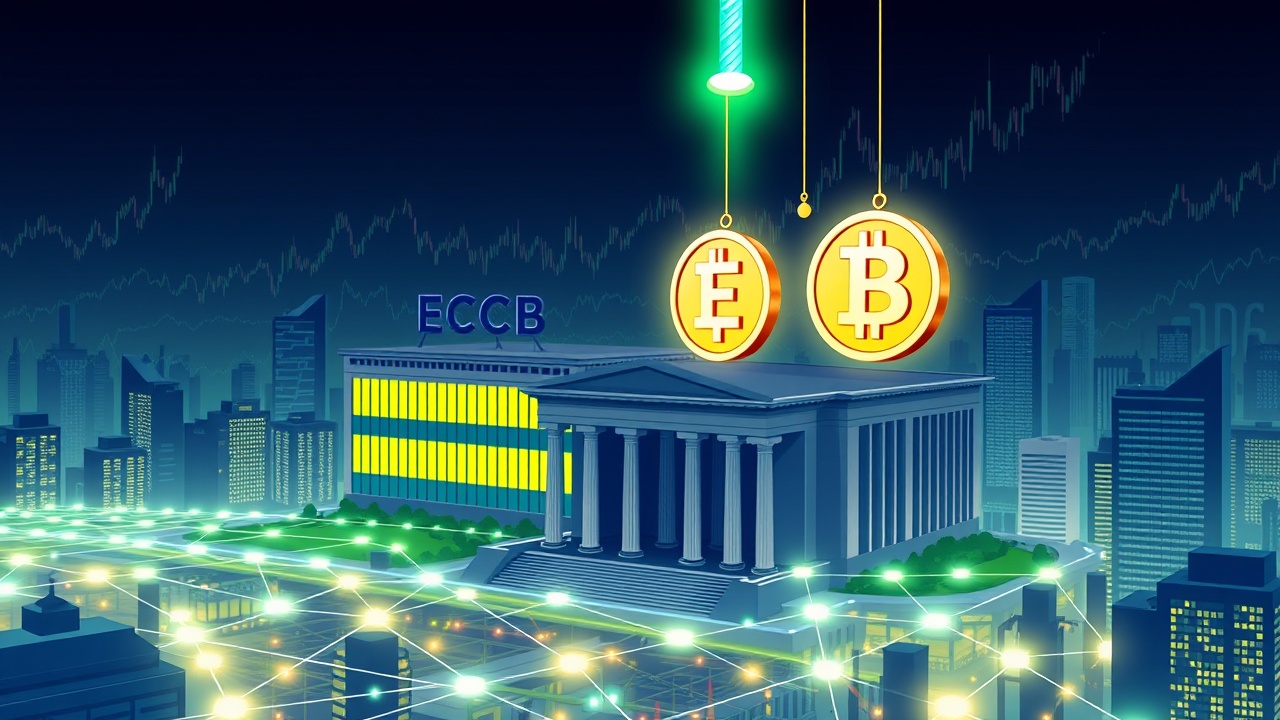
The Shift in Europe’s Financial Landscape
The financial landscape across Europe is shifting as integration with blockchain technology becomes more prominent. Starting March 30, the European Central Bank (ECB) will allow specific securities issued via distributed ledger technology (DLT) to be used as collateral, signifying a transformative step towards the acceptance of tokenized assets within institutional frameworks and the enhancement of financial market infrastructure.
Tokenized Securities and ECB’s Initiative
This initiative enables Eurosystem banks to leverage authorized tokenized securities as collateral for borrowing from the ECB, marking a crucial evolution in how traditional monetary systems incorporate blockchain-based assets. A notable point made in the ECB’s report is its connection to technology associated with the XRP Ledger. The trading and settlement platform created by Axiology employs open-source code linked to the XRP Ledger, indicating that features from XRPL are being utilized to facilitate the development of new tokenized financial infrastructures in Europe.
XRP Ledger’s Role in Tokenization
Currently, the XRP Ledger accounts for over 15% of all tokenized commodities globally, positioning it as the second-largest platform in the field. It is important to clarify that the ECB is not integrating the public XRP Ledger or using XRP tokens as collateral directly; rather, it is implementing a private system tailored for regulated markets that benefits from XRPL’s open-source technology in its trading and settlement operations.
Case Study: Tokenization in Real Estate
In a significant example, Dubai has successfully tokenized more than $5 million in real estate through the XRP Ledger, generating 7.8 million property tokens that can be traded instantaneously.
This development highlights the expanding potential of tokenization in real estate markets driven by blockchain technology.
Advantages of the XRP Ledger
The XRP Ledger is recognized for its rapid transaction processing, minimal costs, and effective settlement capabilities, which enhance Axiology’s platform, showcasing how advancements in public blockchain can be adapted for compliant, institutional applications. With an impressive 63% dominance in the tokenized U.S. Treasury market, the XRP Ledger outpaces competitors such as Ethereum, Solana, and Arbitrum, reinforcing its leading role in tokenized finance.
The Future of Tokenization in Finance
This movement indicates that established financial entities are increasingly prioritizing tokenization to innovate their securities markets. Tokenized assets, which represent traditional securities on blockchains, promise accelerated settlement times, improved transparency, and reduced operational expenses compared to existing legacy systems.
The ECB’s agreement to accept tokenized securities as collateral is significant for the European financial ecosystem, marking a surge in confidence towards blockchain technology. Although the public XRP Ledger and XRP are not part of the ECB’s balance sheet, the integration of XRPL-based systems illustrates the growing potential and influence of open-source blockchain technologies in reshaping future financial dynamics. By aligning conventional banking practices with blockchain innovations, Europe is advancing towards a new era in securities trading and settlement.