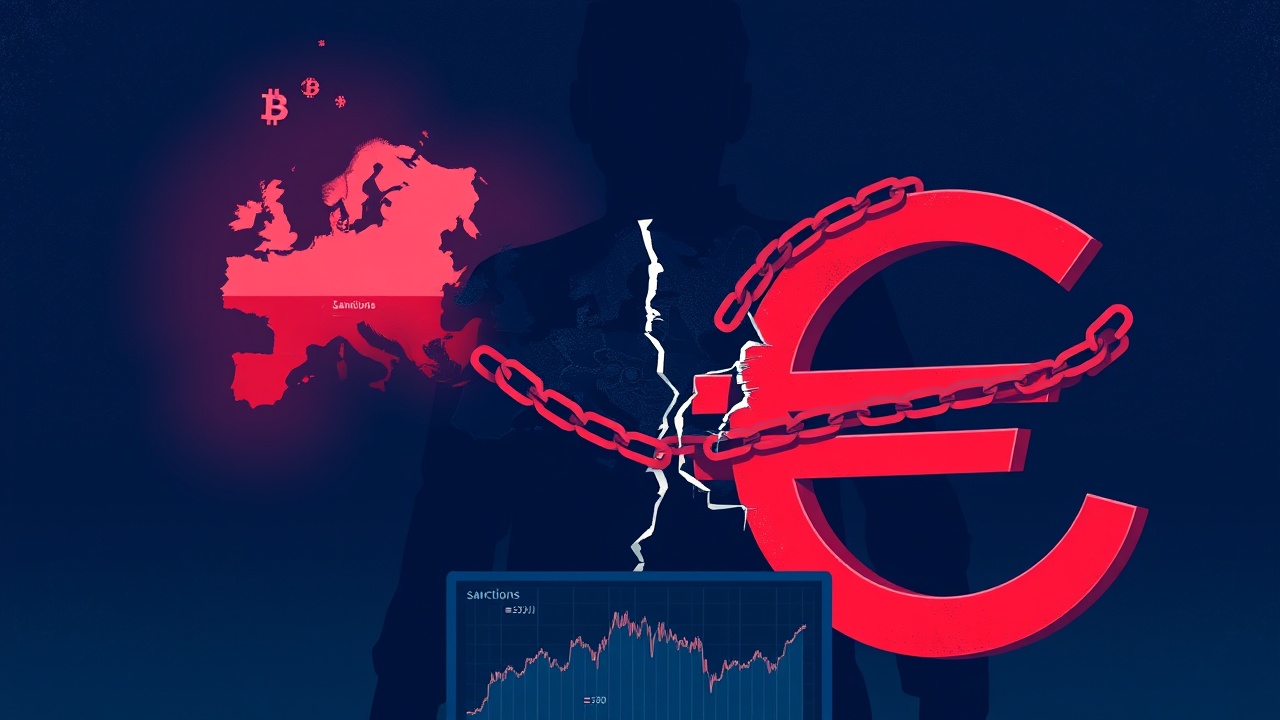
European Commission’s Sanctions Against Russia
The European Commission has formally issued its twentieth round of sanctions against Russia, aiming specifically at the cryptocurrency sector and digital assets. This announcement was made by European Commission President Ursula von der Leyen on February 6, 2026, and represents a significant expansion of previously established economic restrictions.
Targeting the Digital Economy
The latest sanctions delve into the digital economy, extending beyond conventional industries such as energy and trade. They primarily target cryptocurrency platforms, traders, and firms identified by EU regulators as assisting Russia in evading earlier sanctions. The overarching goal of these restrictions is to close potential loopholes that have allowed for unrestricted digital payments and financing tied to cryptocurrencies.
While the precise details regarding the new measures are not fully disclosed, indications suggest that the EU plans to enhance oversight over Russian users’ engagements with cryptocurrency services. Speculation circulating on social media platform X hints at possible prohibitions on the Digital Ruble and other measures aimed at restricting Russian-associated crypto services. Furthermore, trading platforms that serve Russian clients may also be subjected to stricter limits to ensure compliance with the new regulations.
Broader Sanctions Package
In addition to the heavy focus on cryptocurrency, the sanctions package encompasses a total embargo on maritime services related to Russian crude oil, a move anticipated to significantly impact Russia’s energy revenue and disrupt its oil logistics. This round of sanctions will also see 43 additional vessels from what is referred to as the “shadow fleet” included in the sanctions, raising the cumulative count of restricted ships to 640.
Trade restrictions are particularly significant as they will prohibit the export of goods and services valued over €360 million to Russia. This includes a range of products such as rubber, tractors, and cybersecurity services. Concurrently, a ban on imports of Russian metals, chemicals, and minerals exceeding €570 million will also be enforced.
Impact on Financial Institutions
The financial landscape will not remain untouched either; sanctions will target 20 regional banks in Russia as well as foreign financial establishments suspected of facilitating sanctions evasion. Historically, the EU has implemented previous sanctions pertaining to cryptocurrency, and this new package aims to further intensify pressure on these digital platforms.
Challenges of Enforcement
From a broader perspective, the focus on crypto platforms sheds light on the ongoing conflict between centralized regulatory frameworks and the decentralized nature of blockchain technology. Increased restrictions on centralized exchanges often lead to a rise in peer-to-peer trading and over-the-counter (OTC) market activities. Past instances, such as the 2021 cryptocurrency ban in China, have resulted in swift migration towards decentralized finance (DeFi) protocols by users seeking alternatives. Ultimately, the success of these newly proposed sanctions will hinge on how effectively regulators can enforce compliance in a domain that tends to operate outside conventional legal boundaries.