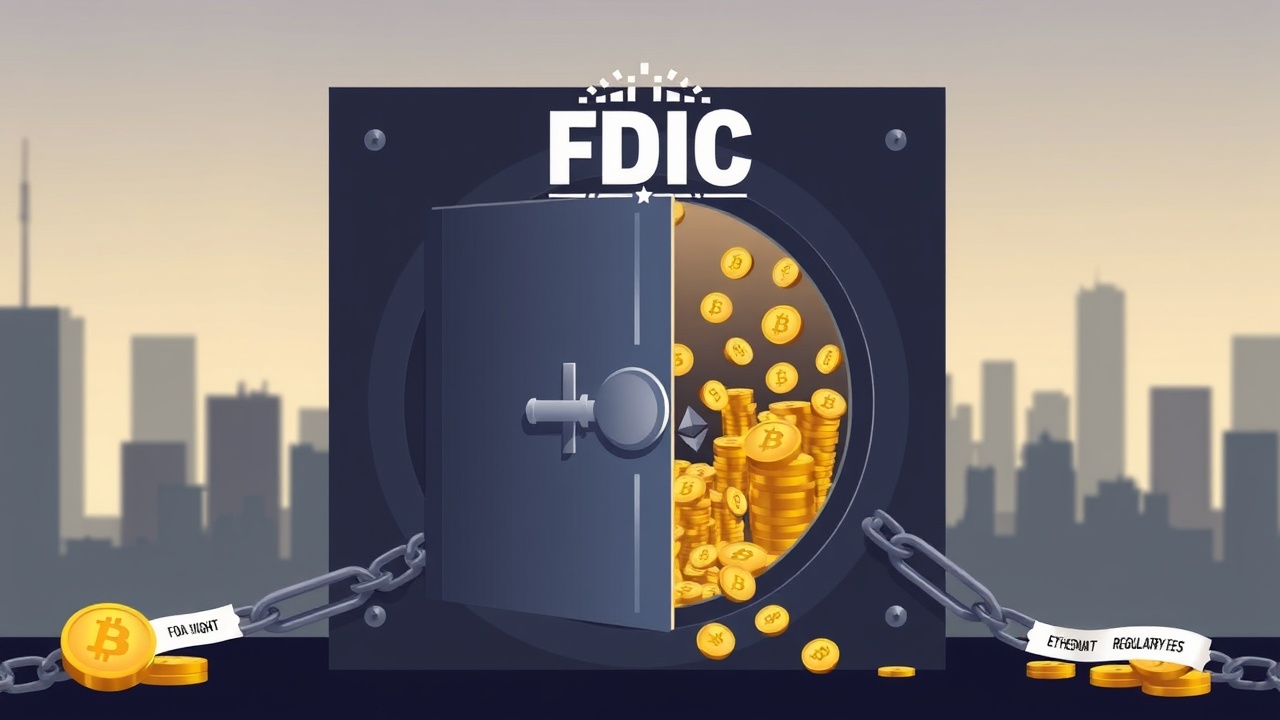
FDIC Settlement on Transparency and Regulatory Practices
In a significant development regarding transparency in regulatory practices, the Federal Deposit Insurance Corporation (FDIC) has reached a settlement involving a payment of $188,440 for legal fees and a decision to stop contesting the release of documents known as “pause letters” linked to its controversial actions against cryptocurrency firms. This decision comes on the heels of a Freedom of Information Act (FOIA) lawsuit that highlighted concerns about the FDIC’s alleged tactics, labeled as Operation Choke Point 2.0, which aimed to restrict banking access for crypto businesses. Documents revealing the extent of these tactics marked a pivotal moment in an ongoing debate over regulatory overreach.
Details of the Settlement
The agreement was reported in a joint status update to a federal court in Washington, D.C., where the FDIC acknowledged its responsibility to compensate History Associates Incorporated, the firm that filed the FOIA request on behalf of Coinbase. As part of the settlement, the FDIC pledged to revise certain policies related to FOIA compliance. The prompt for the full disclosure was underscored by the FDIC’s Office of Inspector General, which criticized the agency for instructing banks to cease or limit their engagement with cryptocurrencies in an October 2023 study.
Legal Challenges and Court Rulings
Earlier attempts by the FDIC to withhold the documents came under scrutiny when a November court ruling determined that the agency had improperly applied exemptions to keep the pause letters secret. The court found that the FDIC had violated FOIA by not considering the necessary exemptions on a document-by-document basis and improperly redacting information that should have been made available to the public.
Joe Ciccolo, president of BitAML, remarked on the implications of the court’s ruling, stating that it revealed a troubling trend within regulatory oversight that is influenced more by political motivations than by the agency’s core mandate of ensuring safety and soundness in banking. He expressed disapproval of the FDIC’s lack of transparency in managing consumer funds.
Operation Choke Point 2.0
The term “Operation Choke Point 2.0” reflects ongoing accusations suggesting a collective initiative among U.S. banking regulators—including the FDIC, Federal Reserve, and Office of the Comptroller of the Currency (OCC)—to limit banking services for cryptocurrency firms, echoing a strategy from the Obama administration aimed at cutting ties with certain industries.
Coinbase’s request for the pause letters was denied initially in November 2023, with the FDIC claiming the documents fell under a broad exemption. However, after History Associates filed the lawsuit in June 2024, District Judge Ana Reyes intervened, mandating that the FDIC fulfill its disclosure obligations and highlighting the agency’s insufficient efforts regarding redactions in the documents.
Outcome and Future Implications
The process was protracted, requiring four court orders and numerous document releases before all requested papers were finally made available. Following the settlement, Coinbase’s Chief Legal Officer, Paul Grewal, shared his perspective on X (formerly Twitter), asserting that the lengthy litigation ultimately succeeded in revealing multiple pause letters and underscored the coordinated effort to marginalize the cryptocurrency sector.
As part of the resolution, the FDIC committed to update its training materials to ensure staff members are better equipped to handle FOIA requests, endorsing a more open stance towards public information requests. Ciccolo emphasized the necessity for oversight to be grounded in transparency and clarity rather than relying on ambiguous communications like pause letters, arguing that such regulatory actions can undermine trust in the supervisory system. The parties intend to file a formal dismissal of the case following the payment by the FDIC, which has yet to respond to inquiries for further comments.