Georgia’s Response to Illegal Cryptocurrency Mining
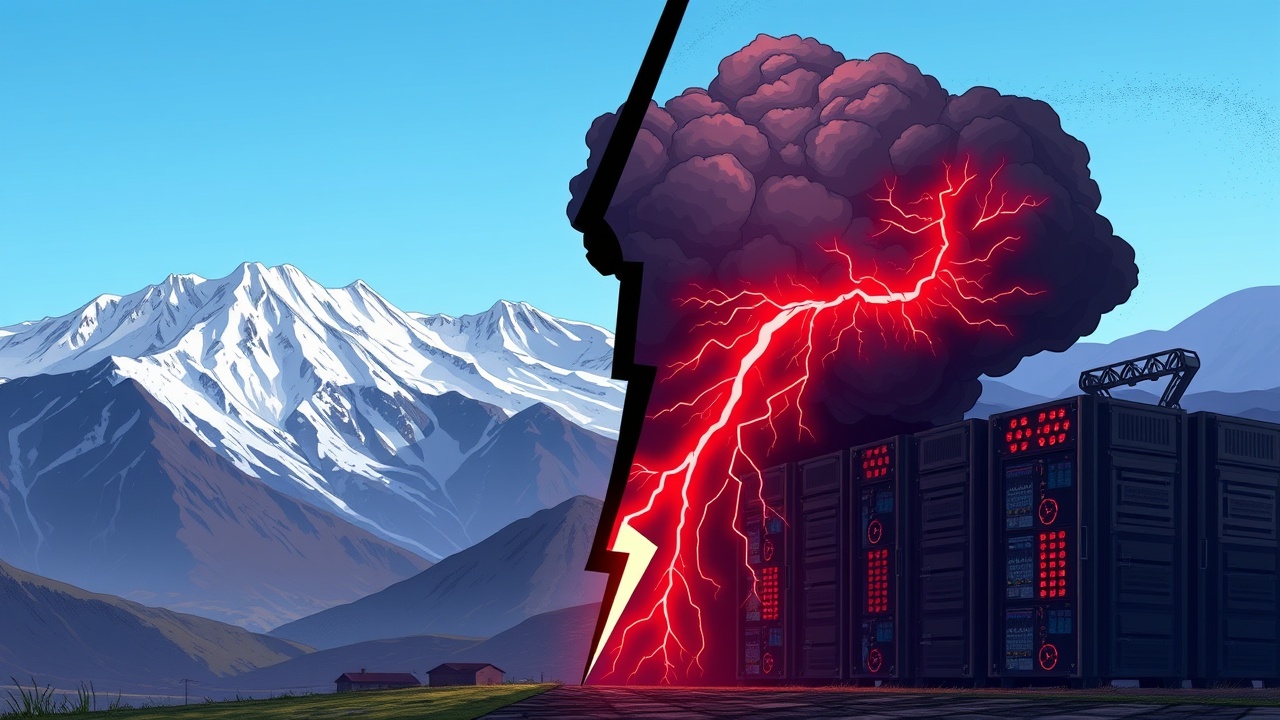
In response to the growing problem of illegal cryptocurrency mining, Georgia has announced a plan to implement electricity meters throughout the Mestia municipality. The Vice Prime Minister, Mamuka Mdinaradze, has indicated that illegal mining activities have contributed significantly to unusually high energy consumption, resulting in stress on the local electricity grid and frequent outages.
Electricity Consumption Concerns
Mdinaradze highlighted that during 2025, electricity consumption in Mestia reached an alarming 133 million kilowatt-hours, starkly contrasting with the typical usage of around 10 million kilowatt-hours seen in similarly sized municipalities. As a remedy, the Georgian government intends to install metering devices in various villages and communities to pinpoint the sources of excessive electricity usage and curb unauthorized mining operations.
While the region, Svaneti, benefits from free electricity up to a specific limit for consumers, those who exceed this cap will incur charges under the new regulations, which are primarily aimed at combating illegal activities rather than impacting normal households. The Vice Prime Minister emphasized that these measures are crucial for identifying hidden electricity consumption associated with crypto mining.
Collaboration with Law Enforcement
In addition to the government’s efforts, law enforcement agencies have been enlisted to aid in the metering initiative, facilitating the identification and response to significant illegal power usage.
Impact on Local Economy and Tourism
Mdinaradze noted that the strain on the electricity grid has compromised service quality, affecting both local residents and the tourism sector in Mestia. The government estimates that unlawful power usage leads to financial losses ranging from 20 million to 25 million lari annually, translating to approximately $7 million to $9.4 million. He pointed out that the repercussions of these illegal activities extend beyond the region, impacting all electricity consumers in Georgia who share the cost burden.
Historical Context of Cryptocurrency Mining in Georgia
Svaneti, known for its free or low-cost electricity, has drawn many miners, both legal and illegal, due to Georgia’s abundant hydropower resources. Historically, the country has served as a key player in Bitcoin mining, attracted by its favorable energy prices. For instance, Bitfury established a 20-megawatt mining operation in Gori back in 2014, marking Georgia as an early central hub for large-scale Bitcoin mining.
Current Energy Consumption by Crypto Mining
Recent reports have revealed that crypto mining data centers in Georgia continue to consume substantial energy, estimating their total usage at 556 million kilowatt-hours from January through September 2025.
International Context and Future Outlook
This enforcement initiative in Mestia aligns with similar crackdowns on illicit mining activities seen internationally, such as Thailand’s seizure of Bitcoin mining equipment in 2025 and Russia’s establishment of a registry for unauthorized miners. The effectiveness of the new metering system will ultimately depend on its ability to distinguish between legitimate household energy consumption and concealed mining operations, all while ensuring that residents are not inconvenienced as they utilize the free electricity provided within legal limits.