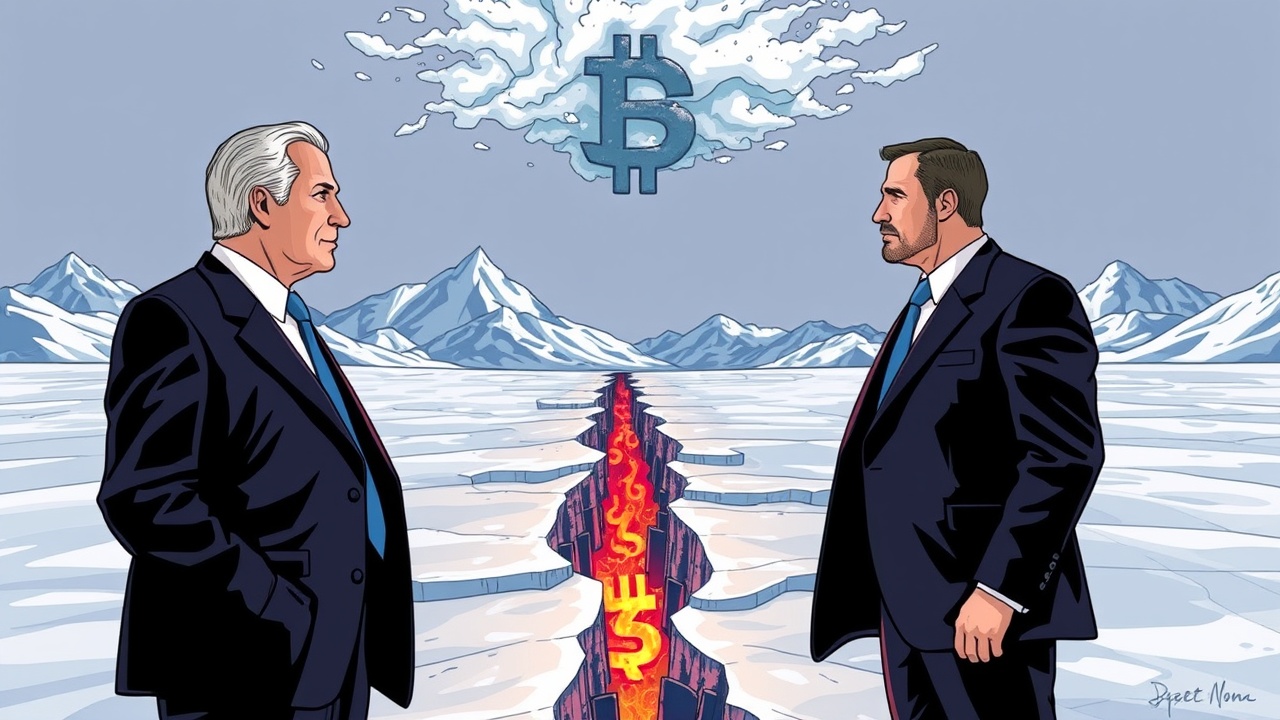
Tensions Between Traditional Finance and Cryptocurrency
Tensions between traditional finance and the cryptocurrency sector reached a boiling point recently, marking a pivotal moment in the ongoing clash over the future of digital assets. This confrontation unfolded during a recent coffee gathering at the World Economic Forum in Davos, where Jamie Dimon, the CEO of JPMorgan Chase, confronted Brian Armstrong, the head of Coinbase.
Dimon, a long-time critic of cryptocurrency, did not hold back, reportedly telling Armstrong, “You are full of s—,” a comment that caught the attention of those in attendance, including former British Prime Minister Tony Blair.
The Source of Friction
The friction stems from Armstrong’s assertions in media appearances that banks are actively trying to undermine supportive legislation for crypto, which Dimon rebuffed by accusing Armstrong of misleading statements. This public spat underscores a broader power struggle as cryptocurrency increasingly integrates into everyday financial practices.
Although major banking institutions have begun to adopt crypto for various purposes, they simultaneously view the rise of crypto firms as a significant challenge to their control, particularly as these firms offer attractive yield-like payouts that could siphon clients away from traditional banks.
The Clarity Act and Regulatory Landscape
Central to this disagreement is the proposed Clarity Act, a piece of legislation that would impact the regulatory landscape for digital assets in the United States. Banking representatives argue that the “rewards” offered by crypto exchanges for holding stablecoins, which can reach around 3.5%, effectively function like interest accounts without the oversight that banks must adhere to.
In response, crypto advocates argue that market competition should dictate success and that banks have ample opportunity to enhance their offerings or delve into the stablecoin market themselves.
Armstrong’s Role in the Industry
Armstrong, at 43, has positioned himself as a leading political advocate for the cryptocurrency industry. Managing Coinbase, valued at about $55 billion, he has been vocal about the high stakes involved in the legislative process and has warned that unfavorable legislation could have dire consequences for his company.
His influence was evident when he successfully delayed a Senate vote on crypto regulation, surprising many political observers.
The Future of Financial Control
Analysts suggest this current standoff has shifted the narrative to one where it is now framed as a battle between Coinbase and traditional banks, rather than a broader contest of cryptocurrency against the financial sector. As upcoming discussions between bank leaders, crypto executives, and the White House loom on the horizon, Armstrong’s stance will likely play a crucial role in determining the future of financial deposits, payments, and control within this evolving digital landscape.