Trump Nominates Kevin Warsh for Federal Reserve Chair
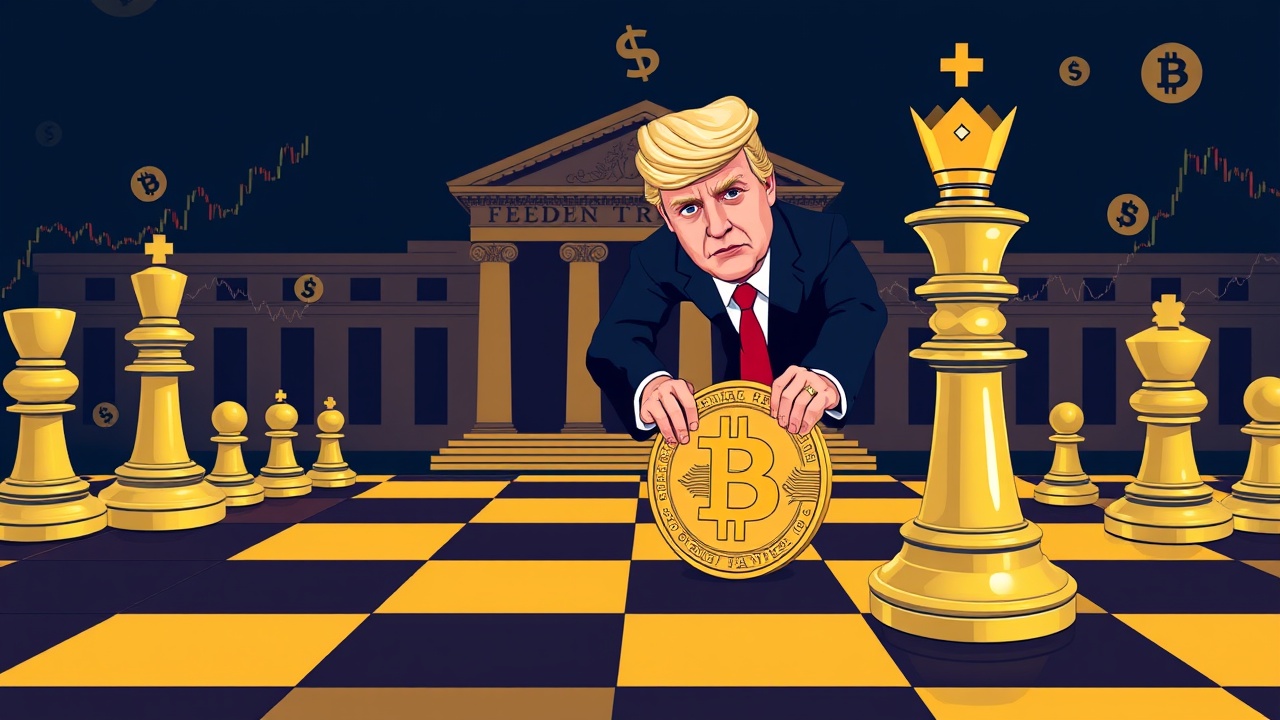
In a significant move, President Donald Trump has put forward the nomination of Kevin Warsh to assume the role of chairperson at the Federal Reserve. The White House has officially submitted this nomination to the Senate, marking a continuation of the president’s public indications about his choice over the past month. If Warsh’s nomination garners the Senate’s approval, he will embark on a four-year term, succeeding Jerome Powell, whose current term concludes in May.
Political Tensions and Market Reactions
The timing of Warsh’s nomination coincides with heightened political tensions, particularly as Senator Thom Tillis announced intentions to obstruct the vote pending the outcome of a federal investigation concerning Powell. This inquiry, which Powell acknowledged in January, revolves around issues related to renovations at the Federal Reserve building, initiated after Powell declined to accelerate interest rate reductions requested by Trump.
In reaction to this nomination announcement, the cryptocurrency markets experienced a notable surge, especially Bitcoin, which jumped by 9% according to CoinCodex. The rise followed speculation surrounding the CLARITY Act and Warsh’s Bitcoin-friendly stance as a potential head of the Fed, resulting in over $530 million in short liquidations. Ethereum saw a similar positive trend, gaining more than 11% during this interval. Bitcoin’s price rebounded to over $74,000, marking a month-high after recovering from a dip to approximately $63,000 amidst broader market anxieties tied to geopolitical events, including U.S. and Israeli strikes on Iran.
Traders have observed a shift towards Bitcoin as a favorable investment option, diverting funds away from traditional safe havens like gold in response to more favorable sentiments coming from U.S. policymakers regarding cryptocurrency. The ongoing situation is being closely monitored to see how the Senate progresses with Warsh’s nomination.
Kevin Warsh’s Background and Expertise
Kevin Warsh’s previous tenure as a Federal Reserve governor from 2006 to 2011 provided him with extensive experience, as he navigated the financial landscape during the global financial crisis while serving as a liaison between the Fed and major financial institutions. His former roles at Morgan Stanley and within the George W. Bush administration have shaped his understanding of market dynamics. After his time at the Fed, Warsh joined the Hoover Institution at Stanford University, where he has been vocal about the challenges of prolonged loose monetary policy, in addition to voicing concerns about inflation and central banking strategies.
Notably, Michael Saylor has asserted that Warsh may lead the Federal Reserve with a deeper comprehension of Bitcoin than any previous chair. Saylor cited Warsh’s academic studies, highlighting interest in how digital currencies can play a role in cycles of significant monetary expansion.
Confirmation Process and Future Implications
While Powell can remain on the Federal Reserve board until early 2028, Warsh’s confirmation is necessary for him to lead the institution. There’s also a possibility of an early appointment if he can fill a separate vacancy, as Governor Stephen Miran’s term recently concluded in January. Adding to the complexities of Trump’s attempts to appoint members to the Federal Reserve, his efforts to oust Governor Lisa Cook were tied to unsubstantiated claims from a housing official; Cook has since contested this in court, with the Supreme Court hearing the case in January, still awaiting a decision.