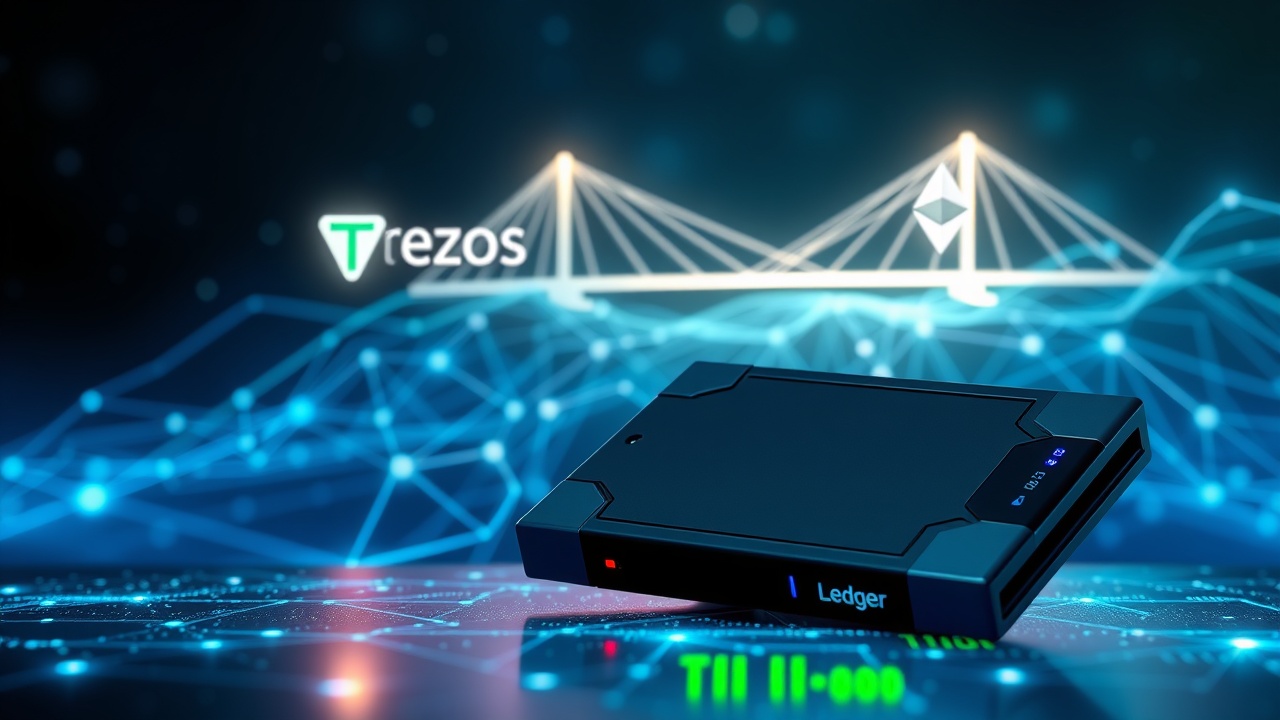
Ledger Enhances Support for Tezos Ecosystem
In a significant advancement for cryptocurrency enthusiasts, Ledger has announced enhanced support for the Tezos ecosystem through the launch of Etherlink, a platform that integrates Etherean Virtual Machine (EVM) functionalities. This move allows users to engage fully with Tezos’ native token, XTZ, and facilitates secure signing, wallet management, and upcoming native staking functionalities through Ledger devices.
Commitment to Tezos
The recent integration builds upon Ledger’s ongoing commitment to supporting Tezos since 2019, during which time more than 10 million tez have been delegated for voting purposes via Ledger Wallet. By introducing native staking features, Ledger aims to boost user participation in maintaining the security of the Tezos network, while simultaneously opening up possibilities for additional yield generation for its clients.
Managing Etherlink-based XTZ
Users can now efficiently manage their Etherlink-based XTZ directly through Ledger Wallet’s desktop and mobile applications. This includes a comprehensive account overview that tracks balances and historical transactions. Furthermore, Ledger Wallet provides functionality for asset swapping and facilitates user interaction with the burgeoning Etherlink decentralized finance (DeFi) ecosystem, granting access to established platforms like Curve, Morpho, and Uniswap, as well as newer initiatives such as uranium.io, which connects digital assets to real-world commodities.
Importance of Security and Staking
As the demand for secure, self-custody options increases, the need for effective staking methodologies becomes increasingly important within blockchain communities. This latest support from Ledger not only reflects the priorities of Tezos users for robust governance and network integrity but also meets the necessity for effective engagement with evolving ecosystems while maintaining high security standards.
Charles Guillemet, CTO of Ledger, emphasized that the integrated hardware-enforced clear signing feature ensures that users can perform transactions confidently, knowing their assets are well-protected.
Cost-effective Alternatives to Ethereum
The launch of Etherlink comes at a time when companies are searching for cost-effective alternatives to Ethereum, especially given the high transaction fees associated with that network. Thanks to Etherlink’s rapid confirmation times and minimal transaction costs, it stands out as a compelling option for users looking to access DeFi without breaking the bank. For institutional players, this integration signifies a critical pivot toward secure methods of managing digital asset portfolios.
Future Prospects
Anthony Hayot, the Head of DeFi Partnerships at Nomadic Labs, stressed that this partnership allows for enhanced user security while promoting a smooth user experience that can help drive the adoption of the Tezos ecology.
Looking to the future, Ledger is set to mark its 10th anniversary in 2024. It has established itself as a leader in digital asset security for both individual users and enterprises, having sold over 8 million devices across 165 countries and in more than 10 languages. With about 20% of all global crypto assets secured by Ledger, its dedicated security team, Ledger Donjon, is increasingly vital, especially in light of significant losses in the crypto sector attributed to security breaches this year.
Tezos Blockchain and Etherlink Technology
The Tezos blockchain itself is designed to support the scalable deployment of decentralized applications, emphasizing energy efficiency, robust governance, and the capacity for upgrading over time. Meanwhile, Etherlink leverages Tezos Smart Rollups technology to enable EVM capabilities, essentially allowing developers to transfer assets and users smoothly between Ethereum and other compatible blockchains.