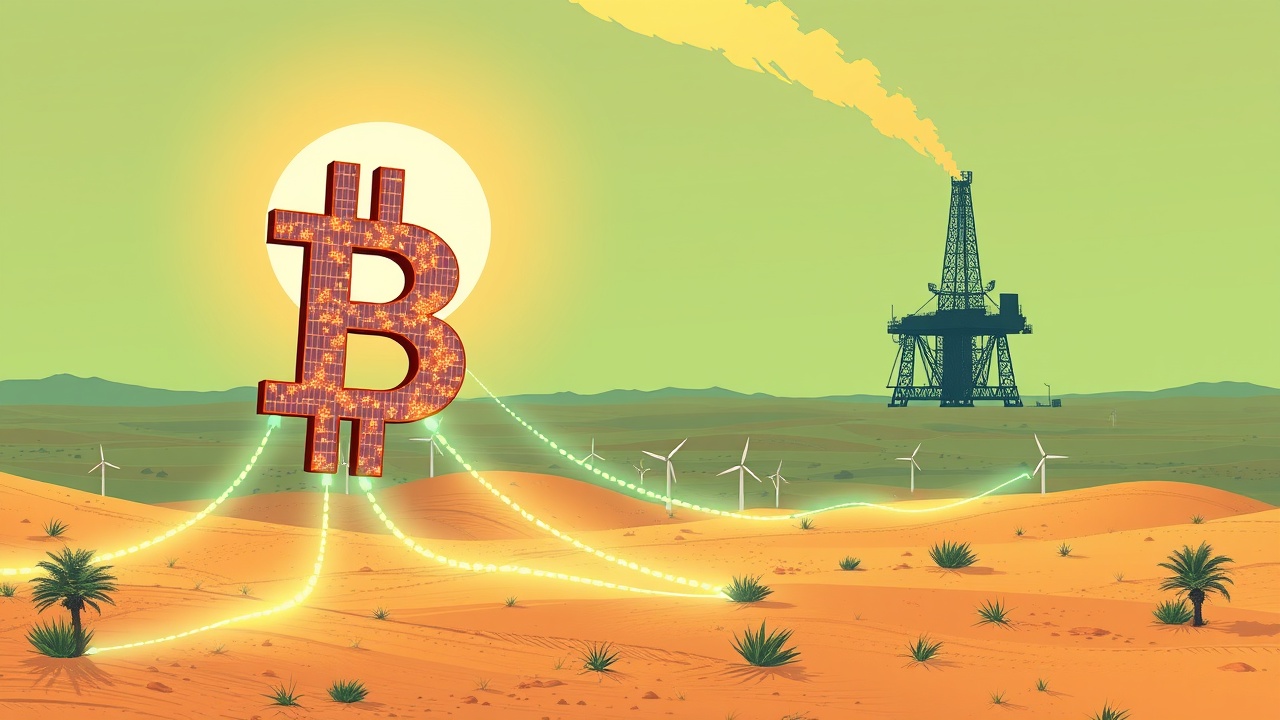
Libya’s Emergence in Bitcoin Mining
Libya has emerged as a surprising player in the Bitcoin mining sector, fueled by extremely low electricity costs and an ambiguous legal environment. The country, which is traditionally recognized for its oil exports, has been able to harness around 0.6% of the global Bitcoin hash rate at its peak, earning itself a notable position among Arab nations and even some European ones as of 2021.
Electricity Costs and Mining Demand
The lure of nearly free electricity—estimated at just $0.004 per kilowatt-hour thanks to heavy state subsidies—has driven this mining boom. This situation offers a distinct advantage for miners: they can operate older, less efficient hardware that would be deemed obsolete in more energy-expensive markets such as Europe and North America. As a result, Libya’s mining demand reportedly consumed about 2% of the nation’s total electricity production, approximately 0.855 terawatt-hours per year. Such diversion of energy, however, comes at a cost, exacerbating already strained energy resources in a country plagued by frequent blackouts.
Legal Ambiguity and Government Stance
The government’s attitude toward Bitcoin mining has been inconsistent, existing in a shadowy realm where legal frameworks are ambiguous. Though the Central Bank of Libya prohibited virtual currencies in 2018, no specific laws exist that regulate or fully criminalize the act of mining itself. Instead, miners are often charged with associated illegal activities such as unauthorized electricity use or hardware importation, creating a complex web of enforcement challenges.
Crackdowns on Illegal Operations
Recent efforts to clamp down on illegal operations have included significant raids across major cities, with authorities taking action against numerous mining farms including an incident in November 2025 that saw nine individuals sentenced to three years in prison for mining activities at a steel factory in Zliten.
These operations tend to be hidden in urban settings, often situated near industrial zones to evade immediate scrutiny due to their high energy consumption.
Future of Bitcoin Mining in Libya
Looking ahead, policymakers face a dilemma over the future of Bitcoin mining in Libya. Some economists advocate for a regulatory framework that would legitimize the industry, arguing that embracing this sector could potentially yield tax revenue and employment opportunities. However, banking officials express concern over the association of mining with illegal activities and the potential for exacerbating financial instability. As of now, Libya’s energy situation remains precarious, with citizens often grappling with daily life amid energy shortages, making the existence of private mining farms—diverting essential electricity—frustratingly salient.
Broader Implications
The country’s dilemma mirrors a broader phenomenon across various regions in the Middle East and Africa where cheap energy leads to thriving mining industries. For Libya, a clear resolution on how to handle its Bitcoin mining sector looms just ahead: regulate it with oversight or tighten enforcement to dismantle it altogether.
Overall, the situation showcases a unique intersection of economics, technology, and policy in a nation characterized by its vast oil wealth yet crippled by infrastructural challenges, drawing attention to the urgent need for a sustainable approach that balances individual enterprise with the vital needs of the public.