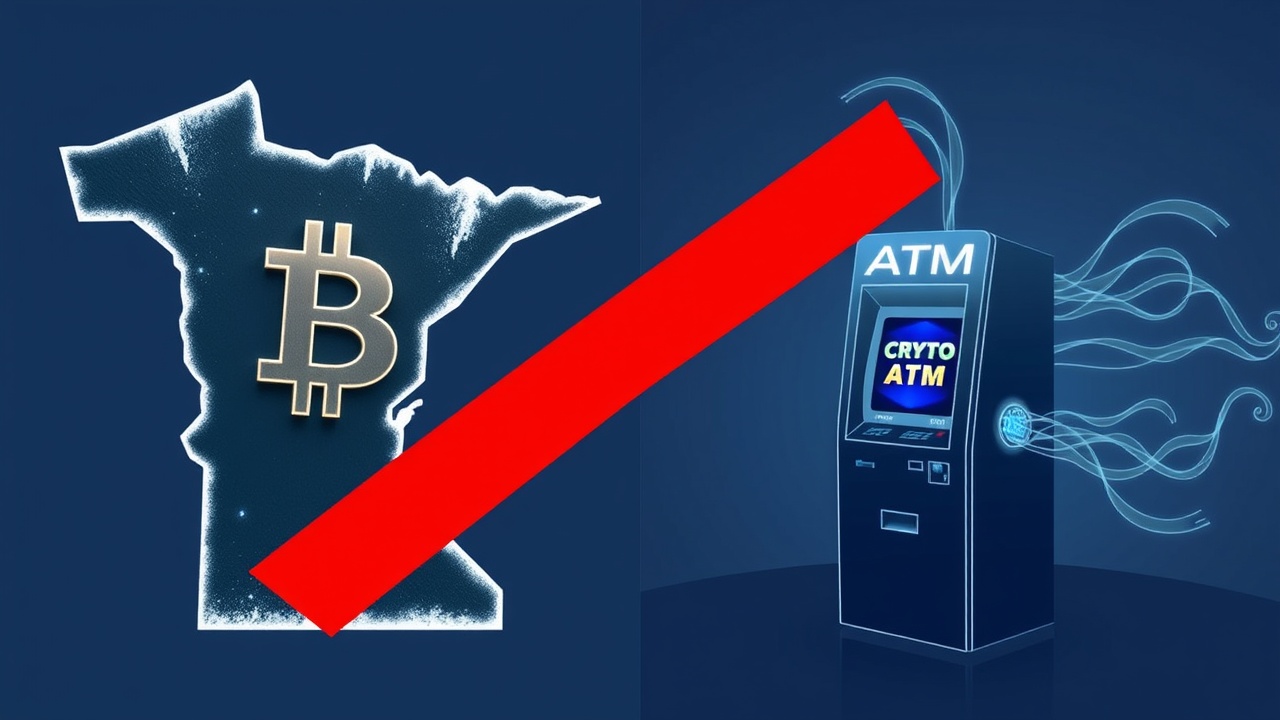
Minnesota Lawmakers Consider Cryptocurrency ATM Ban
Minnesota lawmakers are currently deliberating on a potential outright prohibition of cryptocurrency ATMs, following a legislative proposal aimed at curbing a surge of scams victimizing senior citizens. The bill, introduced by Rep. Erin Koegel—who also co-chairs the House Finance and Policy Committee—on Monday, seeks to eliminate all cash-based cryptocurrency purchasing machines throughout the state.
Background of the Legislation
This proposed legislation emerges in light of previously established regulations enacted in 2024, which imposed transaction limits, required refunds, and implemented a licensing framework for operators of crypto ATMs, yet failed to sufficiently protect the vulnerable populations targeted by scammers.
While many states have paused or restricted crypto ATM operations, if passed, Minnesota’s bill would become a groundbreaking measure as it aims to be the first statewide ban in the U.S., comparable to stringent national restrictions seen in countries like New Zealand.
Impact on Vulnerable Populations
During a recent legislative hearing, law enforcement officials shed light on the substantial financial losses suffered by elderly residents due to fraudulent schemes, where scammers falsely impersonate government officials or tech support to manipulate victims into sending cryptocurrency.
A notable case shared was that of a woman who sent Bitcoin to a fraudster ten times over six months, leading her to dire financial straits and fear of homelessness, necessitating government aid.
Current Landscape of Crypto ATMs in Minnesota
Currently, Minnesota hosts approximately 430 crypto ATMs, with a concentration in the Minneapolis area, according to Coin ATM Radar. In the preceding year, reports from across the U.S. revealed staggering losses amounting to $333 million linked to crypto ATMs, according to the FBI.
Industry Response and Compliance Measures
Larry Lipka, the General Counsel for CoinFlip, acknowledged the firm’s awareness of scams linked to their devices, emphasizing that fraudsters often have multiple means of perpetrating their crimes. In a written statement to the committee, a Minnesota police chief noted the significant obstacles law enforcement faces in recovering stolen funds post-transfer, complicating public safety efforts.
Rep. Keith Allen highlighted the concerning siphoning of funds from rural communities, noting that these losses could have positively impacted local economies. As Minnesota scrutinizes the potential ban, prosecutors in various jurisdictions are also seeking to impose limitations on crypto companies like Bitcoin Depot.
Bitcoin Depot’s New Compliance Measures
In a related development, Bitcoin Depot, the largest operator of Bitcoin ATMs in North America, announced that customers would soon need to provide personal identification for every transaction. This decision is a voluntary attempt to enhance compliance protocols amid scrutiny following a lawsuit from Massachusetts Attorney General Andrea Campbell. The lawsuit alleged that Bitcoin Depot facilitated scams while neglecting necessary fraud safeguards. The company, however, has countered the claims, asserting a commitment to compliance and consumer safety while cooperating with law enforcement to tackle illicit activities.