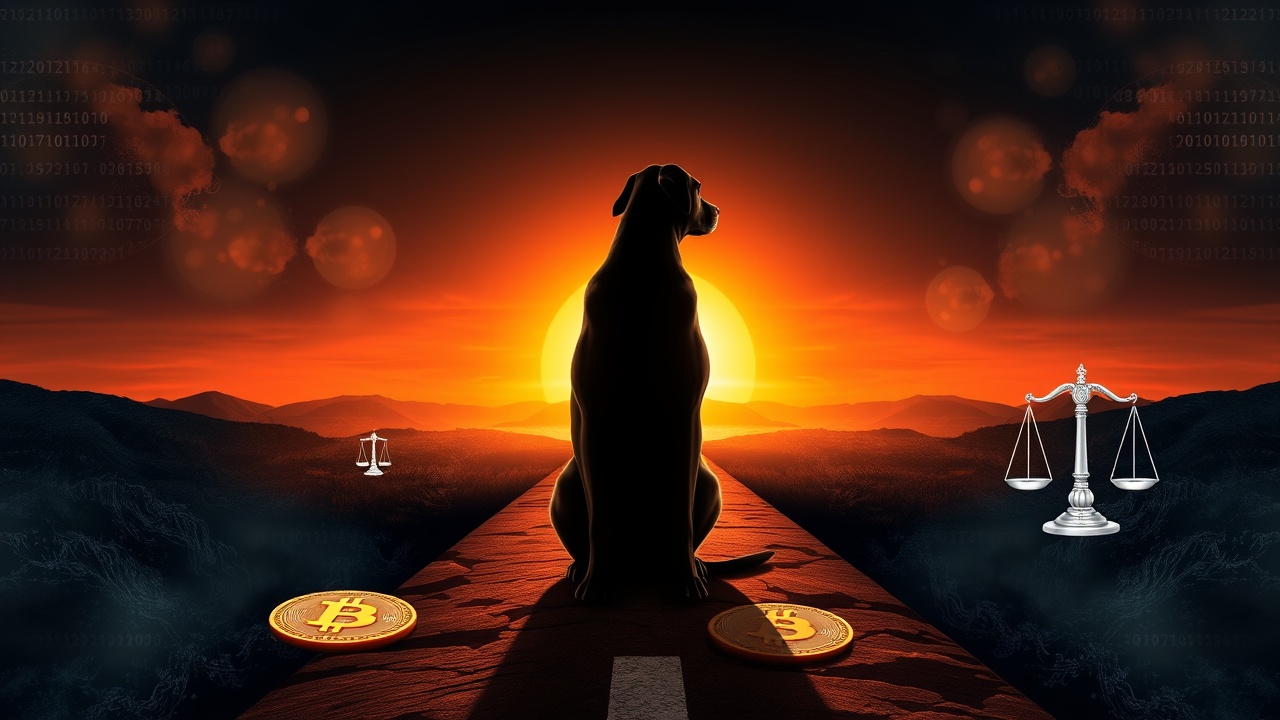
Introduction to DOG Mode
Leonidas, a prominent proponent of Bitcoin Ordinals, has unveiled a new open-source Bitcoin client named DOG Mode. This innovative software seeks to transform the way Bitcoin nodes communicate by adjusting the relay of certain valid transactions while strictly adhering to Bitcoin’s existing consensus rules. This initiative adds another layer to the ongoing debate surrounding Ordinals, Runes, and the utilization of Bitcoin’s block space.
Critique of Existing Clients
In his announcement, Leonidas criticized the Bitcoin Core and Bitcoin Knots clients for imposing policy restrictions that he believes are unnecessary. He emphasized that while a transaction may remain valid under the consensus framework, default node clients can still choose not to relay it within the peer-to-peer network. Leonidas stated:
“I am very excited to announce the launch of a new open-source Bitcoin client called Bitcoin $DOG Mode. Bitcoin Core and Bitcoin Knots have spent years enforcing rules that Bitcoin itself does not possess. A transaction can be fully valid under consensus and still face blockage from…”
Key Features of DOG Mode
One of the key features of DOG Mode is its ability to increase the maximum transaction size to 3.9 million weight units for its relay policy, compared to Bitcoin Core’s existing cap of 400,000 weight units for standard transactions. Furthermore, it proposes to lower the dust threshold for minimal transaction outputs to just one satoshi.
As detailed by crypto.news, DOG Mode stands out as it does not necessitate a fork in Bitcoin; it functions within the bounds of current consensus rules. This means that nodes can opt to operate this new software, allowing them to relay transactions that other clients might classify as non-standard, while miners still hold the power to choose which valid transactions to include in their blocks.
Market-Driven Approach
At the heart of this proposal is a longstanding contention regarding whether all valid, fee-paying transactions in Bitcoin should be treated equitably. Leonidas champions a market-driven approach that encourages users to vie for block space through fees, rather than allowing software developers to dictate which transaction formats receive standard relay support.
Potential Implications
DOG Mode might facilitate the dissemination of large Ordinals inscriptions and smaller outputs associated with certain Bitcoin-native token strategies. However, variations in relay policies could cause discrepancies in how different nodes perceive unconfirmed transactions before they are bundled into blocks by miners. Notably, the fundamental consensus rules of Bitcoin will remain intact, regardless of varying node mempool views.
Contrast with BIP 110
This new approach contrasts with Bitcoin Improvement Proposal (BIP) 110, which recommends temporary consensus limitations on various forms of transaction data. Despite facing criticism from users concerned about the potential censorship implications of the restrictions, Bitcoin developer Luke Dashjr continues to support BIP 110. Advocates of this proposal argue that transactions laden with data elevate storage costs and use up precious block space, while detractors caution that altering consensus rules could set a worrying precedent. High-profile figures such as Michael Saylor and Adam Back have voiced their opposition to BIP 110, and recent miner signaling has fallen well below the necessary activation threshold.
Governance Dynamics
The introduction of DOG Mode prompts further contemplation on the dynamics of Bitcoin governance outside of formal protocol modifications. While Bitcoin Core developers have the authority to establish default relay policies, node operators retain the autonomy to execute alternative software. Additionally, miners can acquire transactions through direct connections, bypassing the traditional peer-to-peer relay network.
This means DOG Mode can begin operations even without widespread consensus, and its impact will hinge on whether node operators, miners, and Bitcoin users are willing to embrace its principles. Leonidas has indicated that one of the long-term goals is to encourage broader adoption of DOG Mode in order to prompt existing Bitcoin clients to re-evaluate the restrictions he perceives as unnecessary.
Conclusion
Currently, the Bitcoin community is facing a clear dichotomy, with BIP 110 attempting to implement new consensus constraints and DOG Mode aiming to ease some relay policy limitations without altering the consensus framework itself. The future direction of Bitcoin will depend on the software choices users make and the transactions miners elect to process.