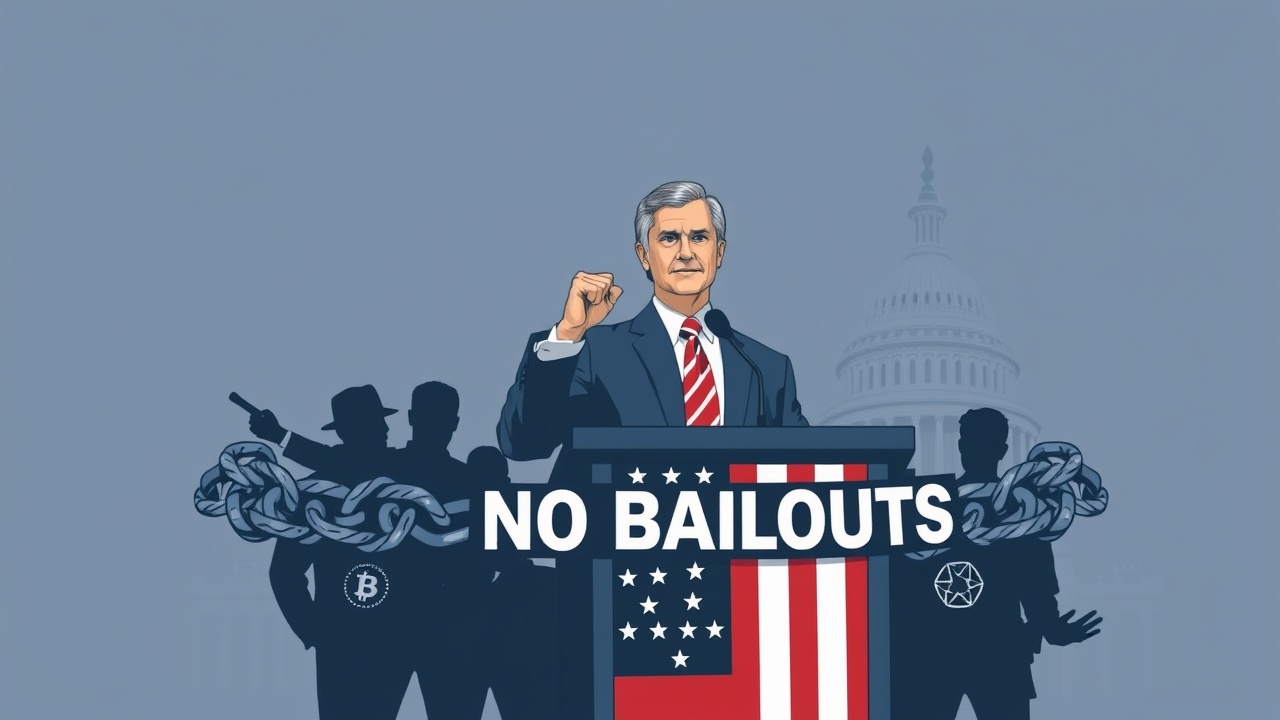
Legislative Action Against Cryptocurrency Bailouts
In a move reflecting growing concerns over the potential integration of digital assets into the mainstream financial landscape, U.S. lawmakers are taking steps to prohibit taxpayer-funded rescues for cryptocurrency firms. This initiative aims to establish clearer barriers between traditional finance and the burgeoning crypto sector, amidst heightened scrutiny regarding the risks posed by digital assets to the financial system.
No Bailout for Crypto Act
On March 19, Senator Richard Durbin (D-IL) unveiled the proposed legislation known as the “No Bailout for Crypto Act.” This bill specifically seeks to restrict federal intervention, preventing governmental agencies from providing emergency financial support to businesses primarily involved in cryptocurrency activities, such as trading, custody, or issuance, especially during market downturns. Senator Durbin emphasized the importance of safeguarding everyday Americans, stating:
“When crypto crashes, everyday Americans should not be on the hook for saving a failed industry—as they were during the 2008 financial crisis. That only punishes hardworking Americans despite no wrongdoing of their own.”
Support and Safeguards
This legislative effort has garnered support from a variety of co-sponsors, including Senators Elizabeth Warren (D-MA), Peter Welch (D-VT), Bernie Sanders (I-VT), Tina Smith (D-MN), and Mazie Hirono (D-HI). Additionally, prominent consumer advocacy organizations like the Consumer Federation of America and the National Consumers League have voiced their backing for the bill, indicating a broad consensus on the need for financial protections against the speculative nature of cryptocurrencies.
The proposed legislation introduces further safeguards by banning the allocation of federal funds to stabilize or guarantee losses associated with digital asset ventures. This includes restrictions on programs managed by the Federal Reserve and the Federal Deposit Insurance Corp, which traditionally provide assurances to federally insured institutions. In a bid to eliminate potential loopholes, it stipulates that even firms with connections to these institutions would not be eligible for federal assistance if they primarily engage in crypto-related activities.
Regulatory Authority and Accountability
Moreover, the bill makes it clear that federal banking regulators will not have the authority to bypass these new regulations through emergency measures, thereby tightening the constraints on any discretionary actions they might have previously exercised. By defining eligibility criteria based on a firm’s core operations rather than its affiliations, the legislation aims to strengthen accountability and reduce expectations of federal bailouts within the digital asset space.
Context and Future Implications
This proposed legislation is part of a larger context where lawmakers are increasingly worried about the intertwined exposure of cryptocurrency to traditional banking institutions and the overall stability of the financial system. By reinforcing the distinction between speculative activities and government-backed finance, the bill is designed to maintain public confidence in existing financial safety nets without extending those protections to cover losses incurred in the cryptocurrency domain.
Senator Durbin underscored the intention behind the bill, stating:
“My simple legislation would ensure that taxpayers aren’t left holding the bag for this shady industry.”
As Congress continues to evaluate the implications of digital commodities, related regulatory measures are also being discussed, such as the “Digital Commodities Consumer Protection Act of 2022,” which aims to grant the Commodity Futures Trading Commission (CFTC) greater authority to oversee cryptocurrency markets.