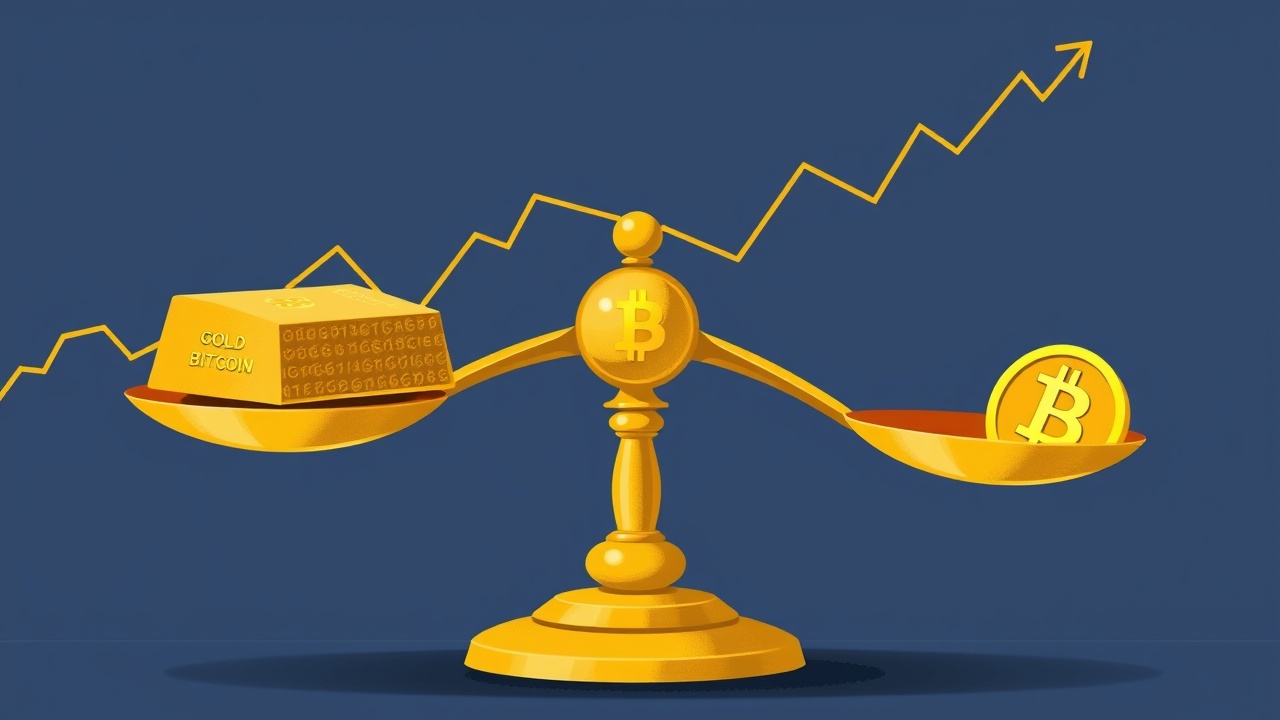
Ray Dalio’s Critique of Bitcoin
In a recent conversation with Nikhil Kamath, co-founder of Zerodha, renowned billionaire investor Ray Dalio shared his criticisms of Bitcoin, underscoring his belief that the cryptocurrency has inherent flaws. Although Dalio admits to owning a small amount of Bitcoin, he perceives it as significantly less favorable than gold, especially regarding its appeal to central banks.
Concerns Over Bitcoin’s Adoption
Dalio pointed out that despite Bitcoin’s restricted supply, its characteristics as a money substitute and a store of value dissuade many central banks from adopting it widely due to these challenges. He referenced the Czech National Bank’s recent move to acquire Bitcoin as part of a $1 million digital assets test portfolio, emphasizing that this venture does not integrate with the bank’s official reserves.
Transparency and Government Surveillance
A major concern for Dalio centers on Bitcoin’s public ledger, which allows for the tracking of transactions linked to user wallet addresses. He suggested that this transparency raises concerns about government surveillance and interference, stating:
“Governments can monitor what the transactions are. And governments can interfere with those transactions.”
In contrast, he regards gold as a more reliable asset that remains beyond governmental control.
Bitcoin vs. Gold: Security and Reliability
Advocates of Bitcoin highlight its potential as a robust asset that enables wealth transfer and access worldwide, secured only by a simple 12-word phrase. Nevertheless, regulatory pressure has led governments to impose requirements such as Know Your Customer (KYC) and Anti-Money Laundering (AML) rules, allowing them to freeze accounts and inhibit transactions tied to sanctioned entities.
Dalio elaborated on his apprehensions regarding the security of Bitcoin’s network, raising hypothetical scenarios about potential future vulnerabilities akin to the production of synthetic diamonds. He asserted that unlike gold, which he considers a safe haven, Bitcoin presents risks of being compromised or controlled.
Historical Context and Future Outlook
While Dalio remains pessimistic about fiat currencies and holds a small investment in Bitcoin, he consistently compares its allure unfavorably to that of gold. Bitcoin, launched in 2009, has achieved a remarkable uptime of over 99.98% over its 16-year history, maintaining flawless reliability since 2013 and avoiding any successful hacks of its protocol. However, challenges such as substantial energy consumption for network security and price volatility continue to draw criticism. Gold, with a centuries-old legacy as a store of value, also faces environmental criticisms tied to its mining processes.
Despite historical precedents showing that both gold and Bitcoin have faced governmental confiscation—for example, the U.S. government’s Executive Order 6102 in 1933 and significant seizures of Bitcoin from criminal enterprises—neither asset offers complete immunity from state intervention, highlighting the complex dynamics between these investment vehicles and regulatory oversight.