Celebrating a Milestone in Cryptocurrency
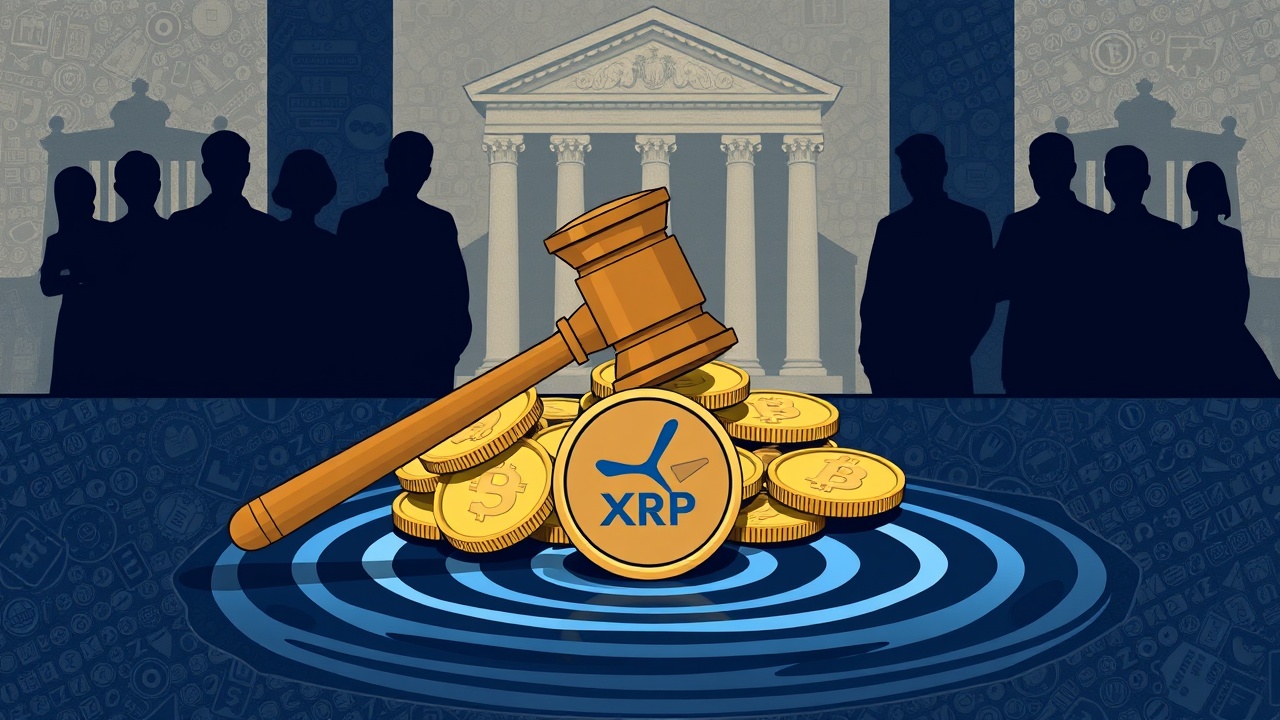
The cryptocurrency community is celebrating a monumental shift this December, marking five years since the U.S. Securities and Exchange Commission (SEC) initiated its legal battle against Ripple concerning the digital asset XRP. In December 2020, the SEC accused Ripple of violating securities laws by selling XRP as an unregistered security, a claim that ignited widespread debate within the crypto sphere. Back then, many skeptics in the crypto community viewed the lawsuit as an unlikely catalyst for significant regulatory clarity regarding XRP. However, over the past five years, the implications of this case have profoundly impacted the legal landscape of cryptocurrencies.
The Lawsuit’s Impact
The lawsuit quickly transformed into a pivotal moment for the wider cryptocurrency sector, garnering support from various advocacy organizations, including the Chamber of Digital Commerce and the Blockchain Association, all echoing their backing for Ripple’s defense to U.S. District Judge Analisa Torres. Central to the SEC’s argument was the assertion that XRP met the criteria of a security established by the Howey test, a legal benchmark originating from a 1946 Supreme Court case. In contrast, Ripple argued that XRP sales did not fulfill the test since transactions typically occurred in the secondary market and lacked any profit pooling among investors.
Key Rulings and Outcomes
A significant ruling came in July 2023 when Judge Torres declared that XRP itself was not classified as a security, although she identified some institutional sales that breached securities regulations. This ruling was heralded as a triumph for Ripple and a notable constraint on the SEC’s regulatory reach. The SEC sought a hefty financial penalty from Ripple, claiming over $876 million in disgorgement, in addition to a more than $198 million interest charge and an $876 million civil penalty. However, Judge Torres rejected the SEC’s request for Ripple to surrender profits made from sales, reasoning that the case didn’t involve any allegations of fraud or serious misconduct. As a result, Ripple was sanctioned to pay $125 million in civil penalties.
Conclusion of the Case
In a final resolution to this landmark case, both Ripple and the SEC withdrew their appeals in October of this year in the U.S. Court of Appeals for the Second Circuit, effectively concluding the civil enforcement actions against Ripple’s CEO, Brad Garlinghouse, and Chairman, Chris Larsen. This decision has now officially sealed one of the most notable lawsuits in the cryptocurrency domain.
XRP Market Performance
As of the latest market data, XRP is trading at $2.04, reflecting a staggering increase of 827% from its low of $0.22 at the time the SEC lawsuit was filed, underscoring the asset’s dramatic recovery amidst evolving regulatory dynamics.