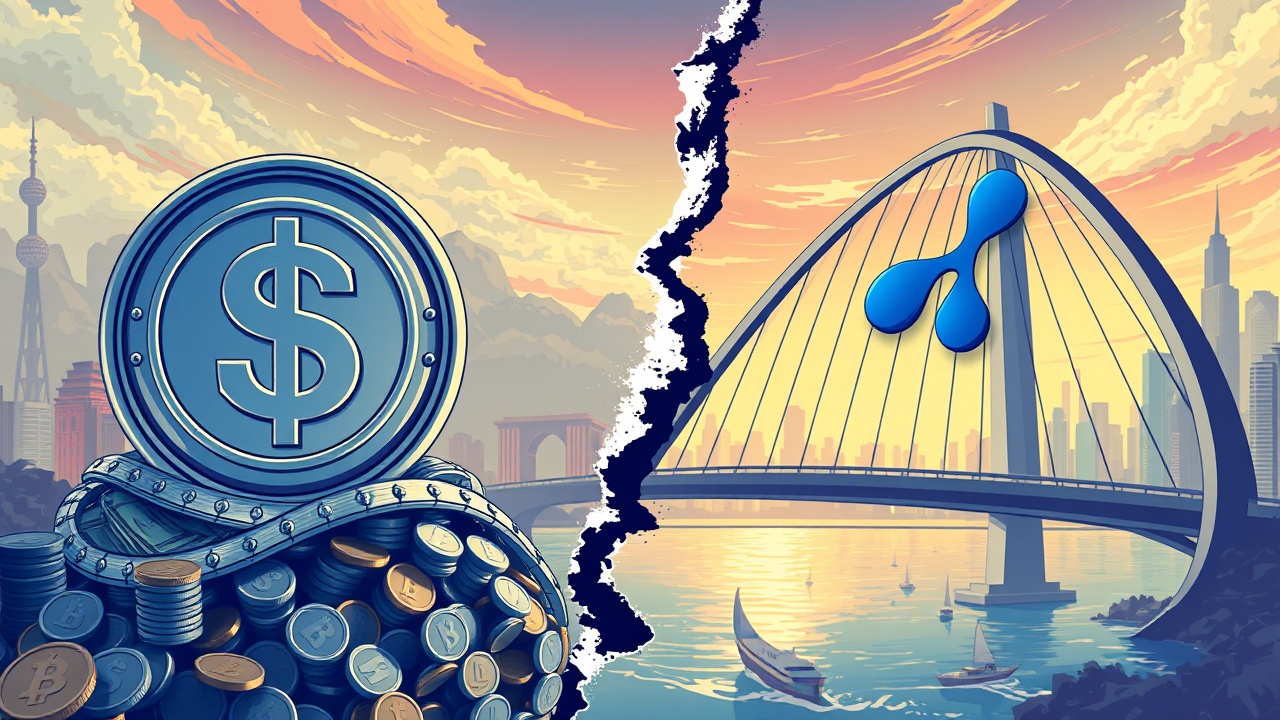
Ripple’s RLUSD: A New Contender in the Stablecoin Market
Ripple’s stablecoin, RLUSD, is making significant inroads into the established market predominantly ruled by USDT and USDC. Analysts, including SMQKE, predict that the year 2026 will bring transformative changes, as new competitors, inventive structures, and enhanced institutional collaborations threaten the entrenched dominance of these leading tokens. Central to this shift is RLUSD, a stablecoin tethered to the U.S. dollar, which has been meticulously designed to meet regulatory standards and cater to sophisticated financial needs.
Targeting Institutional Applications
Unlike many stablecoins that primarily target retail investors, RLUSD is tailored for institutional applications, intending to serve banks, custodians, and major trading entities. Ripple is actively integrating RLUSD into the trading frameworks used by these institutions, facilitating its application in diverse areas such as international remittances, liquidity optimization, and on-chain settlements.
Strategic Partnerships and Adoption
A notable acceleration in RLUSD adoption can be seen with the Latin American exchange, Bitso, incorporating XRP and Ripple Payments to enhance efficiency in cross-border transactions. Ripple’s strategic advantages stem from its strong connections to essential financial systems. As SMQKE outlines, alliances with key financial players, including prime brokers like Hidden Road, along with anticipated access to U.S. payment networks like Fedwire and FedNow, elevate RLUSD beyond a conventional stablecoin offering. This capability could enable more efficient transitions between traditional bank deposits and tokenized U.S. dollars, making RLUSD a viable option for immediate settlement and collateral management in scenarios demanding stringent compliance and reliability.
Future Outlook and Market Dynamics
In a significant development for Ripple’s global aspirations, Binance has recently included RLUSD in its listings, further bolstering the stablecoin’s growth potential. Currently actively traded on Ethereum, plans for RLUSD to extend support to the XRP Ledger (XRPL) are underway, thereby widening its presence within different ecosystems.
Looking to the future, SMQKE envisions that by 2026, the landscape of stablecoins may shift dramatically from a binary competition between Tether and Circle to a more pluralistic environment featuring various contenders. New offshore issuers, heavily regulated payment stablecoins, and dollar tokens that offer yield are likely to emerge, each vying for position on public blockchains. Success in this new arena will be measured not just by market capitalization, but by attributes such as transparency, regulatory compliance, liquidity, and integration with conventional finance. Additionally, Binance Research has identified Ripple’s RLUSD as a potential frontrunner in the next generation of stablecoins.
Potential Market Shifts
There’s even speculation that USDT and USDC’s combined market dominance could dip below 75% as fresh players enter the market, reshaping the competitive dynamics of stablecoins while still allowing Tether and Circle to retain significant power. Should RLUSD adoption grow robustly within the XRP Ledger and the broader Ripple ecosystem, it may increase the demand for XRP itself through network operations and liquidity options, contingent upon legislative frameworks, institutional uptake, and prevailing market circumstances.
Conclusion: A Pivotal Year Ahead
As such, the future success of RLUSD heavily relies on effective execution. By balancing regulatory acceptance with genuine utility for institutions, Ripple is positioned to possibly redefine the stablecoin sphere in 2026. This effort is further enhanced by partnerships such as the one with LMAX Group, which aims to streamline trading across various assets and improve margin efficiency using RLUSD. If the anticipated adoption materializes, 2026 may represent a significant pivot point, offering a legitimate alternative for both investors and institutions, while amplifying XRP’s function as a crucial element in financial infrastructure. Ripple stands ready to spearhead this major shift in the stablecoin landscape.