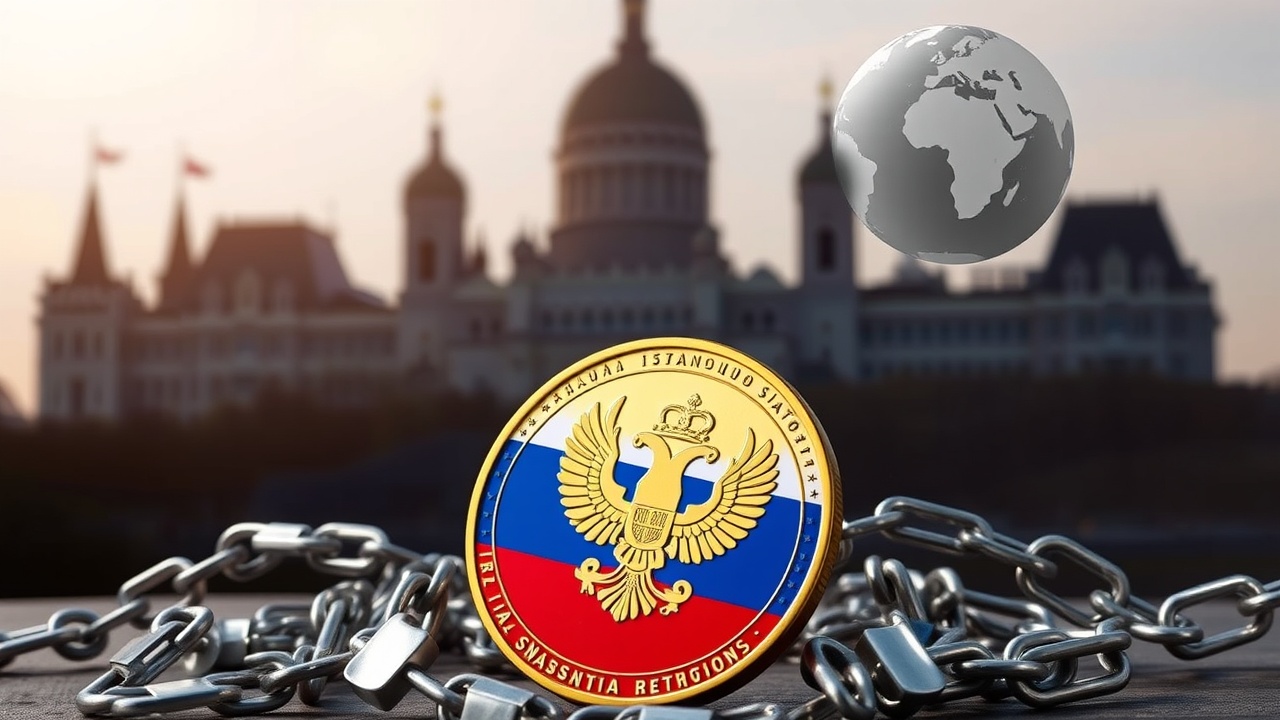
Russia’s Central Bank Reassesses Stance on Stablecoins
Facing mounting external pressures and tightening sanctions, Russia’s central bank is reexamining its previous stance against stablecoins. Officials have indicated plans to conduct a formal evaluation in 2026 regarding the potential development of a state-backed stablecoin, reflecting a significant pivot from their historically rigid position. This announcement was made by First Deputy Chair Vladimir Chistyukhin during an Alfa Talk forum, where he outlined intentions to analyze both the risks and possible benefits of creating a domestic digital currency tied to the ruble. As the geopolitical landscape evolves, the Bank of Russia acknowledges the necessity of reassessing its strategies in light of global market transformations.
International Pressure and Sanctions
This shift in focus comes in the wake of increasing international pressure. The European Union is actively drafting a comprehensive package of sanctions aimed at restricting cryptocurrency transactions with Russia, as part of efforts to limit the utilization of digital assets for circumventing financial sanctions. Proposed regulations may halt transactions with crypto platforms linked to Russia and could potentially affect infrastructure related to digital central bank currency.
Challenges with Foreign Stablecoins
In historically turbulent markets, reliance on foreign stablecoins has presented challenges for Russia. For instance, in March 2025, a significant US dollar-pegged token issuer blocked wallets associated with Garantex, a sanctioned Russian exchange, which was involved in ruble-to-crypto trades. This blockade led to Garantex suspending its operations, revealing the vulnerabilities that come with dependence on international stablecoins under sanctions.
Surge in Domestic Solutions
In response to these challenges, interest in domestically issued ruble-backed tokens, like the A7A5 stablecoin, has surged. A7A5 has reportedly facilitated billions in transactions, serving as an alternative for international payments, although it has faced scrutiny from Western regulators for its potential role in sanction evasion. This trend highlights the urgent need for Russian authorities to explore domestic solutions.
Global Regulatory Landscape
Globally, regulations surrounding stablecoins are becoming increasingly prevalent. The European Union’s Markets in Crypto-Assets (MiCA) regulation went into effect in 2024, imposing wide-ranging rules on stablecoin issuers within the bloc, though enforcement remains complex, especially for tokens operating outside the EU. Other major economies, including the United States, are advancing legislation to integrate stablecoins into the broader payment ecosystem, while several Asian nations are recalibrating their digital asset strategies.
Future of Digital Currencies in Russia
Historically, Russian authorities have approached digital currencies with caution, using constitutional and banking laws to ensure that only the Bank of Russia controls monetary issuance, thereby limiting the introduction of alternative currencies to protect the ruble. However, the confluence of sanctions and the rise of cryptocurrency payment mechanisms has prompted renewed discussions about the viability of a regulated stablecoin that could enhance international trade without compromising domestic monetary policies. Such conversations suggest a potential transformation in Russia’s engagement with digital currencies, moving from a reliance on foreign systems to a focus on developing homegrown solutions, emphasizing the dynamic nature of the global financial landscape.