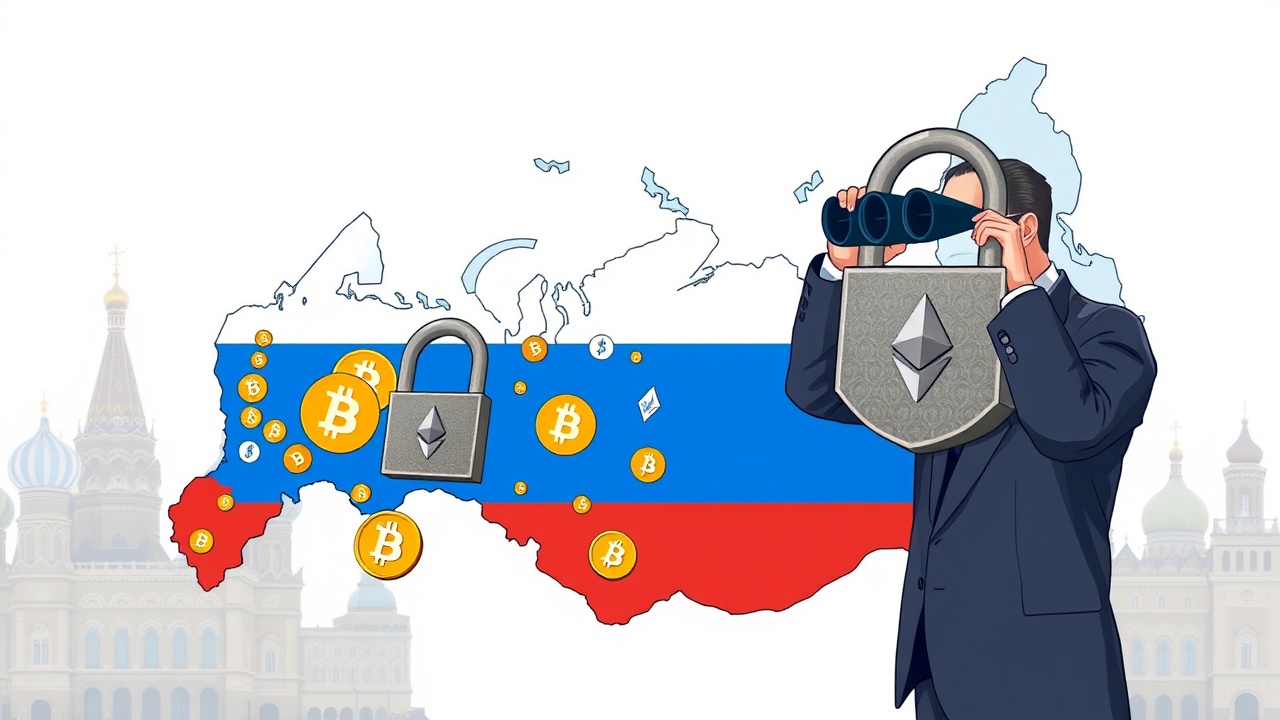
Russia’s Upcoming Cryptocurrency Regulation
Russia is set to advance a significant regulatory initiative concerning cryptocurrency, with a vote on a stringent new bill anticipated by late June. The framework, led by Anatoly Aksakov, chairman of the Financial Market Committee in the State Duma, intends to establish definitive rules governing cryptocurrency exchanges, set to take effect on July 1, 2027.
Licensing and Legal Consequences
Under this proposed legislation, all cryptocurrency exchanges must obtain licenses to operate legally, and failure to do so may lead to severe consequences akin to those seen in illicit banking operations, such as hefty fines and potential imprisonment.
Investor Protection Measures
The regulation aims to safeguard investors by implementing a qualification exam that individuals must pass to engage in cryptocurrency purchases, which would be restricted to a maximum annual limit of 300,000 rubles—equivalent to about $4,000. The rationale provided by lawmakers for these investment caps centers on better protecting retail investors amidst rising market uncertainties.
Restrictions on Digital Transactions
In a move that will restrict anonymity in digital transactions, the bill aims to limit the use of privacy coins and continues to maintain a prohibition on digital currencies for domestic payments. However, there is provision for the use of stablecoins within the realms of international trade and cross-border transactions, indicating a partial opening of avenues for cryptocurrency in specific contexts.
Central Bank’s Role
Furthermore, the Central Bank of Russia would gain the authority to decide which digital currencies can be traded commercially, signaling a shift from its earlier stance advocating for an outright ban on cryptocurrencies.
Conclusion
The journey toward formalizing cryptocurrency regulation in Russia has been prolonged, entangled in disputes between the central bank and the finance department. Nevertheless, the current framework appears to be a response to an escalating demand for alternative financial options beyond traditional dollar-denominated systems. If passed, this framework is expected to allow both individual and institutional investors limited access to Bitcoin and other sanctioned cryptocurrencies by the designated mid-2027 deadline, marking a notable shift in Russia’s approach to digital currencies.