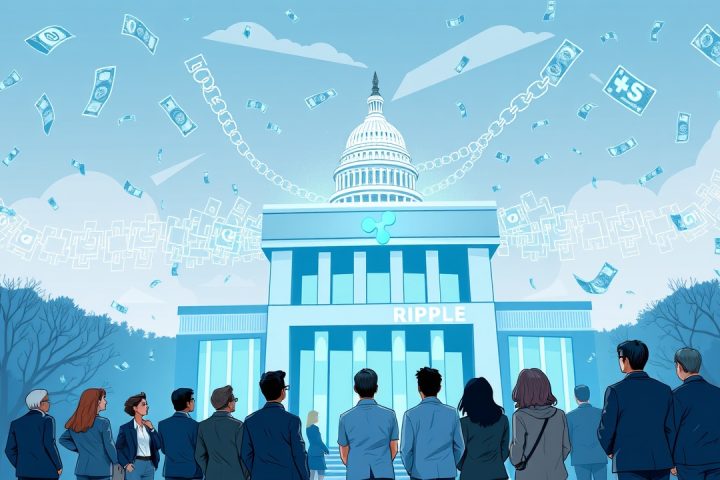
Support for the CLARITY Act
Paul Atkins, the recently appointed Chairman of the SEC, has expressed strong support for the Biden administration’s initiative to advance the CLARITY Act—a legislative proposal that aims to establish clearer frameworks for the cryptocurrency sector. The move comes at a time when the traditional banking industry is actively lobbying against crypto advancements, resulting in significant political contention over regulatory measures for digital assets.
Need for Clear Regulations
Atkins voiced his dissatisfaction with the slow pace of legislative progress, pointing out the necessity for the United States to set “clear rules” governing digital currencies and related technologies. Emphasizing the potential benefits of homegrown tech, he remarked,
“The CLARITY Act enables innovators to build the next generation of financial technologies here in the United States.”
While optimism about the bill’s potential is evident, the SEC is also encouraged by a collaborative approach with the Commodity Futures Trading Commission (CFTC) to develop comprehensive legislation for the crypto market.
Political Landscape and Bipartisan Support
This push for clear regulations comes as Atkins succeeds Gary Gensler, an SEC chair known for his more cautious stance towards the cryptocurrency industry. In a compelling discussion on Fox Business, Representative French Hill (R-AR), a key figure behind both the CLARITY Act and the GENIUS Act, highlighted the robust bipartisan support garnered in the House. Hill noted the passage of the CLARITY Act with the backing of 78 Democrats alongside Republican votes, signaling significant cross-party agreement.
He further addressed the future of third-party rewards in the crypto space, suggesting that these concerns could be addressed independently without obstructing broader regulatory reforms.
“Nonbank issuers and exchanges seek the same capacity to offer competitive products as banks do. There’s potential for a viable compromise here,”
he stated.
In a related note, Ripple’s CEO, Brad Garlinghouse, has previously estimated that the CLARITY Act holds an approximately 80% chance of being enacted by the end of April.