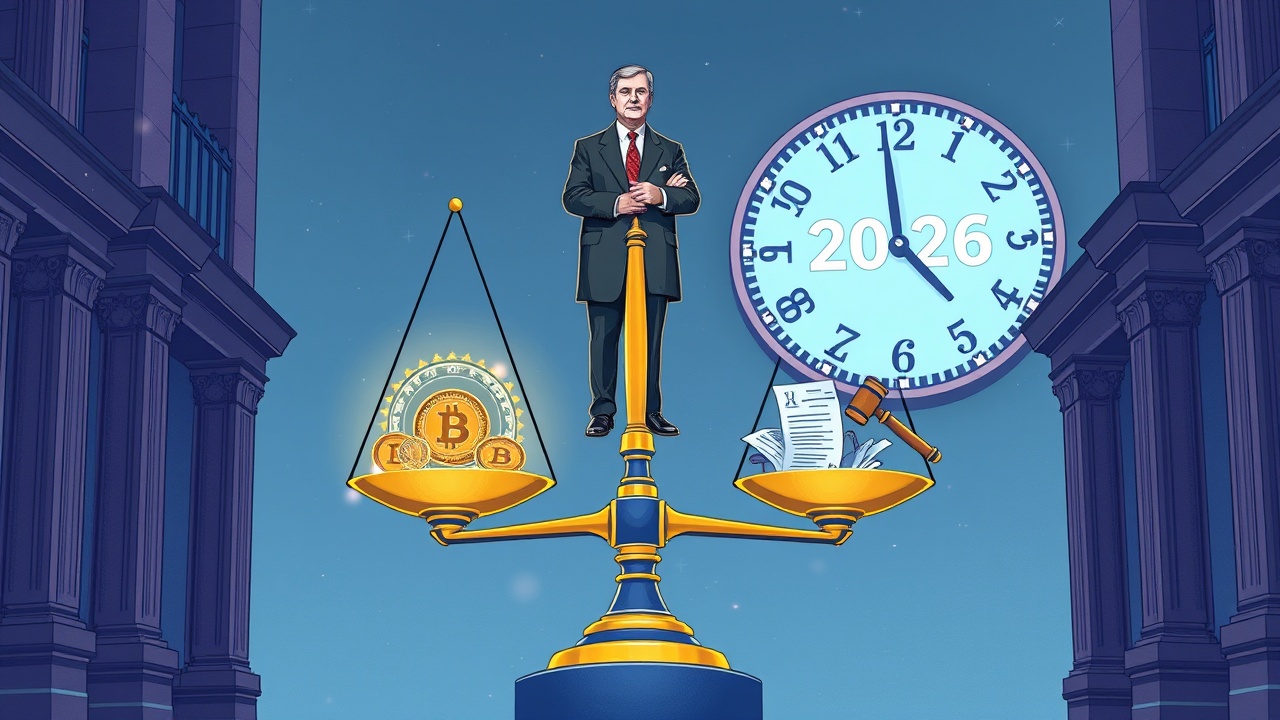
SEC’s Authority on Digital Assets
Paul Atkins, who heads the U.S. Securities and Exchange Commission (SEC), has asserted that his agency possesses the necessary authority to enact regulations for digital assets independently of Congress. In a recent conversation with CNBC, Atkins revealed that while lawmakers deliberate on legislative frameworks for the digital asset space, the SEC is actively providing “technical assistance” and working on rules designed to foster the crypto industry.
Commitment Amidst Challenges
Atkins noted that despite the ongoing government shutdown, the SEC is committed to progress. He emphasized,
“We have enough authority to drive forward,”
and expressed optimism about introducing an anticipated innovation exemption within the coming month.
Shift in Oversight Approach
Since his appointment in April, Atkins has signaled a shift towards less aggressive oversight of cryptocurrency companies, including the issuance of no-action letters to decentralized physical infrastructure networks. These steps align with various policy initiatives from the White House under former President Donald Trump, who has previously enacted multiple executive orders affecting the cryptocurrency and blockchain landscape.
Implications for Shiba Inu Holders
The potential establishment of clearer regulations and the innovation exemption may bode well for Shiba Inu (SHIB) holders by providing a more conducive environment for adoption and the long-term evolution of digital assets. If the SEC successfully rolls out the innovation exemption, it could alleviate some regulatory anxiety that developers face. This would potentially allow projects involving SHIB and similar tokens to explore innovative features, decentralized finance (DeFi) solutions, and use cases devoid of the ongoing threat of regulatory repercussions.
Enhancing Investor Confidence
Moreover, a reduction in enforcement actions is likely to enhance the overall regulatory framework, instilling greater investor confidence. Consequently, SHIB could see improved legitimacy, attracting both institutional and retail investors. Should clear regulatory guidance be established, it would also facilitate smoother listing processes on exchanges and bolster compliance standards for projects built around Shiba Inu. This development could significantly diminish the risks associated with market fluctuations stemming from legal uncertainties.
Conclusion
In summation, the prospect of refined regulations and potential innovation exemptions may ultimately render SHIB a more attractive digital asset, thereby promoting wider adoption, increasing liquidity, and further advancing the token’s underlying ecosystem.