Delays in Cryptocurrency Regulation
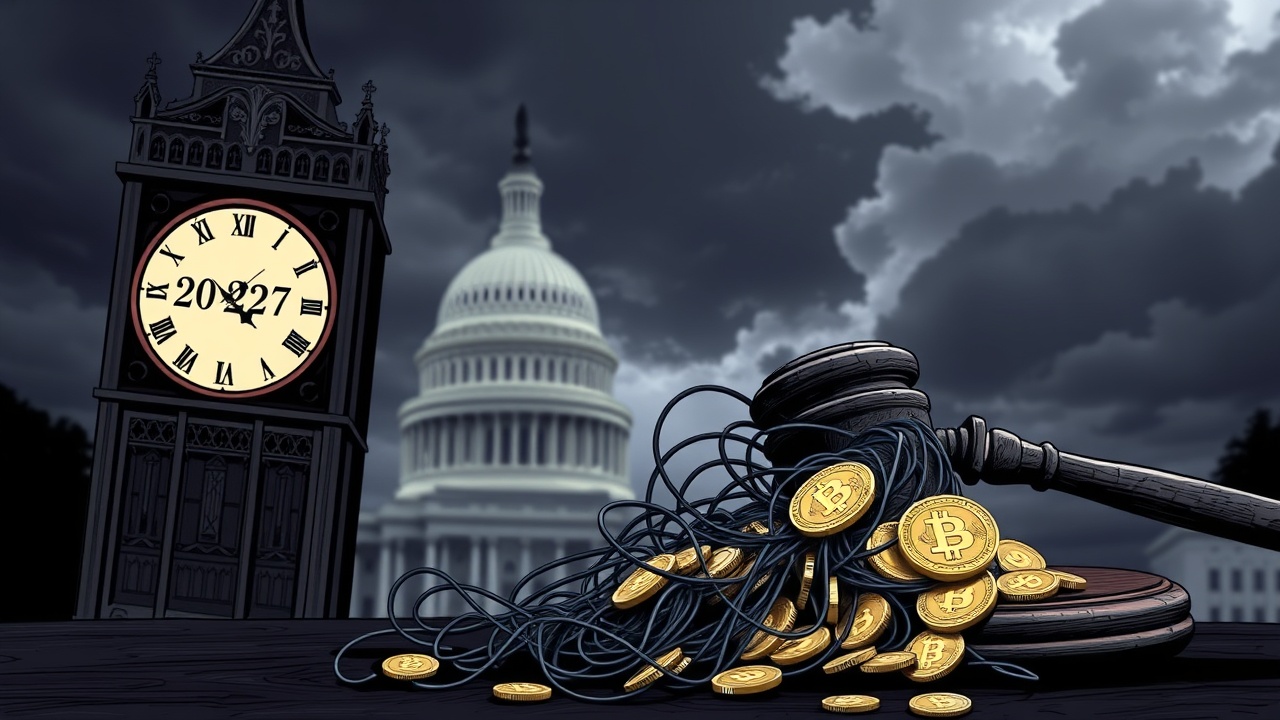
Analysts from TD Cowen, an investment banking firm, have indicated that the push to establish a regulatory framework for cryptocurrencies in the United States may experience significant delays, potentially extending the process to 2027. Lawmakers previously aimed to pass a comprehensive market structure bill within this year, yet shifting political dynamics in Congress have cast doubt on this timeline. If passed, actual enforcement of the new regulations may not commence until 2029.
Political Dynamics and Legislative Challenges
The Washington research team at TD Cowen expressed concerns about the dwindling motivation among legislators to advance this legislation ahead of the crucial 2026 midterm elections. With many Democrats focusing on gaining ground in the House of Representatives, there’s a palpable lack of urgency to expedite the bill’s passage. This situation complicates efforts to secure the necessary support from Senate lawmakers, creating further obstacles in meeting the 2026 target.
Should the new framework be delayed, it could lead to a scenario where full enforcement is pushed toward the latter part of the decade. Under the projection by TD Cowen, it’s plausible the market structure legislation could be ratified in 2027, with its rules coming into effect two years later, in 2029. This prolonged timeline underscores the intricate negotiations that have arisen, particularly around contentious issues like conflict-of-interest restrictions for government officials involved in cryptocurrency enterprises.
Contentious Negotiations
Democratic lawmakers are pushing for stringent guidelines to prevent such conflicts, while their Republican counterparts are resisting immediate enforcement of these rules. This disagreement poses a political risk that complicates the negotiations further. To facilitate broader consensus, some legislators are contemplating a delay on implementing these ethics provisions, possibly stretching up to three years post-enactment, thereby allowing these rules to align with the other regulations in 2029.
Procedural Hurdles
Furthermore, the market structure bill must navigate through procedural hurdles, requiring at least 60 Senate votes to circumvent potential filibusters. This necessity mandates bipartisan support, a challenging feat that often extends the timeframe for legislative action in various policy areas, not just cryptocurrency.
Impact on Digital Asset Companies
As the delay in passing this updated regulatory framework looms, digital asset companies and investors within the U.S. could remain uncertain and vulnerable, forced to operate within an inconsistent landscape shaped by existing guidelines established by organizations like the Securities and Exchange Commission (SEC) and the Commodity Futures Trading Commission (CFTC). Prolonged ambiguity could hinder business strategies and diminish the competitive edge of U.S. firms as other regions refine their own crypto regulations.
Continuing Legislative Efforts
This push for regulatory clarity is a continuation of past legislative efforts, such as the Financial Innovation and Technology for the 21st Century Act (FIT21), which attempted to clarify the regulatory responsibilities among federal agencies regarding digital assets. While FIT21, passed by the House in May 2024, aimed to delineate the criteria for assets classified as commodities versus securities and garnered bipartisan approval, it fell short of creating the extensive regulatory regime currently under discussion.
The ongoing legislative dialogue has been informed by lawmakers’ recognition of the necessity for a definitive regulatory framework to spur innovation, safeguard investors, and maintain international competitiveness, though each delay prolongs a state of uncertainty for crypto firms operating under often vague regulatory guidance.