Insights on Ethereum and BlockDAG: A Shift in EVM Scalability Dynamics
In the evolving landscape of blockchain technology, the competition between Ethereum and alternative architectures like BlockDAG showcases a significant shift in how transaction scalability is approached. While Ethereum has established itself as the dominant player in the Ethereum Virtual Machine (EVM) ecosystem with a robust network of over 900,000 validators, its current transaction processing capability ranges from 15 to 30 transactions per second (TPS) at the base layer. Gas prices often soar during times of high demand, frequently exceeding $20, leading to increased congestion and user frustration.
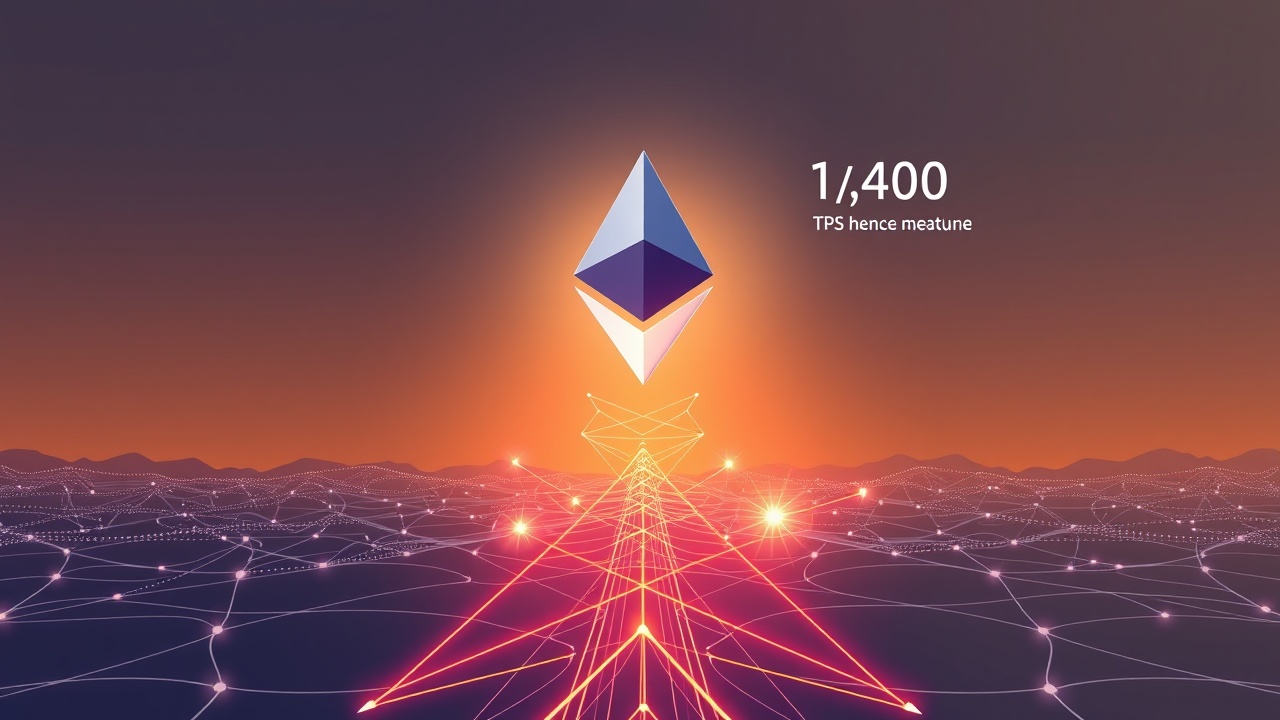
Against this backdrop, the innovative BlockDAG architecture steps in with a compelling solution, claiming to process transactions at an astonishing rate of 1,400 TPS natively on Layer 1. This capability reframes the narrative around scalability—positioning it as an inherent feature of the protocol instead of a layer-2 add-on like Optimism or Arbitrum, which Ethereum developers increasingly rely on.
The Ethereum network continues to uphold its reputation as a resilient environment for decentralized applications (dApps), stablecoins, and decentralized finance (DeFi) protocols, supported by a vast developer community. Yet, despite several upgrades, including the much-anticipated Merge, Ethereum’s base-layer throughput has struggled to deliver significant enhancements. Users are left contending with a modular system where execution, data availability, and settlement are fragmented across multiple layers, complicating the development process and increasing operational risks.
In contrast, BlockDAG utilizes a Directed Acyclic Graph structure that allows blocks to be processed concurrently, effectively sidestepping the linear block sequence limitation and enhancing throughput at Layer 1. This means that developers can build and deploy smart contracts in a familiar EVM environment without the additional overhead and complexity created by off-chain networks.
The architecture promotes efficient transaction ordering through a consensus mechanism based on graph theory, mitigating congestion and ensuring consistent execution speed during periods of high demand. For high-frequency applications, such as those in the gaming or financial sectors, this could represent a significant advantage as it reduces reliance on external systems, thereby improving latency and cost predictability.
BlockDAG’s approach also reflects a distinct economic model; it seeks to increase network throughput rather than ration block space through elevated fees as seen in Ethereum’s implementation following EIP-1559. With a successful presale raising over $442 million and the upcoming end date set for January 26, the project’s pricing at $0.003 signifies considerable market interest in Layer-1 solutions that could potentially redefine performance limits without sacrificing EVM compatibility.
While BlockDAG offers a fresh alternative focused on execution efficiency, it’s important to note that it does not aim to displace Ethereum. Instead, it complements the existing EVM landscape by providing developers with solutions tailored for environments where swift transaction processing is essential.
As the crypto ecosystem continues to expand and demand for EVM applications grows, the emergence of solutions like BlockDAG illustrates an essential evolutionary step—where performance and scalability become built-in characteristics, rather than reliant on secondary systems. To further explore what BlockDAG has to offer, interested parties are encouraged to visit their official website, Telegram, or Discord channels.
Disclaimer: The information contained herein is for educational purposes only and does not constitute investment advice. Readers should conduct thorough research prior to making any financial decisions regarding cryptocurrencies.