Solo Miner Achieves Remarkable Milestone
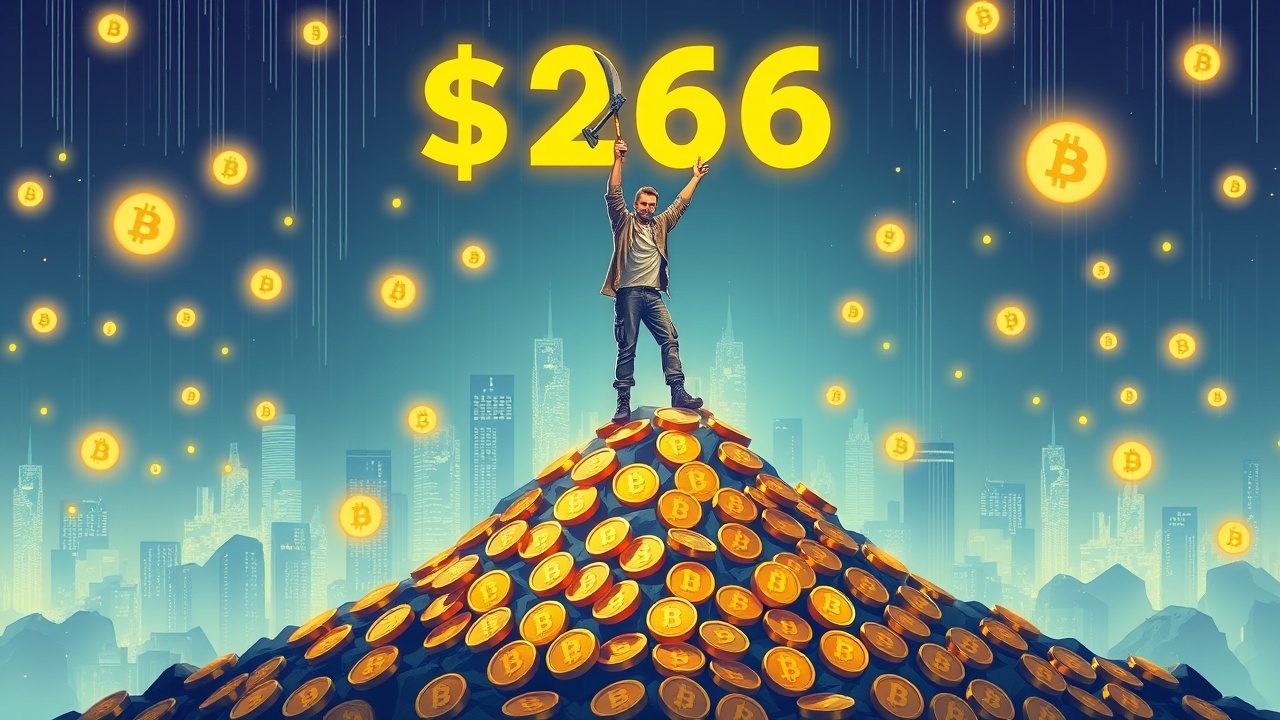
In an unexpected turn of events last Friday, a solo miner successfully mined the 924,569th block in the Bitcoin network, netting a reward of approximately 3.15 Bitcoin, equivalent to $266,000. This achievement is remarkable considering the miner’s chances of success were estimated to be less than 1 in 100,000 per day.
Mining Equipment and Techniques
The mining was reportedly performed using a compact hobbyist machine, characterized by a hash rate of roughly 1.2 terahash per second, similar to a Bitaxe Gamma, which can be purchased for around $100.
Mining Bitcoin typically requires extensive computational power, and most miners opt to join pools that combine their resources to increase their likelihood of success. However, this individual opted for solo mining, a choice that, while significantly raising the risks, also means that any potential reward would be theirs alone.
Odds and Community Support
Notably, earlier this year, another miner utilizing a similar 1.2 TH/s device faced a mere 0.00068390% daily probability of mining a block, underscoring the astronomical odds involved. Despite the unlikeliness of this outcome, the miner has not yet revealed their identity, and as a result, it remains unclear what specific equipment they used.
According to Solo Satoshi, a Bitcoin mining retailer, these instances of solo miners hitting the jackpot have become more frequent this year. However, the rarity of such victories emulates the odds found in lottery games, with CKPool, a resource for independent miners, reporting only 13 successful solo mining rewards throughout the year.
The community has been actively supportive, with users on social media, such as an account named Bee Evolved, encouraging aspiring miners to pursue their ambitions.
The Importance of Mining
The mining process itself is critical to Bitcoin’s functionality, wherein miners solve complex mathematical problems to discover a nonce, or a unique number, and secure Bitcoin’s proof-of-work confirmation. This not only rewards them with new Bitcoins but also enhances the overall decentralization and security of the network, a principle cherished by Bitcoin’s advocates.