Texas State Securities Board Takes Action Against Alleged Pyramid Scheme
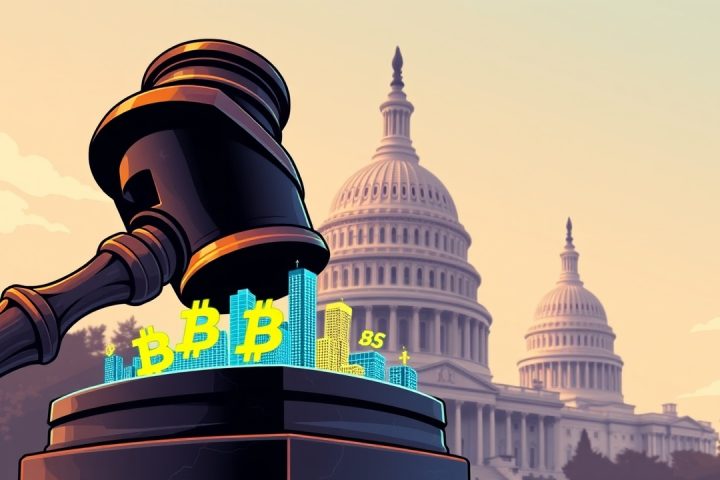
In a decisive move to protect investors, the Texas State Securities Board has issued an emergency cease and desist order against a crypto investment operation alleged to be running a pyramid scheme. Targeting BG Wealth Sharing LTD and DSJ Exchange PTY Ltd, the board acted after receiving reports of high-pressure tactics that promised participants the potential for millionaire status, passive income, and impressive monthly returns through both recruitment and dubious trading codes.
Details of the Alleged Scheme
The scheme, which targeted residents of Texas, revolves around DSJ, which claimed to be a cryptocurrency exchange focusing on low-risk, AI-driven trading strategies. According to the order, BG Wealth Sharing Group LLC, alongside individuals Thaddious Thomas and Gagandeep Sarkaria, were involved in sending out trading codes to investors via Bonchat, a messaging platform. This method left investors with minimal control over their trades, creating a misleadingly dynamic appearance of the platform.
Interestingly, the scheme incentivized recruitment heavily, allowing participants to earn additional trading codes by enrolling new members into the initiative. Promoting an illusion of safety, the operators projected a 99.6% success rate and promised returns of at least 60% monthly, with claims that initial investments could turn into lifetime incomes—settings that painted a picture of systematic, risk-free trading.
Withdrawal Challenges and Fees
However, it also became clear that extracting funds from the platform was not straightforward. Investors attempting to withdraw their money were confronted with a fee amounting to roughly 20% of their account value, which was justified by the operators as a necessary measure against arbitrage and money laundering. Moreover, BG Wealth later imposed an additional charge of 12% of account balances, purportedly to cover taxes and transfer fees, effectively preventing any withdrawal of funds without incurring significant losses.
“After freezing standard withdrawal options, operators insisted that victims pay this so-called ‘exit tax’ or ‘compliance fee’ out of pocket,” noted a spokesperson from the Texas State Securities Board, highlighting the manipulation at play.
Amid growing scrutiny, the operators began deflecting blame onto DSJ for any fraudulent activities and attempted to redirect victims to a new service called HQIEX, raising further concerns about the management of funds and overall transparency.
Broader Implications and State Responses
This action places Texas in line with other states, such as Washington and Hawaii, which have also begun formal investigations and cautions regarding BG Wealth Sharing and its affiliates. While Utah and Alaska have released warnings, they have not escalated to the same formal cease and desist actions, indicating a broader trend of concern over the reach of this alleged cryptocurrency scheme.
As states take more rigorous actions against questionable financial schemes, Texas notably stands out for taking a pioneering step by publicly investing $10 million in bitcoin, marking its first foray into cryptocurrency investments through public funds. This juxtaposition of proactive state investment strategy against fraudulent operations highlights the growing complexity of the cryptocurrency landscape, as regulators intensify efforts to safeguard investors.
A Cautionary Tale
With the potential for further developments looming, the case serves as a cautionary tale for individuals considering involvement in high-risk investments promising unlikely returns, particularly in the unregulated realm of cryptocurrency.