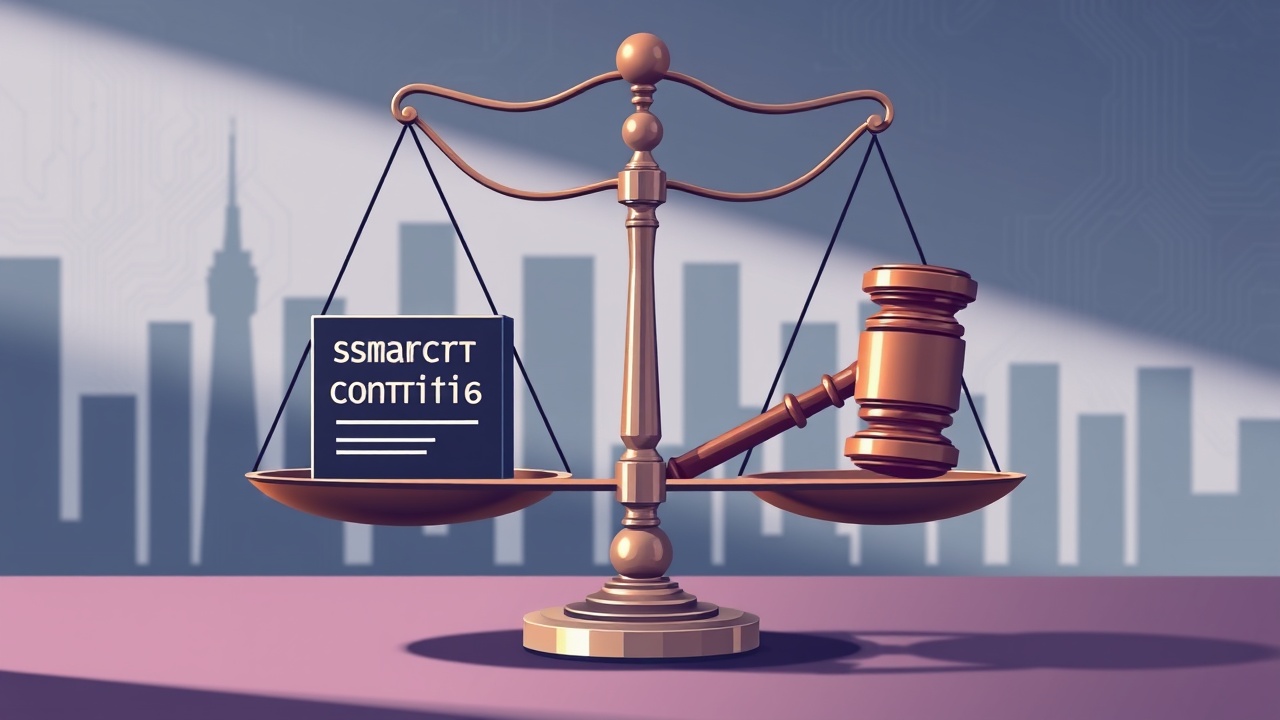
Smart Contracts and Their Legal Status
In the evolving landscape of digital commerce, the topic of smart contracts and their legal status is becoming increasingly relevant. Sponsored by Kelman Law, the segment “Law and Ledger” addresses the complexities surrounding the enforceability of these blockchain-based agreements.
Understanding Smart Contracts
Smart contracts are unique digital agreements that execute themselves when predetermined conditions are met. While they operate automatically through code, their legal enforceability still hinges on traditional contract law. The key elements that courts examine include the offer, acceptance, intention to be bound, and consideration.
Interestingly, smart contracts authenticated via a cryptographic signature can satisfy the intent-to-sign criteria established by the Uniform Electronic Transactions Act (UETA) and the Electronic Signatures in Global and National Commerce Act (E-Sign Act). This delineation ensures that the mere fact that a contract is digital does not render it unenforceable.
Legal Recognition of Smart Contracts
Several states have affirmed the legal effect of smart contracts. For instance, Arizona’s legislation makes it clear that contracts cannot be denied validity merely due to the inclusion of smart contract provisions. This move bolsters the legal framework surrounding blockchain agreements, providing much-needed clarity for developers and users alike. Conversely, other jurisdictions have opted for a more cautious approach, asserting that current contract laws adequately govern smart contracts without explicitly recognizing their enforceability.
Judicial Rulings and Challenges
Recent judicial rulings reveal that courts are more concerned with the fundamental notions of consent rather than the intricate technical details of smart contract code. A notable case, Van Loon v. Department of the Treasury, determined that the immutable smart contracts of Tornado Cash did not meet the criteria for ownership since no party could exert traditional control over them. The ruling reflects a growing trend of treating these contracts as independent technological entities instead of conventional human-centered agreements.
This perception calls for new legal schemas to clarify the application of laws when blockchain functionality acts without a centralized authority.
Despite the potential legal acceptance of smart contracts based on traditional principles, certain inherent challenges remain. Since many contract conditions are encoded, parties may inadvertently agree to terms they do not fully comprehend, raising significant concerns about the authenticity of their consent. Additionally, the unalterable nature of blockchain contracts complicates liability, especially in decentralized models without a clear operator, as discussed in cases such as CFTC v. Ooki DAO.
Furthermore, some smart contracts might fall under the statute of frauds, necessitating a written agreement for enforceability, which raises questions about the legal sufficiency of on-chain actions as a substitute for traditional documentation.
Dispute Resolution and Best Practices
Even with automated processes minimizing day-to-day human intervention, disputes can still arise when the executed code deviates from the parties’ intentions. Traditional mechanisms of dispute resolution—such as arbitration or litigation—remain vital in addressing these conflicts.
To increase the chances of a smart contract being recognized legally, parties need to ensure that they adhere to established contract law principles that demonstrate clear consent, adequate disclosure, and appropriate signing methods. Ultimately, the answer to whether smart contracts are legally binding is affirmative when they fulfill these requirements.
The rise of smart contracts necessitates a careful blend of blockchain automation and off-chain legal clarity to protect parties entering into these agreements, especially as the landscape evolves into 2025 and beyond.
Conclusion
At Kelman PLLC, we remain committed to keeping our clients informed about the shifting legal terrain surrounding digital assets. We are closely monitoring crypto regulations across various jurisdictions and are available to assist clients in managing the complexities of this rapidly changing environment. For further engagement or to schedule a consultation, please reach out to us today.