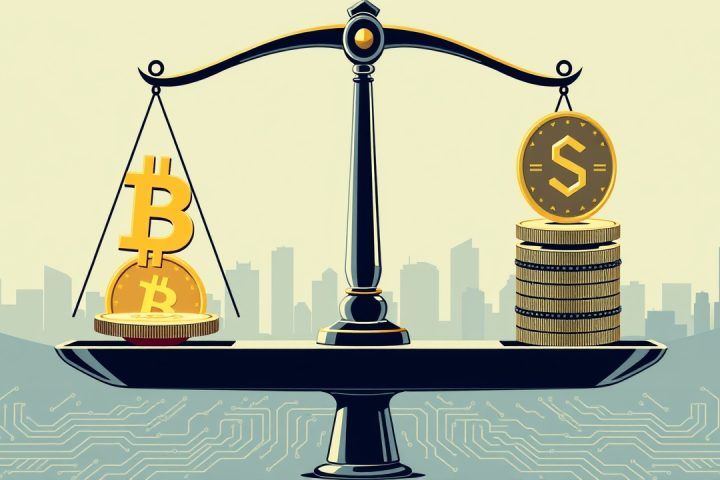
Integration of Digital Assets into Mainstream Finance
In a significant move toward the integration of digital assets into mainstream finance, Nasdaq recently proposed rule changes that would facilitate the trading of tokenized securities, which are to settle through the established U.S. clearing and settlement system, known as the Depository Trust Company (DTC). This initiative follows an endorsement from Binance regarding BlackRock’s tokenized Treasury fund, allowing it to be used as collateral in off-exchange transactions.
Growing Demand for Efficient Asset Management
The momentum in the financial sector reflects a growing demand for faster and more efficient asset management capabilities. Tokenized assets must still comply with existing securities laws, as the Securities and Exchange Commission (SEC) continues to refine its regulatory framework, particularly regarding trading venues and execution processes. A notable step forward was the SEC’s recent decision to grant a three-year no-action relief to the DTC clearing subsidiary, enabling it to tokenize assets, including major index ETFs and stocks from the Russell 1000, on approved blockchain technologies, effective in 2026.
Future of Tokenized Assets
This pivot illustrates that major financial institutions are already actively preparing for a future where tokenized assets serve as recognized collateral rather than just speculative investments. Prominent figures like BlackRock’s CEO Larry Fink have drawn parallels between the current state of tokenization and the early days of the internet, emphasizing its potential to revolutionize finance.
Currently, the market for tokenized real-world assets boasts a substantial valuation of approximately $18.6 billion and has over 570,000 unique holders. When considering the expansive presence of stablecoins, which exceed a collective market cap of $300 billion, the scale of a new, efficient financial infrastructure emerges. Analysts foresee the market could reach upwards of $4 trillion by 2030. However, the critical question remains: what practical applications will these assets serve in the evolving financial landscape?
Creating a Supportive Ecosystem
Simply put, the act of tokenizing an asset by itself provides little value without a supportive ecosystem that can mobilize the asset effectively. Institutions leading this transition are focusing on creating robust collateral management systems. For instance, JPMorgan’s deployment of its Tokenized Collateral Network allows shares in money market funds to be converted into collateral, with transactions executed in seconds as opposed to days. Similarly, BlackRock is not only developing tokenized yield products but also integrating them into institutional workflows through triparty arrangements.
Operational Familiarity and Integration
The approach taken by Nasdaq is crucial since it seeks to ensure that tokenized securities would ultimately settle using the same processes employed for traditional equities—thereby integrating with existing operations. This offers banks and prime brokers operational familiarity, along with improved programmability for automatic posting and seamless clearing.
On another front, JPMorgan’s recent $50 million issuance of commercial paper for Galaxy Digital on the Solana blockchain, settled in USDC, illustrates the shift towards integrating traditional banking operations with tokenized collateral systems.
Unified Collateral Framework
While each of these initiatives currently serves different asset classes, the next evolution will aim to interconnect these systems into a unified collateral framework. This would allow for easier management of diverse assets such as Treasuries, gold, and equities as a single pool, transforming risk management and liquidity access.
Conclusion
In conclusion, the future of financial markets, marked by tokenization, promises a dynamic where assets are not only digitized but can move fluidly and function inherently within an advanced collateral framework. This paradigm shift aims to redefine yield products, making them accessible and efficient, ultimately unlocking the full potential of capital markets as we approach 2026.
The anticipation surrounding tokenization is not about merely housing assets on a blockchain, but rather ensuring that they become active components of financial systems, capable of generating yield while promoting liquidity.