Can Bitcoin Be Traced?
The question of whether Bitcoin can be traced is prevalent among various stakeholders, including newcomers, regulators, and even seasoned cryptocurrency users. Contrary to the widespread notion that Bitcoin transactions are completely anonymous, the reality is that the blockchain offers a high degree of transparency. Each Bitcoin transaction creates a detailed and immutable financial record, making it one of the most traceable payment systems globally.
Understanding Bitcoin Tracing
Understanding Bitcoin tracing involves unveiling the distinction between myth and reality. Bitcoin is pseudonymous, not anonymous, meaning your real-world identity isn’t tied to your wallet address, yet every transaction remains indisputably logged on the blockchain for all to see. Each transaction record encompasses key data points, including:
- The sender’s address
- The receiver’s address
- The transaction amount
- The timestamp
- A permanent public record
Once a Bitcoin address is associated with a real identity—often through the Know Your Customer (KYC) processes of exchanges—every transaction linked to that address becomes traceable.
Blockchain Forensics and Law Enforcement
Numerous blockchain forensics firms, such as Chainalysis and Elliptic, employ sophisticated graph analysis techniques to map the movement of Bitcoin. Instead of circumventing Bitcoin’s encryption, these firms track the flow of funds, visualizing the blockchain as a network that reveals connections and clusters of related addresses, which can ultimately be traced back to specific individuals or services.
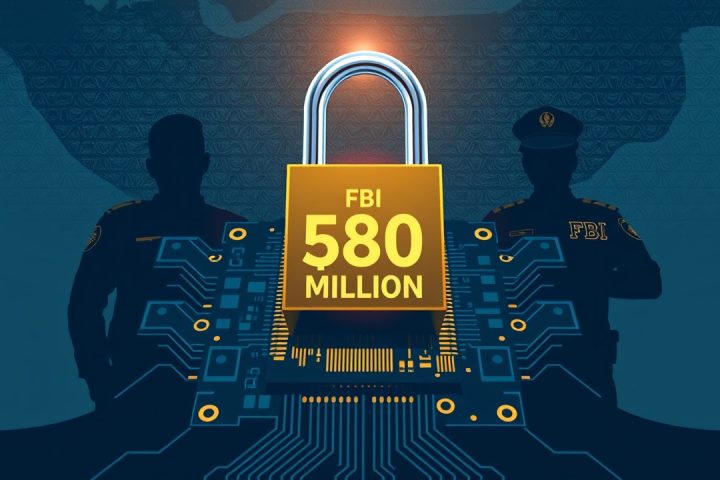
This capability of tracing transactions is invaluable for law enforcement agencies like the FBI and Europol, who utilize blockchain analytics to combat crimes ranging from ransomware attacks to illicit online marketplaces. Major seizures in the cryptocurrency landscape, including operations against Silk Road and the recovery efforts related to the Colonial Pipeline ransomware attack, underscore the effectiveness of traceability in Bitcoin transactions.
Privacy Measures and Their Limitations
While some Bitcoin users incorporate various privacy measures—like using mixers and implementations such as Wasabi Wallet—to obscure their transaction histories, these methods only complicate tracking rather than eliminate it. For example, mixing services can cluster coins and obscure their entry and exit points, but blockchain analysts are still capable of identifying patterns, timing correlations, and ultimately tracing transactions. High-profile incidents, such as the sanctions against Tornado Cash and the shutdowns of ChipMixer, exemplify the limitations of privacy techniques in the face of law enforcement scrutiny.
The Challenge of Achieving True Anonymity
In theory, Bitcoin transactions could be made more untraceable, but in practical terms, it’s quite challenging. For one to avoid tracing altogether, they would need to:
- Never connect their identity to their wallet address
- Avoid using centralized exchanges
- Perfectly implement privacy strategies
- Prevent any network-level tracking of their IP address
- Refrain from reusing wallet addresses
- Completely disconnect their Bitcoin dealings from their real-world activities
Even a minor slip, such as sending Bitcoin to a regulated exchange or reusing an address, could unravel an entire history of transactions. This level of anonymity is often impractical for the average user.
The Transparency of Bitcoin
Bitcoin’s transparency was an intentional aspect of its design, allowing:
- Anyone to verify the total supply
- Auditors to confirm exchange reserves
- Regulators to pursue illicit activities
- Users to independently validate transactions
This inherent visibility contributes to governments’ increasing openness to recognizing Bitcoin as a legitimate asset class, drawing a stark contrast with the anonymity associated with cash, gold, and many offshore banking structures.
Conclusion
In conclusion, while Bitcoin can be traced—and often is—privacy tools may complicate tracking but cannot erase the blockchain’s transparent nature. For regulators, this traceability is instrumental, while for criminals, it’s a significant hindrance. Everyday users are reminded that their Bitcoin transactions are enduringly documented on a public ledger, one of the most traceable financial networks in existence today. As more users adopt Bitcoin and analytic technologies evolve, this reality will likely be amplified.