Trump Cancels Signing Ceremony for Housing Initiative
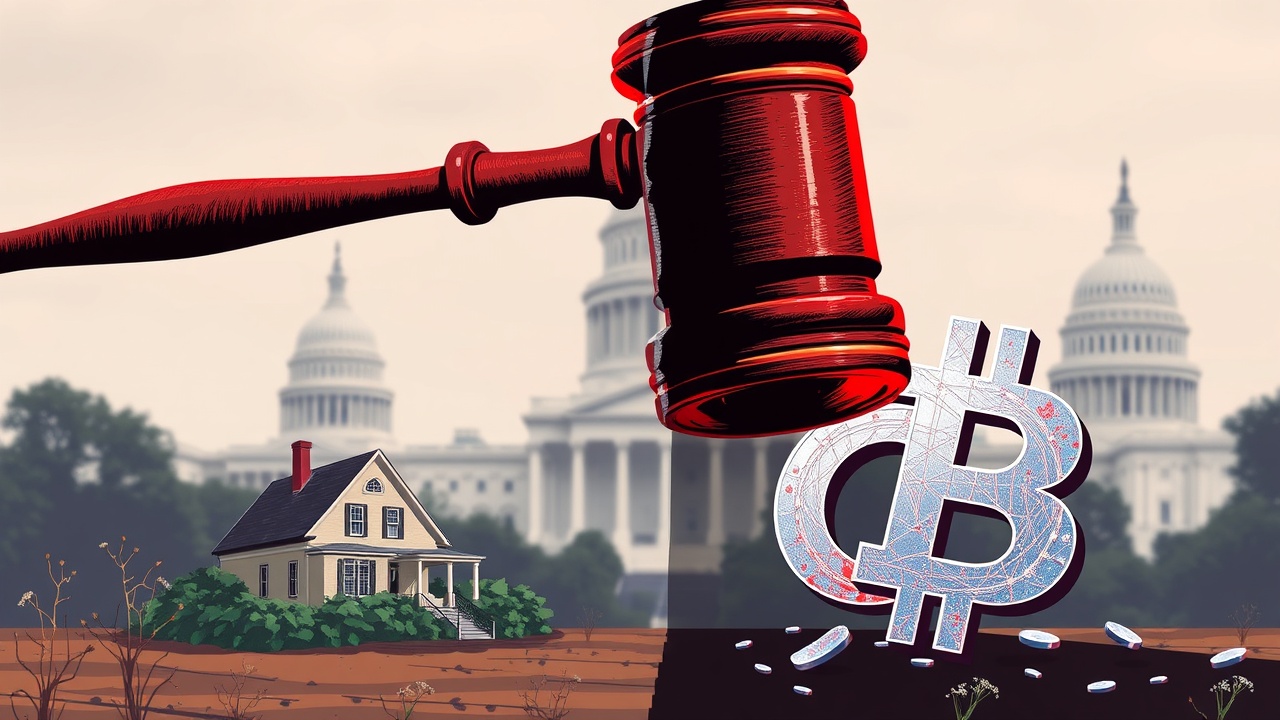
In a surprising turn of events, President Donald Trump called off a planned signing ceremony Wednesday for a significant bipartisan housing initiative known as the 21st Century ROAD to Housing Act. This legislation features a crucial clause that temporarily prevents the federal government from establishing a central bank digital currency (CBDC) until the year 2031.
Bipartisan Support for the Housing Bill
This housing bill has garnered notable bipartisan support, with the Senate recently approving it in an overwhelming 85-5 vote, followed by the House’s endorsement with a 358-32 vote. Designed to eliminate barriers to new home construction across the nation, the act also includes measures to stop large financial firms from monopolizing the housing market.
Additionally, earlier this year, advocates for cryptocurrency and privacy successfully included restrictions on the Federal Reserve, halting any plans to introduce a digital currency backed by the U.S. government until 2031. While the European Union and other global entities are advancing their digital currency projects, U.S. conservatives have expressed significant opposition to the idea, fearing it could enable governmental overreach into personal transaction data.
Cancellation of the Ceremony
The signing event was initially anticipated to take place at the U.S. Capitol, as many were set up for the occasion. However, just hours before, Trump canceled the ceremony, stating that the housing bill was “of minor importance.” Instead, he indicated he would withhold his approval until Congress passes another piece of legislation—the SAVE America Act. This act, which has been a contentious topic, seeks to impose stricter voting regulations across the country. Despite Trump’s endorsement, Republican leaders have pointed out the bill’s slim chances of being enacted.
Potential Veto and Political Implications
If Trump ultimately decides to veto the housing bill, it would require a two-thirds majority in both congressional chambers to overcome the veto. The bill initially received sufficient bipartisan backing to achieve this threshold, leading to uncertainty about how political dynamics may evolve in light of Trump’s recent decisions.