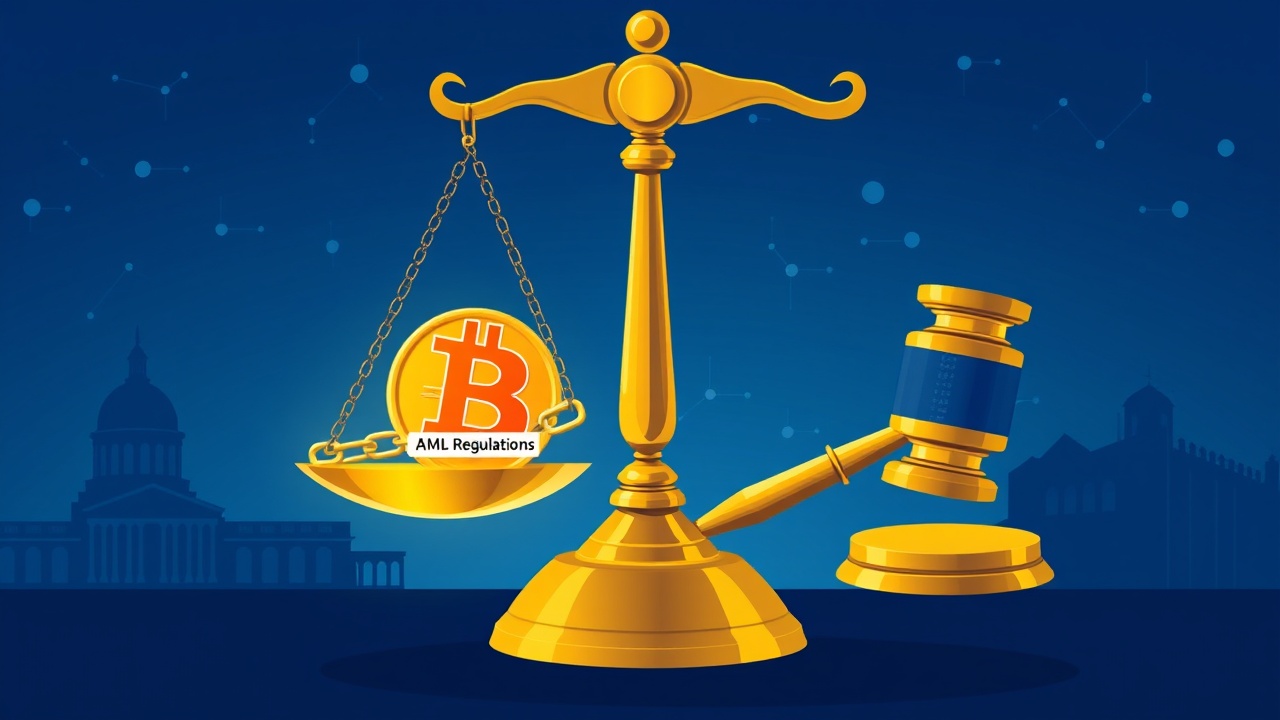
Senate Vote on the CLARITY Act
The recent Senate vote led to the dismissal of the CLARITY Act, which means that current regulations regarding customer verification, anti-money laundering (AML), sanctions, and suspicious activity reporting remain intact for cryptocurrency businesses operating in the United States. Fernando Castellanos, Global Head of Digital Assets and Sponsor Banks at Prove, emphasized to crypto.news that the bill, while focused on market structure, would have had no impact on the compliance requirements established by the Bank Secrecy Act that govern crypto enterprises.
Compliance Obligations for Crypto Businesses
These businesses are still obligated to adhere to stringent customer identification requirements and continue monitoring any suspicious activities, ensuring that they file necessary reports for any detected incidents. Castellanos reassured that the failure of the legislative motion does not alter any of the compliance demands already placed on these companies.
According to him, while the CLARITY Act aimed to delineate the responsibilities of regulatory bodies, it wouldn’t have replaced existing laws meant to combat financial crimes. On September 15, the Senate failed to reach the necessary threshold to debate H.R. 3633, which is the House’s proposal for the Digital Asset Market Clarity Act. The procedural voting resulted in 49 senators supporting it while 50 voted against, falling short of the required 60 votes.
Ongoing Bipartisan Discussions
Despite the setback, seven Democratic senators who opposed the cloture indicated this is merely a stepping stone and affirmed their commitment to ongoing bipartisan discussions. Although no further votes are planned at the moment, these senators aim to resolve ongoing debates about ethics in relation to elected officials’ personal assets in the digital realm.
Challenges in Identity Verification
The ongoing discussions underscore the complexities that come with emerging technologies such as blockchain, which do not absolve firms from identifying account holders. Castellanos pointed out that as transaction speeds increase and reversals become challenging, the necessity for continuous risk assessment and identity verification becomes even more pressing.
Moreover, sponsor banks evaluate crypto firms by assessing their entire control framework, which includes customer verification techniques, beneficial ownership assessments, and robust transaction monitoring processes. Banks demand assurance that every control is effective in real-world conditions rather than just relying on written compliance guidelines.
Regulatory Framework and Future Considerations
Under the proposed structure of the CLARITY Act, jurisdiction would have been split between the Securities and Exchange Commission (SEC) and the Commodity Futures Trading Commission (CFTC). This division would clarify which federal agency regulates specific digital assets while maintaining compliance with established laws, state licensing, and federal sanctions. However, this regulatory framework’s rejection means that existing laws remain in effect while Congress, the SEC, and the CFTC deliberate on the regulatory status of decentralized services in the financial sector.
Impact of AI on Transactions
The challenges of maintaining identity verification grow when AI systems operate transactions. Castellanos asserted that institutions need to identify who controls such agents and what actions they are permitted to perform. As the financial landscape evolves to accommodate technologies that enable machine-driven finance, clear accountability and verification protocols must be established, particularly regarding transactions initiated by AI agents.
As seen with innovations like the newly launched Coinbase for Agents, which allows software to manage trades and transactions without direct user interaction, ensuring every transaction links back to a verified individual or entity becomes critical. In navigating this rapidly changing regulatory environment, institutions are compelled to continuously verify not only customer identities but also who is ultimately authorized to execute transactions, pointing towards an ongoing evolution in compliance practices for cryptocurrency platforms and their financial institutions.