Introduction
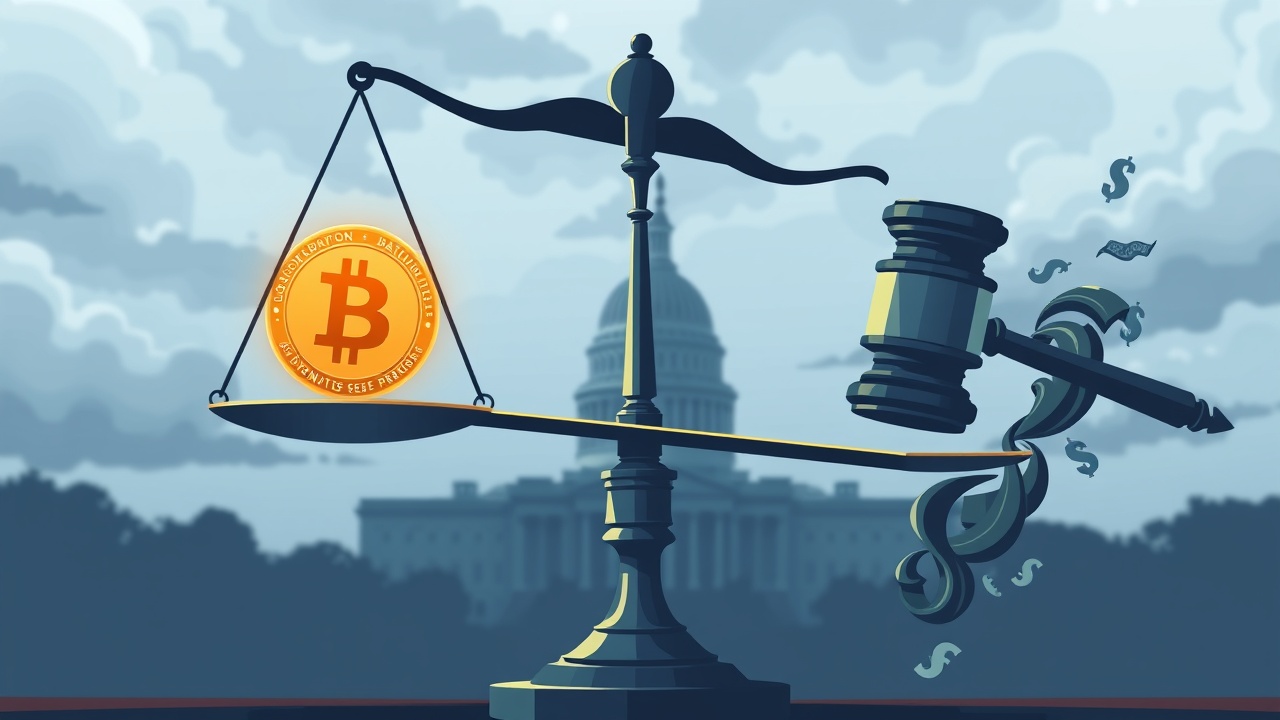
The U.S. Treasury Department is advocating for Congress to establish a new legal provision, known as a digital asset “hold law,” which would empower cryptocurrency exchanges to temporarily suspend funds suspected of being linked to illegal activities. This proposal is part of a report aimed at addressing how technology can be utilized to combat financial crimes associated with digital currencies, which is part of the broader legislative agenda outlined in the Guiding and Establishing National Innovation for U.S. Stablecoins (GENIUS) Act.
Proposed Hold Law
According to the report, legitimate users of digital currencies often utilize mixers for enhanced financial privacy during transactions on public blockchains. The proposed hold law would provide a legal safety net for financial institutions, allowing them to “voluntarily and temporarily” freeze digital assets that are under investigation for potential wrongdoing. This measure would enable institutions to halt suspicious transactions before assets are transferred or converted through other cryptocurrency platforms.
Expert Opinions
Ari Redbord, the global head of policy and government affairs at TRM Labs, noted to Decrypt that while exchanges are often capable of identifying questionable funds through blockchain analysis, they currently lack a clear legal framework to hold those assets for investigative purposes. He stated that the hold law would create a mechanism for exchanges to pause transactions while law enforcement addresses the necessary legal steps related to the investigation.
If implemented, this legislative change would enhance the capacity of exchanges to handle potentially suspicious transactions, offering law enforcement the time needed to adapt to the rapid nature of blockchain transactions. Alongside this recommendation, Congress is presently considering more comprehensive legislation on the structure of the cryptocurrency marketplace, amid increasing pressure from various stakeholders, including former President Donald Trump, to expedite the regulation of digital assets in light of tensions between traditional banks and crypto firms.
Current Challenges
Currently, while exchanges can flag suspicious activity, the legal complexities involved in freezing funds make this process difficult. According to Andrew Rossow, a public affairs attorney and CEO of AR Media Consulting, banks have limited authority to delay transactions under suspicious circumstances, but that authority is narrow and fraught with legal challenges. Although banks can submit suspicious activity reports (SARs), they lack a straightforward statutory safe harbor that permits them to hold funds in limbo without a court directive or other legal authorizations.
Rossow pointed out that cryptocurrency exchanges face an even more complicated situation, as they operate without a clear mechanism for creating a “pending state” or a full freeze of assets without facing significant legal exposure. He explained that if a hold law is passed, crypto platforms will gain the legitimate authority to pause transactions while investigations are conducted.
Concerns and Implications
However, the Treasury’s report has not addressed various critical vulnerabilities, according to Rossow, who highlighted concerns regarding the dependability of blockchain analysis tools and restrictions on informing clients about ongoing investigations related to SARs. He warned that a potential incongruity could arise where transparency requirements would obligate exchanges to disclose the fact that assets are frozen, while simultaneously, SAR rules prohibit detailing the reason behind the freeze.
This could result in a legal dilemma where customers are aware their funds are frozen but lack insight into the reasons, creating a scenario ripe for exploitation. Despite these unresolved challenges, the proposed hold law represents a significant potential step towards enhancing tools to tackle crypto-related fraud and money laundering across the industry. Redbord emphasized, arguing that since illicit actors move swiftly, and digital assets transfer even more quickly, a narrowly defined hold authority could help bridge that gap.