Introduction
Bitcoin mining serves a critical role in the functioning of the Bitcoin network, facilitating transactions, ensuring security, and enabling the creation of new bitcoins. Essentially, it transforms Bitcoin from a promise into an operational payment system, independent of any central authority. As we look ahead to 2025, a question arises: is mining Bitcoin still feasible, and does it make economic sense? This article delves into the mechanics of Bitcoin mining, its evolution, and the conditions that can make it viable.
The Mechanics of Bitcoin Mining
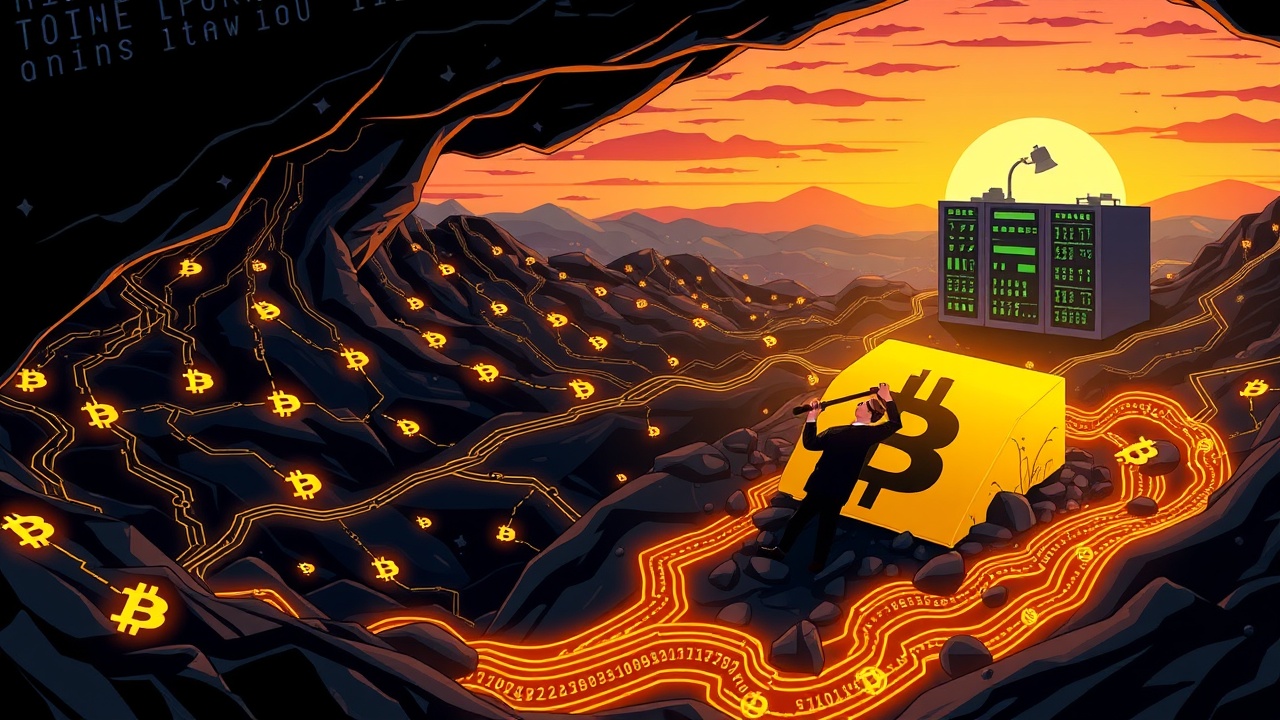
At its core, Bitcoin mining encompasses more than just generating new bitcoins. It is a validated process that maintains the integrity of the network. When a transaction occurs, it is broadcast to the network where miners—who use powerful computational resources—gather these unverified transactions and compile them into what’s known as a “block.” These miners then engage in a competitive race to solve a complex cryptographic puzzle that utilizes a hash function called SHA-256. This puzzle requires intense computational effort to ensure that manipulating the blockchain is exceedingly difficult. Each time a miner successfully solves this puzzle, they are rewarded with the opportunity to add their block to the blockchain, thereby cementing those transactions and preventing issues like double spending.
The rewards for miners not only include newly minted bitcoins, known as the block reward, but also any associated transaction fees. However, the total reward decreases over time as per Bitcoin’s predetermined schedule, limiting the total number of bitcoins that can ever be created, which further emphasizes the control miners exert over transaction validation and coin issuance.
The Evolution of Mining
Initially, Bitcoin mining was accessible to anyone with a standard computer. Individuals could mine on home systems and sometimes successfully discover blocks. However, as more participants entered the market, the competition significantly escalated, driving up the total computational power within the network, known as the hash rate. Consequently, the puzzles miners face became increasingly difficult, necessitating more advanced technology for successful mining.
Today, mining is primarily conducted using ASICs, or Application-Specific Integrated Circuits, which are designed specifically for processing SHA-256 hashes at high speed and efficiency. This shift has transformed mining from a personal undertaking into an industrialized sector. Large-scale mining operations now dominate the landscape, utilizing numerous ASICs alongside optimized cooling systems and stable electricity supplies to enhance their profitability.
Mining in 2025: Feasibility and Challenges
In addressing the question of whether individuals can still mine Bitcoin in 2025, the answer is affirmative—miners continue to receive rewards for validating transactions. However, the practicality of mining as a profitable venture is heavily influenced by various factors. Small-scale miners face daunting challenges due to the exceptionally high global hash rate, steep competition, and the prohibitive costs associated with specialized hardware and electricity. For many, these conditions render solo mining an unviable option, leading them to join mining pools that consolidate their efforts to increase their chances of earning rewards, albeit with shared profits.
Thus, while it remains technically possible to mine Bitcoin, it is increasingly unfeasible for typical home miners without access to the necessary infrastructure and low energy rates. In this competitive arena, profitability often hinges on being able to invest in efficient ASICs, access to economical power, and sometimes participating in mining pools to leverage collective power.
Conclusion
Despite these challenges, the process of mining retains its fundamental importance to Bitcoin’s framework. It ensures decentralization, prevents unauthorized transaction modifications, and contributes to Bitcoin’s scarcity, holding fast to its value as a decentralized digital asset. As Bitcoin mining continues to evolve, acknowledging and adapting to the ongoing changes is vital—particularly for those looking to enter this challenging yet essential domain of cryptocurrency.