Navigating the Financial Landscape
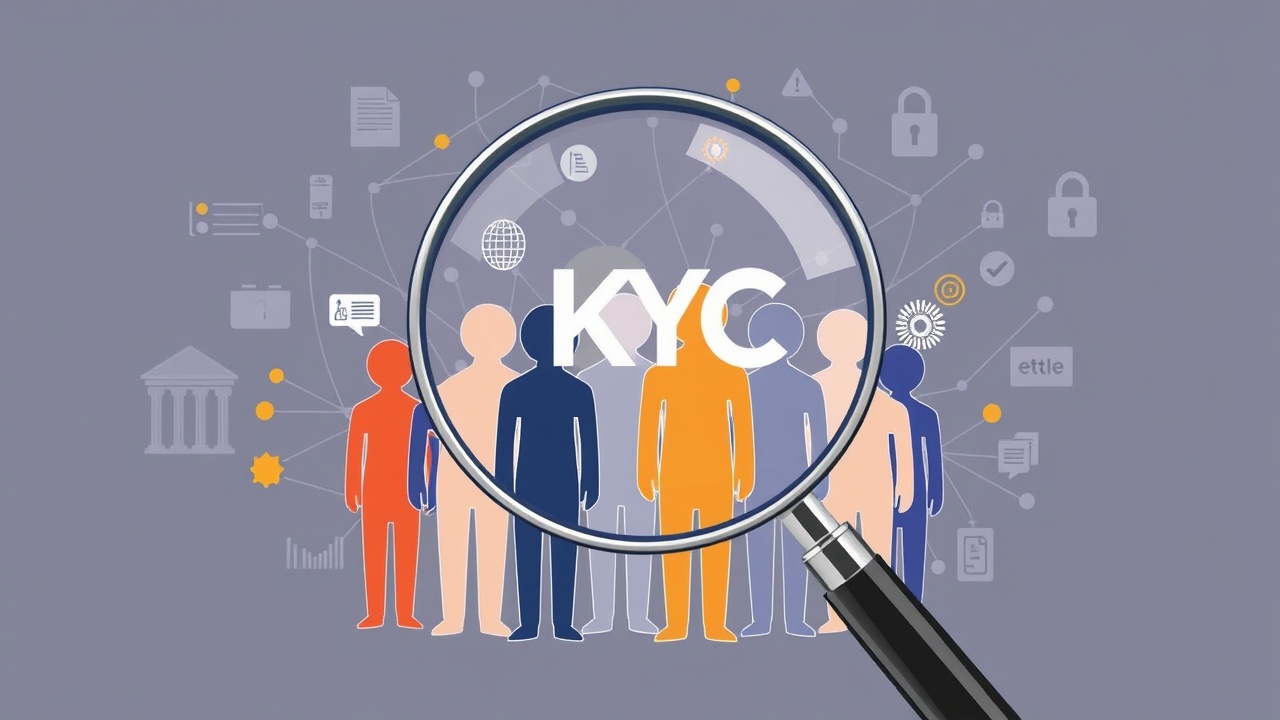
Navigating the financial landscape, whether traditional banking or cryptocurrency, often leads individuals to encounter the term KYC, which stands for “Know Your Customer.” This protocol requires financial institutions to verify the identities of their customers before allowing them to access services or transact. At its core, KYC helps prevent fraud and enhances the security of users’ finances.
Understanding KYC
While it may seem like bureaucratic jargon, grasping the concept of KYC is essential for making informed decisions in the financial world. It equips users with the knowledge needed to understand what personal information may be required and helps them steer clear of potential issues associated with banking or cryptocurrency platforms.
Key Components of KYC
Central to KYC is the Customer Identification Program (CIP), likened to a doorman at an exclusive venue who verifies attendees’ identities before granting entry. Financial entities typically ask for documents such as a driver’s license, passport, or utility bills to confirm who you are. Although this process might seem tedious, it is a crucial measure that prevents unauthorized individuals from impersonating you, thereby protecting your assets.
Following CIP is Customer Due Diligence (CDD), a process employed to assess the risk associated with a customer once their identity is confirmed. CDD acts as a preliminary background check, analyzing aspects such as the origin of funds, transaction history, and current occupation, all with the aim of identifying potentially risky behaviors. This foundational procedure is designed to preemptively catch suspicious activities, preserving the integrity of both the platform and its users while fostering trust within the financial ecosystem.
For customers in higher-risk scenarios—such as substantial cryptocurrency transactions or those identified as Politically Exposed Persons (PEPs)—Enhanced Due Diligence (EDD) comes into play. This mechanism involves more thorough scrutiny to avert risks related to money laundering and illicit activities, ensuring that large financial movements are legitimate and comply with regulations.
Anti-Money Laundering and Risk Management
Another component linked to KYC is Anti-Money Laundering (AML), which encompasses various laws and methodologies that hinder illicit funds from infiltrating financial channels. AML practices stipulate that platforms monitor transactions for irregularities, flag accounts that appear suspicious, and uphold adherence to regulatory standards. This crucial filtration process plays a vital role in establishing a transparent and trustworthy banking and cryptocurrency environment.
Within this framework, PEPs require heightened observation due to their potential exposure to corruption or bribery. Individuals occupying significant political offices, along with their family members, are often subject to stricter scrutiny to deter any misuse of the financial system that could arise from their influential positions.
Employing a Risk-Based Approach (RBA) allows financial institutions to allocate their resources judiciously by recognizing that not every customer poses the same level of risk. This strategy ensures that more attention is given to transactions or users deemed high-risk, while allowing lower-risk customers to experience seamless service. This balanced methodology is essential for effective risk management in a constantly evolving financial landscape.
Conclusion
To recap, understanding key KYC concepts, such as CIP, CDD, EDD, AML, PEPs, and RBA, is invaluable for anyone engaging with financial institutions or cryptocurrency platforms. Rather than being reserved for financial professionals, this knowledge empowers all users, enhancing safety and confidence in their banking and trading ventures. Keeping this information at hand can significantly improve your experience when navigating the complexities of digital finance and account management.