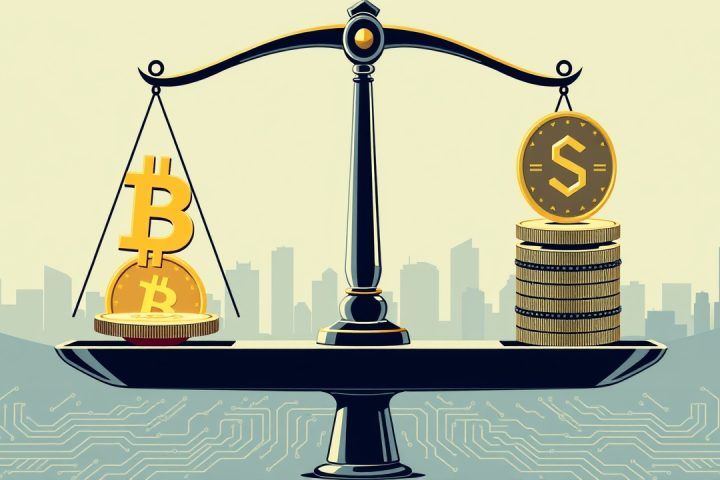
Bitcoin vs. Cardano: A Comparative Overview
Among the leading cryptocurrencies, Bitcoin and Cardano take distinctly different approaches to their roles in the digital currency realm.
Bitcoin: The Pioneer of Cryptocurrencies
Bitcoin, often regarded as the first cryptocurrency, is celebrated for its security and reliability as a digital asset. It attracts investors who view it as a stable store of value or a safeguard against economic uncertainty. Its reputation as ‘digital gold’ stems from its limited supply and long-standing presence in the market.
Using a Proof-of-Work (PoW) consensus method, Bitcoin relies heavily on computational power provided by miners to validate transactions. This results in high energy consumption and slower transaction speeds ranging from 3 to 7 transactions per second, which can further decrease during peak usage times.
Cardano: The Innovative Blockchain
In contrast, Cardano represents a more recent innovation in blockchain technology. As a third-generation blockchain, it addresses the limitations of earlier systems such as Bitcoin and Ethereum. Utilizing a Proof-of-Stake (PoS) protocol known as Ouroboros, Cardano promotes energy efficiency and supports higher transaction throughput, capable of processing several hundred transactions per second.
This design focuses on enabling complex smart contracts, decentralized applications, and digital asset management, all while emphasizing a sustainable approach to blockchain development.
Investment Considerations
Both cryptocurrencies serve essential but different functions. Bitcoin appeals to traditionalists and long-term investors due to its proven track record and market dominance, while Cardano attracts those interested in cutting-edge blockchain technology and sustainable practices.
Investors often find themselves weighing these differences as they seek to align their investments with their individual financial goals. Cardano’s ongoing efforts to enhance scalability and introduce robust technological features have positioned it as a potential contender in the future landscape of cryptocurrencies, although it comes with inherent risks due to its relative newness in comparison to Bitcoin’s established status.
Understanding the core principles, strengths, and weaknesses of each platform is crucial for investors navigating this evolving market.