Understanding the Ethereum Burn Address
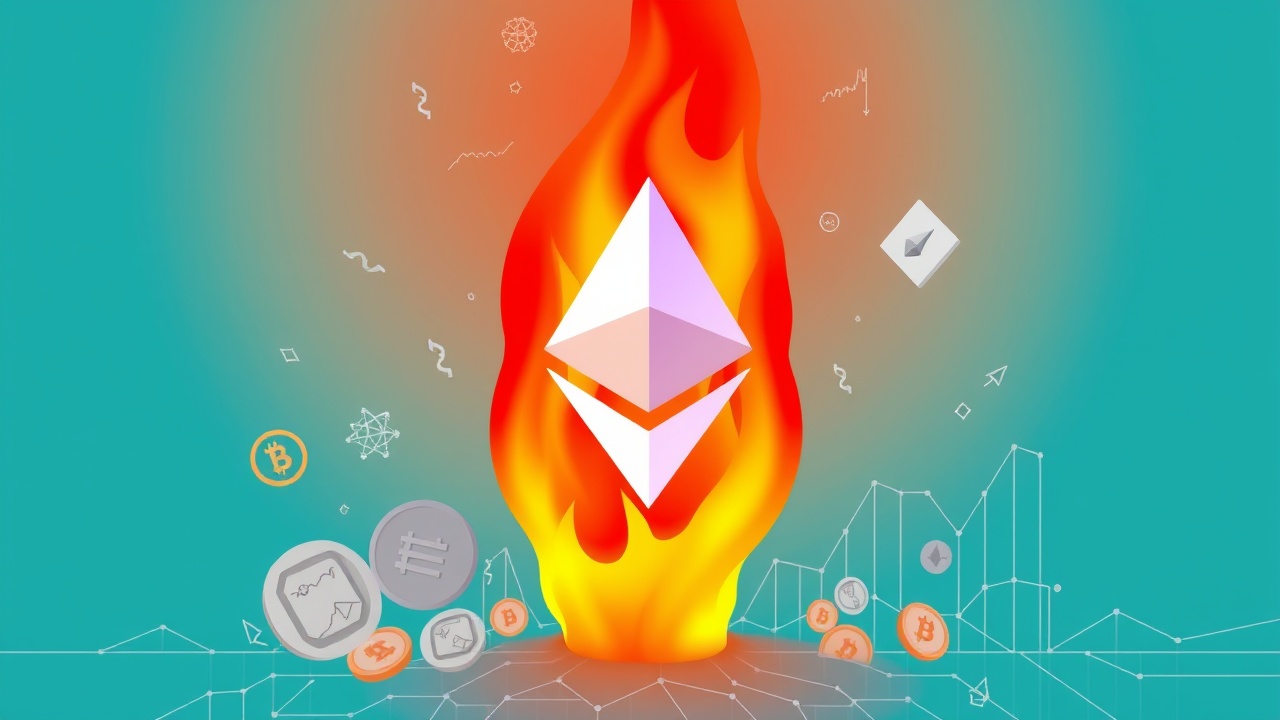
Ethereum (ETH) is recognized for more than just its role in decentralized finance (DeFi) and smart contracts; its innovative economic structure, particularly its burn mechanism, sets it apart. A pivotal aspect of this structure is the Ethereum burn address—an irreversible wallet into which ETH is sent and effectively erased from circulation. This feature, established through EIP-1559 during the London Hard Fork in August 2021, transformed the network’s fee processing and its approach to managing ETH supply. In this article, we will explore the function and significance of the ETH burn address and how it impacts users and the Ethereum ecosystem.
The Function of the Ethereum Burn Address
At its essence, the Ethereum burn address is a wallet that has been deliberately locked, with no private key available for anyone to access it. Thus, any ETH sent to this address cannot be retrieved, ensuring these coins are permanently eliminated from circulation. In the Ethereum ecosystem, there are two primary burn addresses used:
- Zero Address: 0x0000000000000000000000000000000000000000 — typically utilized for protocol-level burns and standard Ethereum Virtual Machine (EVM) functions.
- Dead Address: 0x000000000000000000000000000000000000dEaD — a commonly recognized address amongst the community, frequently employed by various projects to publicly demonstrate token burns.
Both addresses serve the same fundamental purpose of making ETH unspendable, although the dead address is viewed as more transparent and human-friendly, in contrast to the more functionally oriented zero address.
The Impact of EIP-1559 on Ethereum’s Fee System
The cornerstone of Ethereum’s reformed fee system was introduced via EIP-1559, which innovatively split transaction fees into a base fee—dynamically adjusted based on network demand—and a priority fee (or tip). This change mandated that the base fee be sent to the burn address, systematically lowering the circulating ETH supply. In times of high activity, the base fee climbs, while it falls during quieter periods. Each transaction confirmation results in this base fee being effectively destroyed, marking a significant shift in Ethereum’s economic policy.
Broader Implications of the Burn Mechanism
Beyond EIP-1559, various Ethereum projects are also inclined to burn tokens as part of their economic strategies, purchasing tokens from the market and sending them to the burn address to constrain supply and bolster value. Burning ETH is analogous to withdrawing cash from an economy, which can help foster deflation when demand remains stable or increases, potentially enhancing the value of the remaining tokens.
Through this burning mechanism, Ethereum’s fee market becomes more straightforward, eliminating the previous chaos associated with fluctuating gas prices. The protocol’s algorithm calculates the base fee that gets burned, which enhances the user experience significantly.
Effects on Users and the Ethereum Ecosystem
With EIP-1559, Ethereum’s fiscal structure has shifted towards a more neutral or possibly deflationary model, contingent on overall network activity. At times, more ETH has been burned than issued to validators—an encouraging sign for proponents of what they term “ultra-sound money” principles.
While everyday users may not frequently interact with the burn address directly, the ramifications of this mechanism are extensive. Key aspects include:
- Transaction Fees: A portion of the fees generated from ETH transactions or smart contract interactions is automatically designated for burning.
- DeFi Tokenomics: Many decentralized applications are integrating burn functions as an intrinsic part of their economic frameworks.
- Network Monitoring: Users can utilize blockchain explorers and analytics platforms to observe the total amount of ETH burned over time, providing insights into market trends and network usage.
Since the inception of EIP-1559, the burn mechanism has sophistication in Ethereum’s economic model, with billions of dollars’ worth of ETH burned—a direct reflection of network activity shaping monetary policy. However, it’s important to note that while this process does promote scarcity, it does not necessarily lead to price increases, as price is still influenced by demand, market conditions, and overall utility of ETH.
Conclusion
In summary, the Ethereum burn address is a critical component of the network’s framework, designed to permanently eliminate ETH from circulation, thus enhancing the overall economic experiences within the Ethereum ecosystem. Although users can select the priority fee freely, the mechanism for burning the base fee operates automatically and is intrinsically linked to the network’s efficiency and transaction structure. Tools and dashboards are available for users to track real-time and historical burning data as well.